
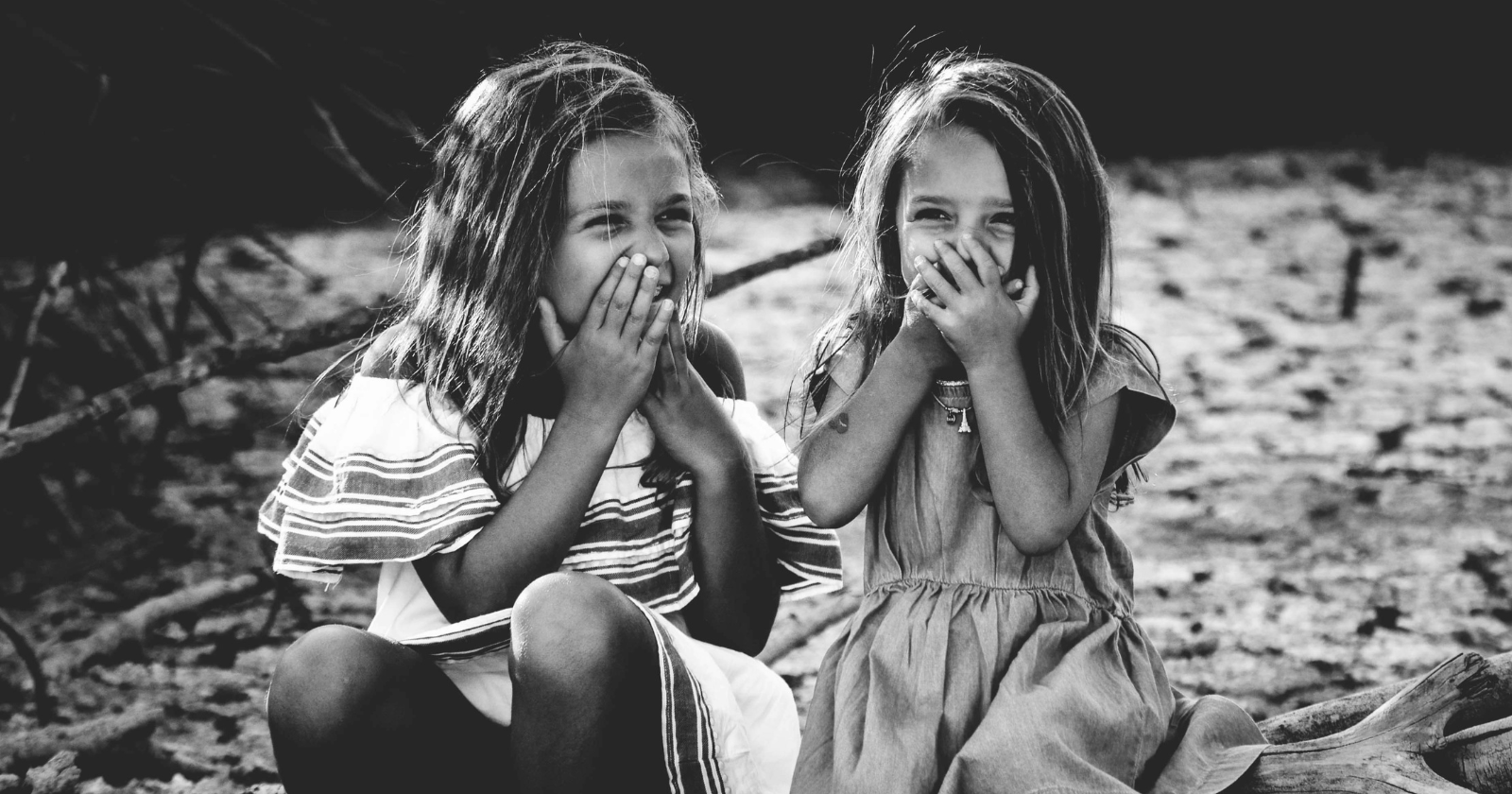

There’s a particular texture to the childhoods people describe when they say they were free. Bikes left on lawns at dusk because nobody tracked them. Afternoons that stretched out without a schedule and no adult waiting to fill them. The particular satisfaction of solving a problem, navigating a neighborhood, or handling a conflict with another kid without anyone stepping in. You were out there. Nobody was entirely sure where, and nobody was panicking about it. That was just the arrangement.
A lot of people who grew up this way carry a complicated relationship with the memory. They know the world has changed. They understand why parents supervise more closely now. And yet something about those unsupervised hours feels, in retrospect, like something genuinely important that has since disappeared. They’re not entirely sure whether to defend it or to be glad it’s gone. Many haven’t fully decided, and the conversation tends to end there, with both things held unresolved.
What that freedom actually was
It’s easy to romanticize it, and that’s worth being honest about. The freedom of those years wasn’t freedom from all risk. Kids got hurt. Conflicts went unmediated. Some of what got called independence was really just benign neglect. Not everything about it was good.
The Artful Parent
Family-life ideas and sharp reads, in your inbox.
But the freedom was also real. Children who spent hours each day directing their own time, making their own decisions, dealing with the social architecture of neighborhood groups without adult intervention, were doing something that doesn’t have a clean equivalent today. They were learning to run their own lives. Not in a dramatic sense. In the small, daily sense of figuring out what to do next when the answer wasn’t handed to them.
The people who grew up this way don’t typically describe it as “character-building” in retrospect. They usually describe it more simply: it was just what childhood felt like. Which is perhaps the most interesting thing about it. The freedom wasn’t an experiment. It was the default, and nobody was particularly aware of it as a thing until it started going away.
How supervision became the norm
The shift wasn’t driven by data. It was driven largely by fear, and by media coverage that made rare events feel common. Starting in the 1980s, high-profile cases of child abductions received enormous press attention, and the effect on parental behavior was significant even though the underlying risk for most children was statistically low. The culture of childhood supervision changed faster than the actual danger landscape warranted.
Formal schooling expanded. After-school activities became structured. Unstructured time was gradually replaced by scheduled time, enrichment time, supervised time. The unsupervised afternoon started to feel irresponsible rather than ordinary. And once enough parents changed their behavior, the children who weren’t supervised simply had no one to play with anyway.
This video goes into more detail:
What the research has found
I’m not a child psychologist, and I want to be careful about overstating what the research shows. It is largely correlational, and correlation is not the same as cause. But the pattern is notable. As Peter Gray, a professor of psychology at Boston College who published a review of the evidence in the Journal of Pediatrics, has documented: “over the past 5 decades or more we have seen, in the United States, a continuous and overall huge decline in children’s freedom to play or engage in any activities independent of direct adult monitoring and control.” Over the same period, rates of anxiety and depression among young people have risen substantially.
Social psychologist Jonathan Haidt, co-author of The Anxious Generation, frames it this way: “we have overprotected children in the real world, where they need a lot of free play and autonomy, while underprotecting them online, where they are not developmentally ready.” Two trends moving in opposite directions at the same time.
None of this means the free-range childhoods of earlier decades were without risk. It means the trade-off was real. And it means the adults who grew up in that era are not simply being nostalgic when they sense that something has changed.
The belief that’s still being sorted out
There’s also something worth acknowledging about the class dimension here. The free-range childhood being romanticized was not universal. It was more available in some neighborhoods than others, more affordable in some family structures than others. The freedom that one child experienced as idyllic was another child’s version of being left without enough support. Any honest accounting of what was lost has to hold that complexity too.
Most people who grew up with more freedom don’t actually want to re-create their exact childhood for their own children. They buy the car seats. They know about concussions. They understand that the world their kids move through is not identical to the one they grew up in. The nostalgia isn’t usually a political position. It’s more like a private negotiation.
What they’re sorting out is something more specific: how much of the supervision they see around them is genuinely protective, and how much of it is anxiety management for adults dressed up as safety for children. Those two things look almost identical from the outside, and pulling them apart takes more honesty than most parenting conversations allow.
The uncomfortable version of that question is this: if it turned out that the freedom was not just survivable but actually valuable, what would follow from that? Most people aren’t quite ready to answer. So they hold both things at once: the memory of the freedom, and the impossibility of giving it back. And they keep sorting.
If any of this is landing in a heavy way, whether you’re a parent navigating these decisions or an adult still processing your own childhood, a therapist can be a useful sounding board. Some of the feelings this territory stirs up go deeper than parenting philosophy.