Inspiration for Creative, Connected Family Life

Discover thoughtful stories, practical ideas, and heartfelt reflections on parenting, creativity, and family 
— across all generations.

Most popular
activities

What is Your Inner Child's Artist Type?

Knowing your inner child’s artist type can be deeply beneficial on several levels, because it reconnects you with the spontaneous, unfiltered part of yourself that first experienced creativity before rules, expectations, or external judgments came in. This 90-second quiz reveals your unique creative blueprint-the way your inner child naturally expresses joy, imagination, and originality. In just a couple of clicks, you’ll uncover the hidden strengths that make you most alive… and learn how to reignite that spark right now.

Featured Seasonal
Activities

Check out our
Youtube Channel

Korean parenting produces some of the most academically successful, emotionally intelligent kids in the world. 

But there's a side to it that most videos won't show you.

Studies show that children raised under its most intense form are significantly more likely to experience depression and anxiety. 

So the question isn't whether Korean parenting works — it's which parts of it actually serve children, and which parts quietly harm them.

This video is for parents who want the best of it, without the rest of it.

→ Nunchi — the 5,000-year-old emotional intelligence practice Korean parents teach from age three 
→ Why Korean-style academic pressure is linked to depression in nearly 40% of Korean-American adolescents 
→ How to use each principle in a way that builds children up rather than weighs them down

The goal isn't to copy another culture's parenting. It's to borrow what works — with eyes open.

Timestamps
00:00 Introduction 
00:50 Principle 1 — Nunchi: The Art of Reading the Room 
03:00 Principle 2 — Academic Dedication 
05:30 Principle 3 — Collective Responsibility 
07:30 Principle 4 — Close Family Bonds 
09:30 Conclusion

4 Korean Parenting Rules That Raise Brilliant Kids Without Burning Them Out

7 hr ago
Most Western parents are stuck in the same exhausting loop — wait for bad behaviour, react, repeat. Japanese parents aren't.

There's a reason Japanese children are consistently calmer, more self-sufficient, and more emotionally resilient than their Western counterparts — and it comes down to a set of deeply intentional parenting principles that most of us have never been taught.

This video is for parents who are tired of reacting and ready to start building.

→ Why the first two years are the most important — and not for the reason you'd expect 
→ The one question Japanese parents ask instead of punishing bad behaviour 
→ The three-stage philosophy that turns unconditional love into real independence

Parenting isn't about controlling behaviour. It's about building the skills that make good behaviour possible.

TimeStamp

00:00 Introduction 
00:45 Rule 1 — Prevent Problems Before They Start (Shitsuke) 
02:00 Rule 2 — Show Them, Don't Just Tell Them 
03:10 Rule 3 — The First Two Years Are Everything 
04:20 Rule 4 — Teach Empathy, Not Just Obedience 
05:20 Rule 5 — There's a Reason for Every Stage 
06:20 Rule 6 — Predictability Is a Gift 
07:20 Rule 7 — Bad Behaviour Is a Missing Skill 
08:40 The Bigger Picture

#parenting #japaneseculture #resilientkids #independentkids

7 Japanese Parenting Rules That Raise Independent, Resilient Kids

5 days ago
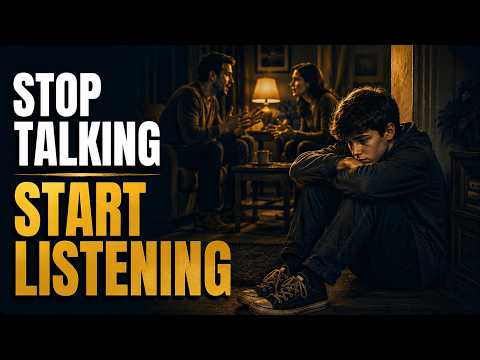
Some words stay with us for life.

Not the ones said during big moments — but the quiet sentences repeated at the dinner table, in the car, or during homework. The phrases that sounded normal at the time, but slowly became the voice inside our own heads.

In this video, we explore 8 things parents say that can quietly damage a child’s emotional foundation — often without realizing it. Most parents who say these phrases aren't trying to hurt their children. Many of them simply repeat what they heard growing up.

But words shape how children understand their feelings, their worth, and their place in relationships.

Inside this video you'll learn:

• The subtle phrases that make children doubt their emotions
• Why guilt-based parenting damages connection
• How certain comparisons affect identity and self-worth
• The long-term impact of dismissing a child’s feelings
• Simple shifts in language that build trust instead of shame

If you're a parent, this video can help you become more aware of the small moments that shape your child’s inner world.

If you're an adult reflecting on your childhood, it may help you understand where some of your inner patterns began.

Because the cycle doesn’t break by accident.

It breaks when someone decides to say something different.

Timestamps

00:00 The Words That Shape a Child
01:04 #1 "You're Too Sensitive"
02:10 #2 "I Sacrifice Everything for You"
02:42 #3 "You're Just Like Your Father / Mother"
03:37 #4 "If You Really Loved Me, You Would…"
04:33 #5 "I Knew You Couldn't Do It"
05:52 #6 "I Wish You Were More Like…"
06:30 #7 "What's Wrong With You?"
06:58 #8 "Stop Crying or I'll Give You Something to Cry About"
08:24 Breaking the Cycle
09:32 What Comes Next

8 Things Parents Say That Damage Their Kids For Life

3 weeks ago

Latest Articles​

4.2K Shares
Print
Share
Pin4.2K