
In 1932, during the Great Depression, a New York real estate broker named Bernard London published a pamphlet with a title that reads more like a confession than a policy proposal. London called itEnding the Depression Through Planned Obsolescence, and in it he argued that Americans were dragging the economy down by using their old cars, radios, and clothes for far longer than the statisticians had expected them to. His solution was, in hindsight, extraordinary: the government should assign every manufactured good a fixed lifespan, and when its date came, it would be legally dead and turned in for destruction. He wrote: “After the allotted time had expired, these things would be legally “dead” and would be controlled by the duly appointed governmental agency and destroyed if there is widespread unemployment”. New purchases would follow. The wheels would keep turning.
London’s specific proposal never made it into law. His term, though, did. Bernard London is credited with coining “planned obsolescence”, and the underlying logic he defended, that the economy runs better when things wear out faster than they need to, quietly worked its way into how a great many products would be designed for the rest of the century.
What the mid-century household looked like
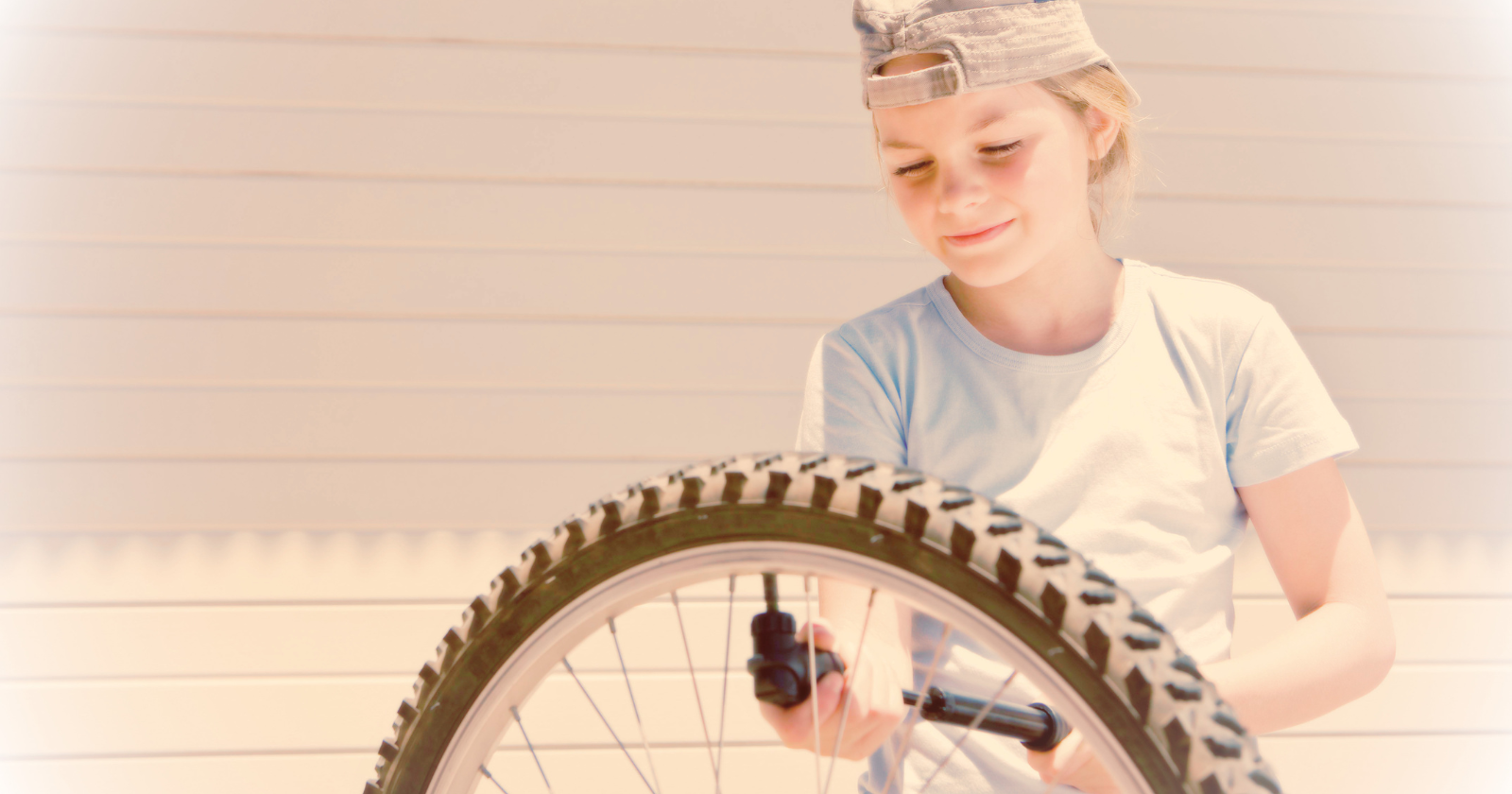
Three decades later, the people who grew up in the 1960s and 70s were not living inside London’s imagined world yet. They were living inside a habit of household repair that would have been recognizable to their own parents. A puncture in a bike tire was a patch job on the kitchen table, not a trip to the shop. A hole in a sock was closed with a darning needle, not a bag for the trash. A radio that stopped working got opened, poked at, and often persuaded to run for another year. Furniture was reupholstered. Coats were relined. A pot with a loose handle became a pot with a tightened handle.
The Artful Parent
Family-life ideas and sharp reads, in your inbox.
None of this was romantic in the moment. Most of it was ordinary and often tedious, and the people doing it were often doing it because they had to. The point is only that a whole set of ordinary skills lived in the average household. You did not need to be a hobbyist to know how to sew on a button or replace a fuse. You needed to be a person running a house.
What the economy quietly replaced the habit with
The trade came in slowly, on the back of goods that were cheaper to buy new than to fix. A pair of jeans that costs less than an hour of a tailor’s time will not, statistically, get its inseam repaired. A blender that costs less than the diagnostic fee to open it up will not get opened. A phone whose battery is sealed shut with adhesive and whose software will not accept an unofficial replacement part is not being repaired in a kitchen.
None of that is an accident of physics. Cheap batteries, glued cases, and software that refuses to recognize third-party components are design choices. They shape what a person can reasonably do at home, and they shape what people even think of as a household skill. Repair moves from ordinary to specialist, and eventually out of reach.
Some households kept the older habit alive, out of principle or frugality or because they still had the tools and the patience their parents had passed on. But the ambient culture had shifted. The default answer to a broken thing had moved from “fix it” to “replace it.”
What the repair habit taught
We’d argue that the loss here is not really about money, though money is part of it. Repair teaches a particular relationship with objects. It teaches you that the thing in your hand has an inside, and that the inside is knowable, and that most of what breaks in ordinary life breaks in ordinary ways. It fosters patience of a specific kind: the willingness to sit with something that is not working, look at it carefully, and try one thing at a time. It teaches you to size up a problem before spending money on it. It teaches children who grow up watching it that broken is a temporary state, not a verdict.
You can arrive at all of this from a workbench, or from a sewing basket, or from a chest freezer used carefully across a season. The specific object matters less than the habit of engaging with the material world as something you can act on, rather than something you only buy from.
What is starting to come back, and what isn’t
There is at least a partial course correction underway. The right-to-repair movement, which argues that owners and independent shops should have access to the tools, parts, and documentation needed to fix the things they own, has moved from the fringes to the statehouses. The Public Interest Research Group reported that 2025 was the movement’s most productive year yet in the United States, with 35 states considering repair legislation, up from 30 the year before. As of June of this year, 8 states have right-to-repair laws on the books: California, Colorado, Connecticut, Minnesota, Nevada, New York, Oregon and Washington.
Kyle Wiens, the founder of iFixit, has been the loudest voice inside that push. Speaking to the fact that repair bills have now been introduced in every US state, he said: “People are fed up with disposable products and locked-down devices. Repair is the future, and this moment proves it.”
New laws will help. What they cannot restore on their own is the household knowledge that used to sit alongside the tools. A right-to-repair statute makes it legal and practical to open the phone. It does not by itself teach anyone how to. That part travels the old way, one person showing another, at a kitchen table or in a garage.
What is worth keeping from the older habit
Nobody is asking you to darn a sock this evening. It is worth noticing, though, that a generation of parents and grandparents ran their households on a stance toward broken things that our current one has quietly given up. That stance had a payoff difficult to buy back once it is gone: a plain confidence that ordinary problems can be met with ordinary attention.
Some of that can be picked back up. A patched tire, a resewn hem, a fifteen-minute look inside a lamp that stopped working. None of it is heroic, and together, over the years, it adds up to a way of moving through the material world that our economy has been designing away from us, and that is still, in most homes, ours to keep or let go.