
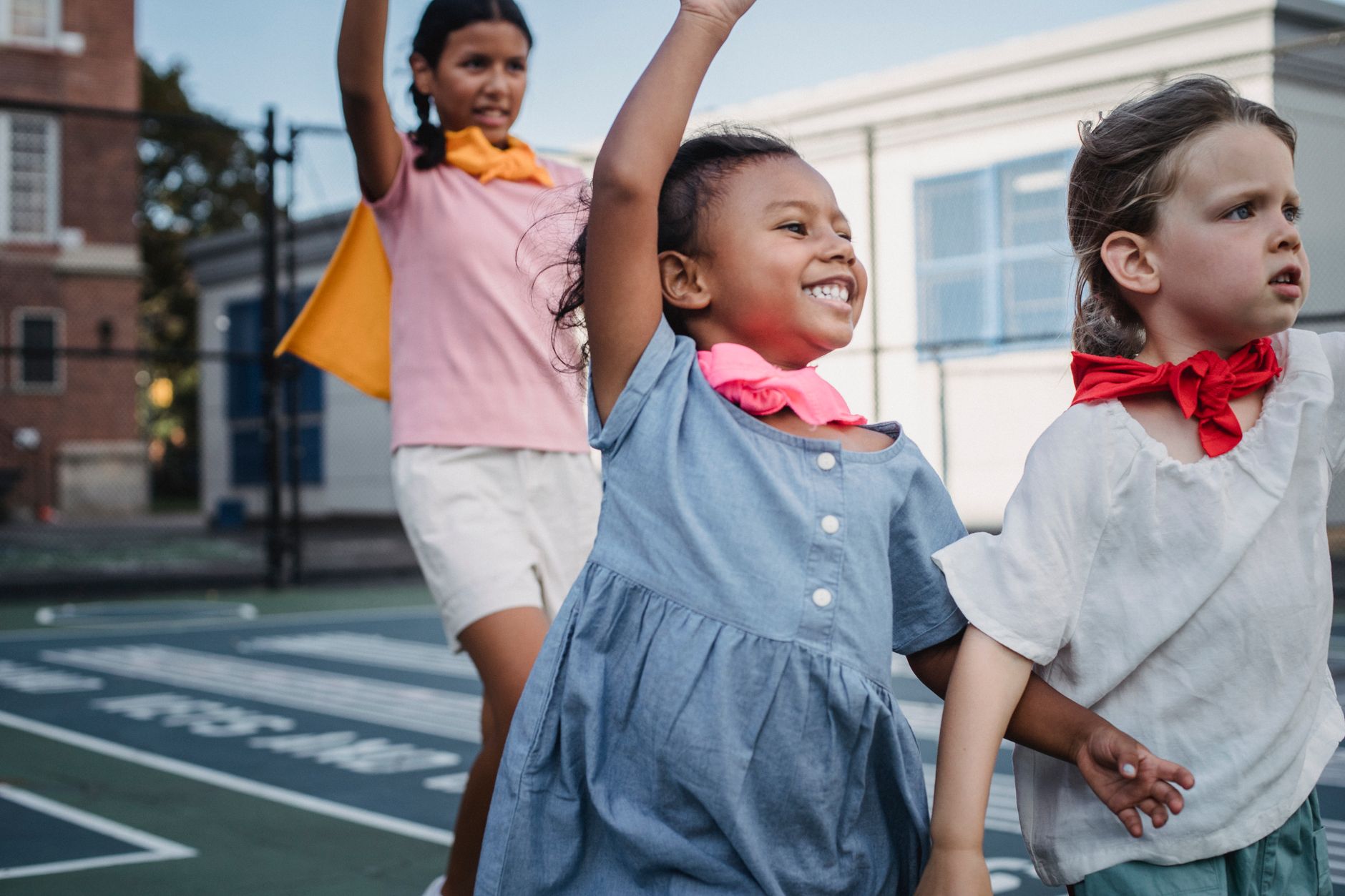
It is easy to treat children’s free play as the leftover part of the day. It is what happens after school, after homework, after lessons, after errands, after the adult calendar has finished making its claims.
Peter Gray, a research professor of psychology at Boston College, has argued for years that this may be backwards. In a 2011 essay in the American Journal of Play, Gray connected two large historical patterns: a long decline in children’s free, self-directed play from the 1950s onward, and rising measures of anxiety, depression and helplessness among young people across many of the same decades.
We are parents and writers, not pediatricians or therapists. What follows is a careful reading of the research, not medical or developmental advice. This is one study, not settled consensus, and in this case it is best read as one psychologist’s argument built from several strands of evidence, not proof that less play caused every rise in childhood distress.
The Artful Parent
Family-life ideas and sharp reads, in your inbox.
That caveat matters. Childhood has changed in many ways since the 1950s: schooling, family life, screen media, safety fears, neighborhood design, economic pressure, diagnostic language and willingness to talk about mental health have all changed too. No single explanation can carry that whole history.
Still, Gray’s argument is worth sitting with, especially for parents who feel the squeeze between wanting children to have room to be children and feeling that every hour must now be supervised, scheduled or improved.
What Gray means by free play
Gray is not talking about every pleasant activity a child does. He means play that children choose and direct themselves. The child decides what to do, who joins, what the rules are, when the rules change and when the game is over.
A pickup game in the yard can be free play. A pretend restaurant under the dining table can be free play. A cardboard box that becomes a boat, then a shop, then a cave can be free play. So can a child spending half an hour mixing paint colors without anyone asking what it is supposed to be.
The key is not that adults vanish completely. Young children still need safe spaces, nearby adults and sensible limits. The key is that the activity belongs to the child more than to the adult. It is not a lesson disguised as play. It is not a worksheet with nicer materials. It is not an adult holding the plan while the child fills in the blanks.
Gray’s concern is that, over recent generations, children have had fewer chances to practice that kind of self-direction. He points to more time in school and adult-organized activities, less freedom to roam neighborhoods, more fear around unsupervised childhood, and fewer ordinary spaces where children can simply gather and make something happen.
The mental health pattern he connects it to
The second half of Gray’s argument comes from long-running psychological measures. A 2010 cross-temporal meta-analysis by Jean Twenge and colleagues, published in Clinical Psychology Review, examined MMPI data from young Americans between 1938 and 2007 and reported birth-cohort increases in several measures of psychopathology.
Another paper by Twenge, Liqing Zhang and Charles Im, published in Personality and Social Psychology Review, looked at locus of control from 1960 to 2002. Locus of control is a plain but useful idea: whether a person tends to feel that outcomes in life are shaped by their own actions, or by outside forces beyond their influence.
That 2004 paper reported that young Americans became more external in locus of control over time. In ordinary language, they were more likely to feel that life was being controlled from the outside. The authors linked externality with poorer school achievement, helplessness, stress management difficulties, lower self-control and depression.
Gray’s leap is to ask whether the loss of free play might help explain some of that change. His reasoning is simple enough to understand at the kitchen table: free play is one of the main places children practice having agency.
Why play might matter for agency
In child-led play, children make decisions that are small but real. They decide whether the fort needs a door. They decide what happens when two children both want to be the dog. They decide whether the game is too rough, too boring or worth saving. They negotiate, quit, restart, invent, repair and try again.
That is not always peaceful. Real play can include arguments, disappointment, unfair rules, hurt feelings and messy compromises. In fact, that may be part of why it matters. Children are not only practicing joy. They are practicing how to live with other people when no adult is scripting every move.
For Artful Parent families, this is easy to see in making. A child who is allowed to explore materials without a fixed finished result has to make hundreds of tiny choices. More red or more water? Cut the paper or fold it? Keep the accidental smear or paint over it? Ask for help or solve it another way?
None of those choices needs to be dressed up as a developmental exercise. They are simply part of a child being in charge of something real for a while.
The American Academy of Pediatrics took a broader view of play in its 2018 clinical report, “The Power of Play”. The report described play as supporting social-emotional, cognitive, language and self-regulation skills, while also helping build safe, stable relationships with caregivers. That does not prove Gray’s historical thesis, but it does support the wider idea that play is not a decorative extra in childhood.
What this does not mean
This is where the subject can easily become too heavy. It would be a mistake to tell parents that if a child is anxious, they did not get enough free play. It would also be a mistake to say that more backyard time, more cardboard boxes or more time with paint will prevent depression.
Children’s mental health is shaped by many forces, including temperament, sleep, stress, relationships, school, illness, trauma, poverty, family support and access to care. A historical pattern cannot diagnose a child, and a parenting essay cannot treat one.
It would also be unfair to pretend every family has equal access to safe, spacious, flexible time. Some parents are working multiple jobs. Some neighborhoods are not easy places for children to wander. Some homes are crowded. Some children need closer supervision. Some seasons of family life are simply survival seasons.
A useful reading of Gray’s argument should make parents feel less alone in noticing that modern childhood can be over-managed, not more guilty for living inside it.
The small, practical version
The home version of this idea does not have to be grand. It might mean leaving scrap paper and tape where a child can reach them. It might mean allowing an art project to turn into a pretend shop instead of redirecting it back to the planned activity. It might mean saying yes to a blanket fort even when it makes the room awkward for an afternoon.
It might mean giving children a little more time before stepping in to solve a disagreement. It might mean letting a child abandon the craft idea you had and use the materials in a completely different way. It might mean noticing when we are about to turn play into instruction and pausing for a breath.
For younger children, adult presence still matters. Small parts, scissors, water, hot tools and public spaces all need sensible care. But within those boundaries, children can still have more authorship than we sometimes give them.
At the art table, that authorship can sound like: “You can decide.” It can look like fewer examples placed in front of the child. It can feel like tolerating a little uncertainty about what the activity is becoming.
There is a quiet respect in that. It says that a child’s choices do not have to be efficient to be worthwhile. Their play does not have to produce a tidy object, a lesson or a measurable improvement. Some of its value may be that, for a short stretch of time, the child is not being managed toward an adult outcome.
A gentler takeaway
Gray’s argument is not the final word on childhood mental health. It is one way of reading a set of troubling historical patterns. But it gives language to something many parents already sense: children need some parts of life that are not constantly optimized for them.
They need space to choose, make, negotiate, wander within safe limits, try something odd, get bored, recover from a small frustration and discover that their own actions can change what happens next.
If you are worried about a child’s anxiety, depression or daily functioning, the right next step is to speak with a pediatrician or a qualified mental health professional. Free play is not a substitute for care.
But in ordinary family life, it may still be one of the gentlest things we can protect: a child with some materials, some time, some room to decide, and no urgent need to turn the moment into anything more impressive than play.