
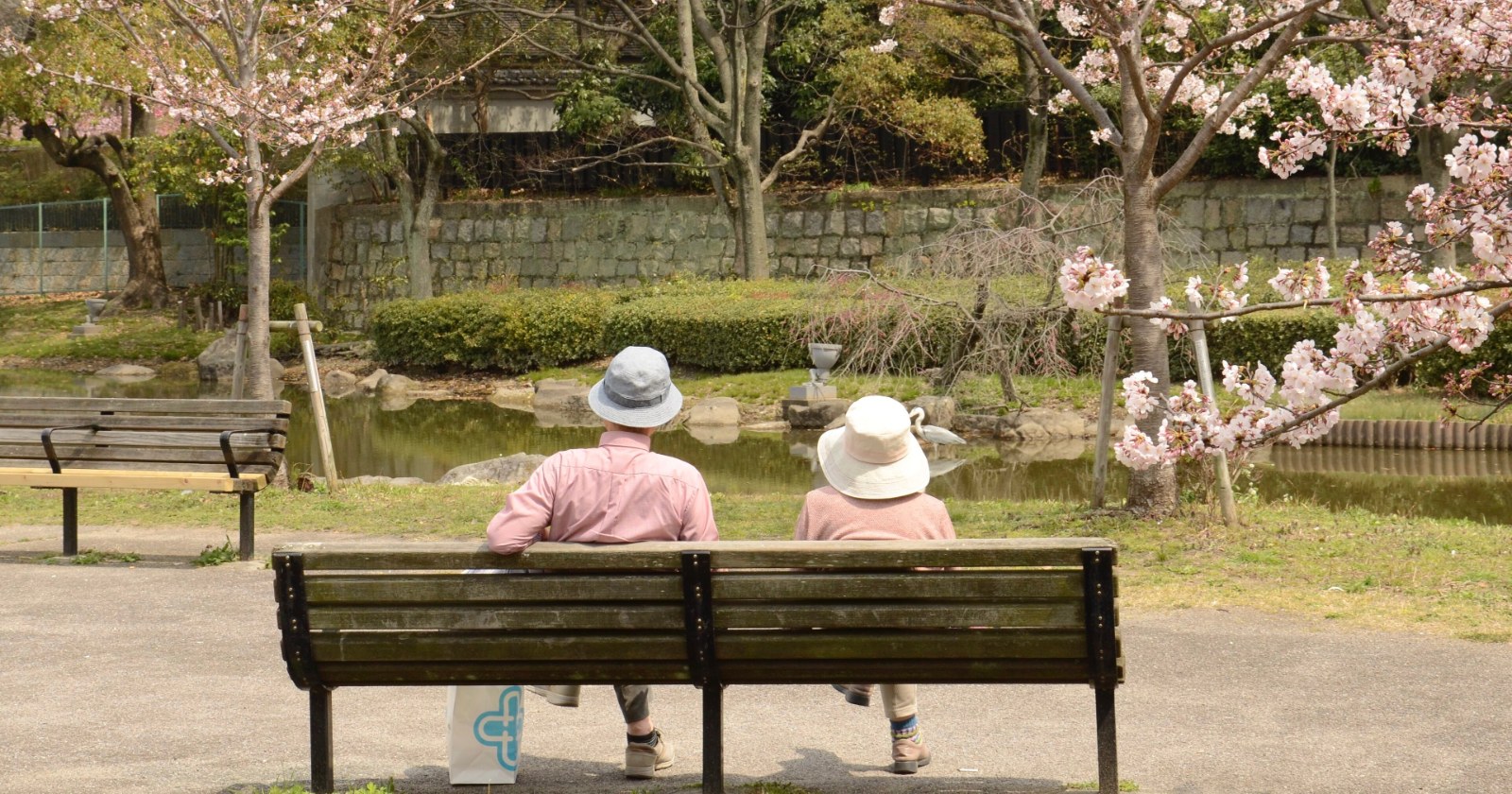
You may have heard the worry, or lived it: when a husband retires, his wife ends up paying for it in stress, low mood and lost sleep. It even has a name, retired husband syndrome. A 1984 medical commentary listed its symptoms as including headaches, depression, agitation, palpitations and lack of sleep, and the international press has often looked to Japan for examples.
What nobody had done, according to two economists at the University of Padova, was measure whether the retirement itself is the cause. The idea had been “anecdotally documented but never formally investigated,” Marco Bertoni and Giorgio Brunello wrote. Their 2017 paper in Social Science & Medicine estimated that it can be, at least for couples whose retirement timing a change in Japanese law shifted. Among 817 Japanese wives, each extra year a husband had spent retired was estimated to raise the chance that his wife reported feeling stressed, feeling depressed or sleeping badly by about 6 percentage points. A later and much larger Japanese study found a rise in distress its author called relatively moderate, and one that faded within a few years.
That law change is what made the Padova estimate possible. In 2006, Japan told employers to offer older workers more years on the job. Most long-term jobs there ended with mandatory retirement at sixty, but the age for a full state pension was rising, so a revised Elderly Employment Stabilization Law required companies to guarantee continued work until the pension began. For private-sector employees born in 1946, that meant until 63. For those born in 1947 or 1948 it meant 64, and for those born in 1949 or later, 65. Most companies complied by rehiring people after sixty, usually at lower pay.
The Artful Parent
Family-life ideas and sharp reads, in your inbox.
Men born a year apart
Because the guarantee depended on birth year, men born a year or two apart faced different rules about how long they could stay at work. That variation was what the researchers needed, because a plain comparison of wives would not settle the question. A couple’s own circumstances shape when a man retires, and some of those circumstances can also affect his wife’s health. When Bertoni and Brunello simply related wives’ symptoms to how long their husbands had been retired, they found no clear link.
The law gave them a cleaner comparison. A man born in 1945 had his job guaranteed only until 60; a man born a year later had it until 63. No couple chose which side of that line the husband was born on, so the researchers argue that shifts in wives’ health at those cutoffs can be traced to when the husband stopped work. That holds only if the job guarantee affected his wife through his retirement alone, and if men born on either side of the cutoffs don’t differ in other ways that matter. The researchers controlled for birth-year trends and childhood conditions to check the second point.
The data came from the Preference Parameters Study, an annual Osaka University survey of a nationally representative sample of Japanese adults. Only one person per household answers, so the researchers used married women, who also reported their husband’s work status and the year he retired. The final sample was 817 wives of men born between 1940 and 1952, answering between 2008 and 2013, for 3,192 yearly responses.
Stressed, depressed or sleeping badly
Each year the women rated three statements: “I have been feeling stressed lately,” “I have been feeling depressed lately” and “I haven’t been sleeping well lately.” A rating of 4 or 5 on a five-point scale, where 5 meant “particularly true,” counted as having that symptom.
Across the 3,192 responses, 46 percent reported at least one of the three. Stress was the most common, at 41 percent, and poor sleep the least, at 16 percent.
Once the comparison ran through the law’s timing, a link appeared. Each additional year a husband had spent in retirement was estimated to raise the chance that his wife reported at least one symptom by 5.5 to 6.4 percentage points, depending on the statistical model. Against the 46 percent average, that is roughly 12 to 14 percent more for each year. The authors write that each symptom taken separately gave results “in line with” the combined measure. The reverse did not show up: they found no statistically significant effect of a wife’s work status on her husband’s symptoms.
The authors also ran a rough sum. Retired husbands in the sample had been retired about 5.4 years on average, by the paper’s count, and at that point, they write, the yearly estimate adds up to close to 30 percentage points. That assumes every year adds the same amount. When the researchers let the effect vary, it looked small in the early years and largest six to eight years in, though they could not rule out a steady year-by-year rise.
Why it might happen
Wives who held jobs were affected more than wives who did not. The authors had expected it could go either way. A wife at home might spend more hours with a retired husband, while a working wife might add his retirement to the stress of her own job. The second effect appeared to win.
Money explained part of it. Retirement made households more likely to have below-median assets or debt and to not own their home, and made wives more likely to describe a low standard of living. Adding those measures, plus the husband’s income, to the model shrank the effect on wives by about 15 percent.
Husbands’ own symptoms appeared to rise as well. In a separate sample of men who answered the survey themselves, each year of retirement raised a man’s chance of reporting symptoms by an estimated 3.6 percentage points, against 6.4 for wives. That estimate was significant only at the 10 percent level. Bertoni and Brunello suspect that looking after a retired, possibly depressed husband adds to the pressure on his wife. They call that view “speculative at best,” because wives were never asked about their husbands’ mental health, and they conclude that much of the effect remains unaccounted for.
The estimate covers only couples whose retirement timing actually moved with the law: men who stayed on because the guarantee let them. The symptoms are self-reported, three survey lines rather than a doctor’s diagnosis or a standard depression scale, though the authors note that low mood, poor sleep and stress or irritability all appear in such scales. And the data come from one country, between 2008 and 2013.
Whether retirement is what keeps a particular wife awake is something she and her own doctor can work out; national surveys, relayed here by journalists rather than clinicians, can only estimate how retirement shifted wives’ symptoms on average, across hundreds or thousands of homes. Sleep that has stopped coming back, or a low mood that has settled in, is worth a doctor’s appointment whatever lies behind it. Strain that sits between the two of you is the kind of thing couples counseling exists for.
Eleven years of a government survey
Takashi Oshio of Hitotsubashi University looked again using a much bigger government panel, the Longitudinal Survey of Middle-Aged and Older Adults. It began in 2005 with Japanese adults aged 50 to 59 and surveyed them every year until 2016. His 2021 paper in the Journal of Epidemiology followed 3,794 women whose husbands retired during the survey, measuring their distress with the K6, a standard six-question scale.
Their scores rose about 0.18 points on the 0-to-24 scale after the husband retired, stayed about that much higher for roughly three years (clearly so for the first two), then drifted back toward where they had been. Oshio wrote that his results confirmed the syndrome exists. But he put its size at about 4 percent of a standard deviation, judged it relatively moderate, and concluded that the findings “suggest the limited relevance” of retired husband syndrome among middle-aged Japanese couples.
The two studies used different surveys, measures and methods, so their numbers can’t be compared directly. They also point different ways on timing. Bertoni and Brunello’s estimate looked largest six to eight years in, though that pattern was not statistically firm, while Oshio’s rise came early and faded within his five-year window.
Oshio also found that the rise showed up only in some groups, sorted by how the wife lived the year before the retirement. Women who took part in several kinds of social activity, or who already did many things with their husbands, showed no significant rise in distress; women in paid work did. The gap between the groups was not itself statistically significant, at least for social activity, and he cautioned that the women who did these things may differ in other ways, such as personality.
Retiring as a couple
The couples retiring next may look different. Oshio notes that younger Japanese cohorts likely include more dual-earner couples, who tend to decide retirement more jointly. In both studies, the rise in distress showed up among wives with jobs of their own: Bertoni and Brunello found it larger for them, and in Oshio’s data it was working wives whose distress rose.
Oshio’s paper suggests a need for local governments to help couples take part in social activities and to offer counseling for retirement-related mental health problems. Bertoni and Brunello argue that retirement should be studied as something that happens to both partners. Much of the debate about retirement among economists, they note, is about whether people are financially prepared for it. Their results suggest that preparing for its psychological side deserves attention too.