
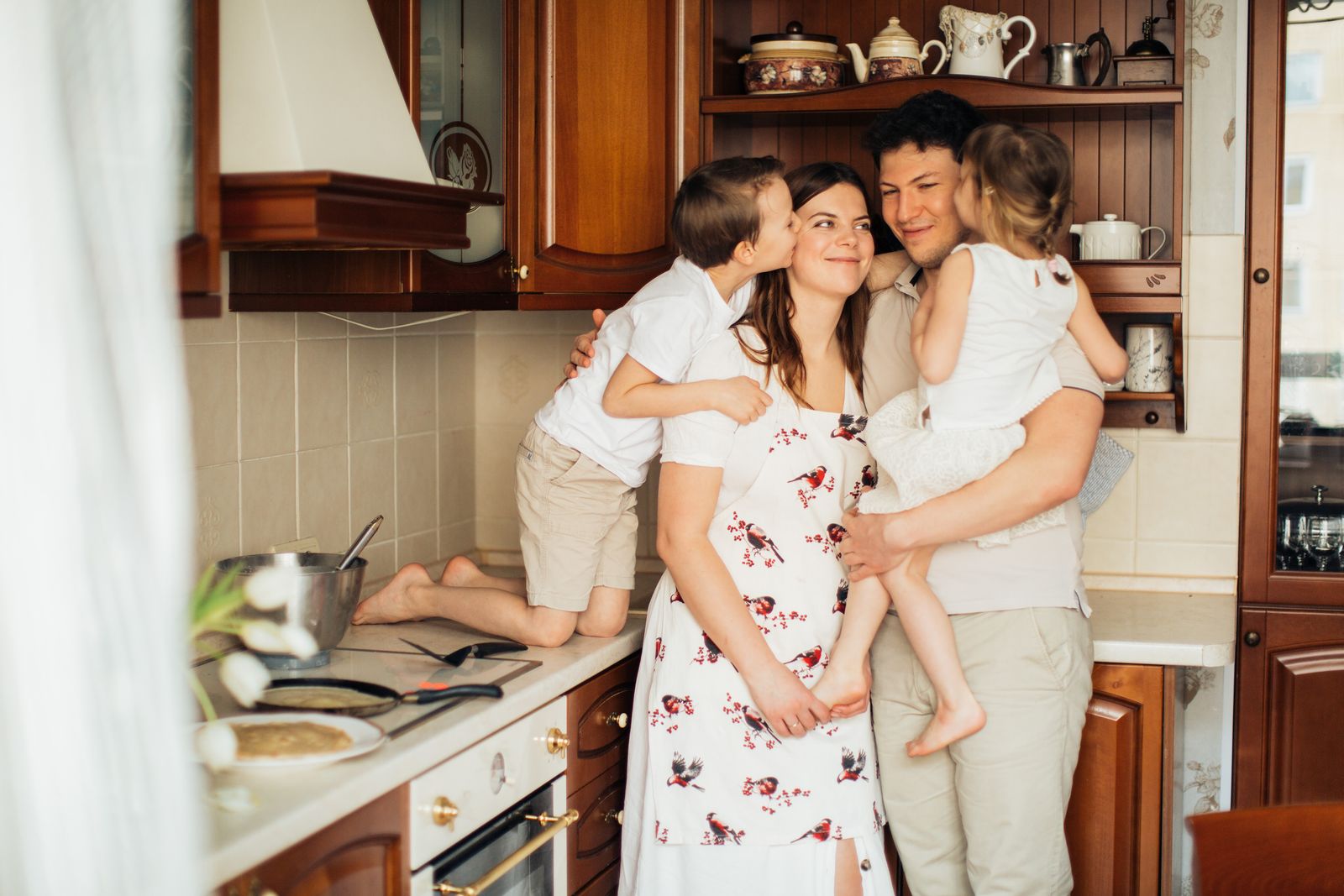

Many parents picture a harmonious family as one where nobody raises their voice. Decades of research on children and family conflict point somewhere else. Arguments are a normal part of any household. What children seem to track most closely is how those arguments end, and one common way of ending a fight, going quiet and refusing to engage, does not count as an ending at all in the eyes of the researchers who study it.
How a fight ends matters more than the fight
Much of this work comes from psychologist E. Mark Cummings of the University of Notre Dame and his colleagues. In a 1991 study in Developmental Psychology, 98 children and young people aged 5 to 19 watched short videotaped arguments between adults. The arguments ended in one of three ways. Some were resolved, with a compromise or an apology. Some were partly resolved, with one person giving in or the subject being changed. Others were left unresolved: the adults either kept fighting or slipped into the silent treatment.
Across every age group, the children’s reactions closely followed how far each argument had been settled. The more complete the resolution, the less anger they perceived and the less upset they felt themselves. Fully resolved fights produced the mildest reactions. Fights that ended in continued arguing or in stony silence produced the strongest.
The Artful Parent
Family-life ideas and sharp reads, in your inbox.
That grouping is worth pausing on. Many adults treat walking away or going quiet as the polite option, a way of keeping the peace in front of the children. In this research, silence was classed alongside continued fighting as a conflict that had not ended. Children seemed to read it the same way.
Children notice more than parents assume
The studies used actors rather than real parents, which is an important limit. Watching strangers argue on a screen is not the same as hearing a parent slam a door. But research in real families has pointed in the same direction. Cummings and colleague Patrick Davies have described a group of destructive tactics that tend to unsettle children. According to a summary in Greater Good magazine, these include insults and threats, physical aggression, silent tactics such as sulking, walking out or withdrawing, and capitulation, where one partner simply gives in to make the argument stop.
That last item may surprise some parents. Giving in can look like a resolution. To a watching child, it may look more like one parent losing, with the underlying problem still unsolved. The same summary notes that children do not simply get used to destructive conflict over time, and that sensitivity to parental conflict has been found even in 19-year-olds.
What constructive disagreement looks like
Constructive conflict is not the absence of disagreement. In the research, it means arguing with affection, support and an effort to solve the problem, often ending in compromise.
A longitudinal study published in 2009 in the Journal of Child Psychology and Psychiatry followed 235 two-parent families in Indiana and New York, with children aged 5 to 7 at the start. Researchers rated how couples handled their disagreements, both from questionnaires and from watching them discuss real problems together. Constructive conflict was linked to children feeling more emotionally secure and to warmer parenting. Those children went on to show more prosocial behavior, such as helping and sharing, at a later assessment. Destructive conflict was linked to lower emotional security.
The study tracked families over time and accounted for children’s earlier behavior, but it was not an experiment. It shows a pattern, not proof that changing how parents argue will change how kind their children become. The likely path, the authors suggest, runs through security: children who feel the family is stable have more room to turn their attention outward.
When the resolution happens out of sight
Not every argument can be finished at the kitchen table. Some topics are private, and some conversations need time. Cummings and colleagues tested this too. In a 1993 study with children aged 5 to 6 and 9 to 10, negative reactions to an adult dispute were reduced even when the children only learned that the conflict had been resolved behind closed doors.
There is a catch. Children appear to be good at telling a real resolution from a forced one. Advice drawn from Cummings’ work stresses that pretending to have made up does not work, because children can tell. The useful step is to genuinely settle the matter and then let the children know, calmly and warmly, that it has been worked out.
Harmony between brothers and sisters
For many families, the loudest conflicts are not between parents at all. Researchers at Penn State have noted that parents frequently rank sibling conflict as their number one family problem. Here too, the evidence suggests that skills can be taught.
In a randomized trial published in 2013 in the Journal of Adolescent Health, 174 families from 16 Pennsylvania schools were assigned either to a program called Siblings Are Special or to a comparison group that received a parenting book. The program brought fifth graders and their younger siblings together for 12 weekly after-school sessions on understanding emotions, self-control, problem solving and cooperation, plus three family nights for parents.
Afterward, observers rated the sibling pairs in the program as more positive with each other. The children also showed better self-control, and teachers rated their social skills and schoolwork more highly. Mothers in the program reported fewer depressive symptoms. The program did not measurably reduce sibling conflict itself, partly because serious conflict was rare at the start, and there was no long-term follow-up. Even so, it suggests that the skills behind family harmony, such as taking turns, solving problems together and calming down, can be learned.
Putting it into practice
- Expect disagreements. A family with no visible conflict is not necessarily a harmonious one.
- Aim to finish arguments, not just stop them. A compromise or a sincere apology carries more weight than a change of subject.
- Be wary of the silent treatment and of giving in just to end things. Both can leave the problem, and the tension, in place.
- If a discussion needs to move out of earshot, settle it properly and then tell the children it has been resolved.
- Let children see the repair, such as a hug, a joke or a plan both parents agree on.
- Coach siblings through disputes with the same tools: naming feelings, taking turns and finding a solution both can accept.
None of this requires a perfect home. The research suggests that children can handle seeing the people they love disagree. What they seem to need is evidence that the disagreement ends, and that the family is still whole when it does.
Photo: Elina Fairytale / Pexels (representative image)