
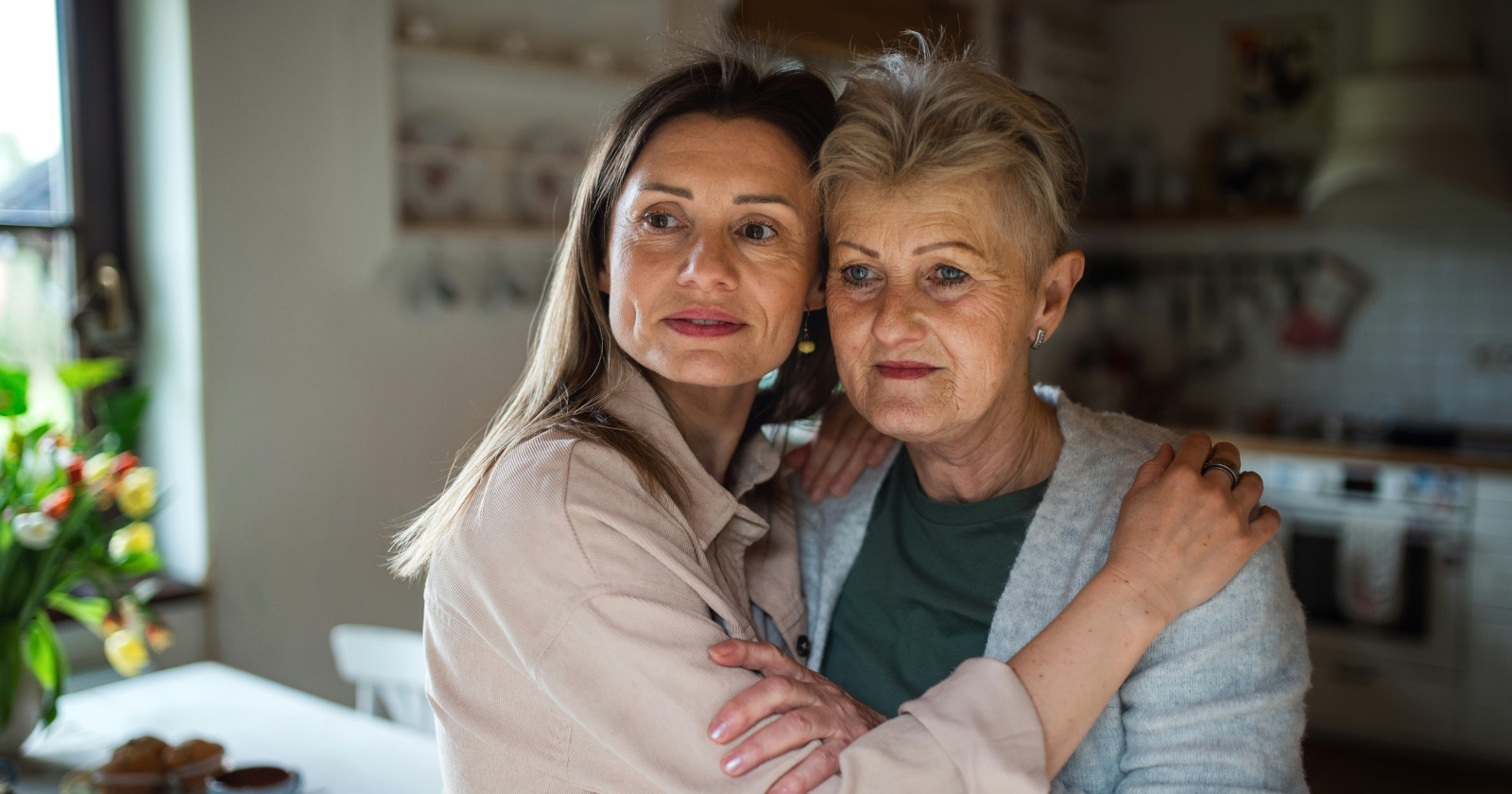

Picture a person driving home to their parents’ house after a hard month. They haven’t decided exactly what they’re going to say. They might not say much at all. What they know, the thing that has been pulling them along the highway, is something quieter than an invitation: the knowledge that when they walk through that door, they will not have to be okay.
They will not have to perform a version of themselves that has everything together. They will not have to start the visit with an explanation or a reassurance. They can just arrive, and the house will hold them, and so will the people in it.
When people explain why they stay close to their parents as adults, they almost never start with the obvious things. Not the holidays. Not the history. What they describe, given a little time to think about it, is usually something like this: a place where they do not have to translate themselves.
The Artful Parent
Family-life ideas and sharp reads, in your inbox.
The assumption we start with
Most people assume that adult children stay close to their parents because of shared experiences. The big occasions. Weddings, graduations, holidays, the moments that carry weight and get photographed. These create a record of a relationship, a shared timeline that connects people across years.
But if you ask people who are genuinely close to their parents, the ones who call not because they feel obligated but because they actually want to, they tend not to describe those occasions first. They describe something that has no occasion attached to it. A quality of the relationship that exists not in the events but in between them.
What they describe is the feeling of being able to arrive as themselves. Not as the successful version, or the composed version, or the version that has a plan. Just as whoever they happen to be that day, in that year, in that chapter of their life. And finding, when they do, that this is sufficient.
What “arriving as yourself” actually requires
The phrase sounds simple. It is not simple to create.
What it requires, in practice, is a parent who consistently meets their child without a hidden audit running in the background. Without a low-level assessment of whether the child is achieving enough, making good enough choices, presenting well enough, or living up to the shape the parent originally had in mind for them.
Kaytee Gillis, a psychotherapist who has written about the long-term effects of conditional parental love, notes that parents who love their children unconditionally teach them that the world is safe. The inverse is also true: when love feels conditional, children learn that they must manage how they are perceived in order to remain safe. They learn to translate themselves before walking through the door.
The adult children who stay close, the ones who come back by choice rather than duty, are usually the ones who never had to learn that translation. Or who, over time, unlearned it. Whose parents had a way of communicating, without always saying it directly, that the child’s actual self was the welcome version. Not the polished self. Not the performing self. The real one.
What it looks like in practice
It does not look like parents who agree with everything their children do. That is not what this is about. Many of the people who describe this quality of relationship have parents who have expressed disagreement, concern, different values, different opinions about choices. The closeness is not built on the absence of friction. It’s built on something that runs underneath the friction.
It looks like a parent who asks how you are and actually waits for the answer. Who does not pivot immediately to a solution or a correction. Who can sit with difficulty alongside you instead of immediately trying to resolve it in a way that makes everyone more comfortable.
It looks like a home where a bad year can be named. Where walking in under-resourced, overwhelmed, or mid-collapse is not treated as something to quickly smooth over, but as a version of you that is welcome.
A woman I spoke with said something I kept coming back to afterward. “My mother does not always understand what I’m going through,” she told me. “But I never feel like I need to explain why I’m sad before she’ll care that I’m sad.” That distinction, she said, was the whole thing. Not comprehension. Presence. The willingness to care first and understand later.
The thing parents sometimes don’t realize they are building
Many parents who have this quality with their adult children did not set out to cultivate it. They were not following a framework or running a deliberate strategy. They were simply, year after year, communicating through small gestures that the child’s company was genuinely wanted. Not the achievement record. Not the external life. The person.
The cumulative effect of that message is not something a child can consciously track, but it is something the adult carries into every room they walk into. And it’s something they tend to feel most clearly when they go home.
The drive back that day, or the flight, or the weekend trip across a city. The reason people make it. The reason they keep making it, year after year, through seasons of their lives that get more complicated and more full of competing obligations. What they are traveling toward is not a set of holiday traditions or a family obligation they have decided to honor. They are traveling toward a place where the version of them that exists that day, in that form, is enough.
What it builds over time
The adult children who stay close are not all alike. Some of them have parents who are warm and expressive. Some have parents who are quieter, more reserved, whose way of communicating care is through consistency rather than words. The quality of relationship is not about emotional style. It’s about something underneath style.
What it builds, over decades, is a particular kind of confidence. Not the kind that comes from external success or from having been praised into believing you are talented. Something more foundational than that. The knowledge, carried in the body rather than the mind, that you existed somewhere in the world as entirely acceptable. That there was a place you could go where you did not have to earn your welcome.
That is not a small thing. For many adults, it is the most valuable inheritance they have. More durable than money, more private than memory. The sense that somewhere in the world, the most ordinary version of them was, and is, exactly enough.
That is what they are driving toward. That is what keeps them close. Not the occasions. The arrival.