
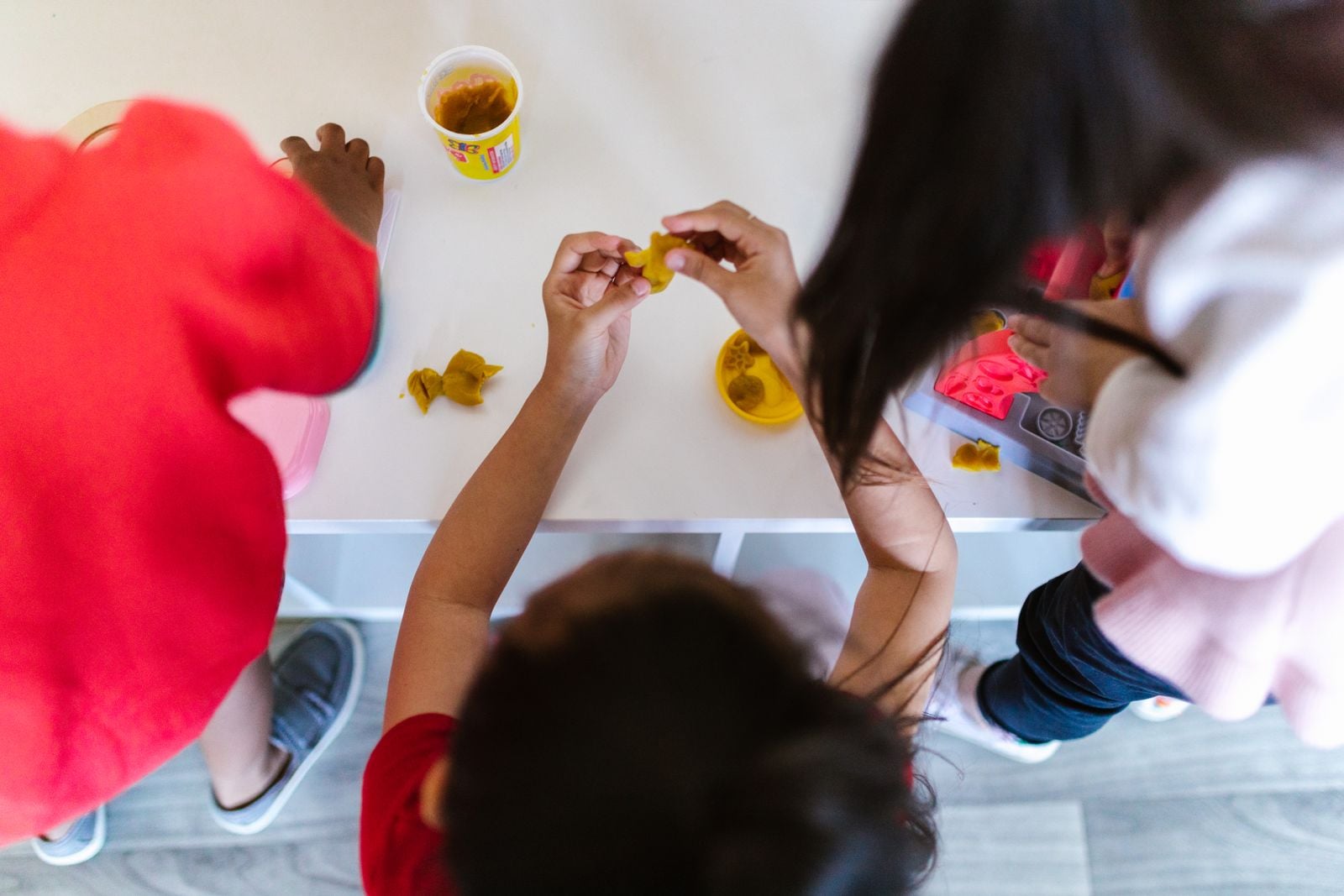
The soft, salty, almond-scented dough that has passed through nearly every preschool in America began its life on the walls of coal-heated homes. In the 1930s, Kutol Products of Cincinnati manufactured a pliable, off-white compound designed to be rolled across soot-stained wallpaper the way you might roll out pie crust. It picked up the grime. It kept the company alive through the Depression. And by the mid-1950s, with families switching from coal furnaces to oil and gas, it was about to bankrupt them — until a nursery school teacher named Kay Zufall bought a can at a hardware store to make Christmas ornaments with her class.
The rebrand happened in 1956. The name Play-Doh followed. And the base recipe is still what it was then: flour, water, and salt.
A wallpaper cleaner that saved a soap company
Kutol Products opened in Cincinnati, selling powdered hand cleaners. By 1927 the company was failing, and a salesman named Cleo McVicker was reportedly hired to shut it down. Instead, he bought it. Then he did something bolder — he pitched Kroger, the grocery chain, on manufacturing a ready-made wallpaper cleaner for their stores, signing a $5,000 performance contract to ship 15,000 cases by a specific date.
The Artful Parent
Family-life ideas and sharp reads, in your inbox.
There was one problem. McVicker had no idea how to make wallpaper cleaner.
His brother Noah, brought on as plant manager, worked out a formula: a non-toxic, malleable, dough-like compound of flour, water, and salt, with a bit of boric acid and mineral oil to keep it pliable and stop it from spoiling. Coal-heated homes across the Midwest had a soot problem. Regular soap smeared it. This stuff lifted it. Homemakers would tear off a hunk, roll it in long strokes down the wall, and watch the dough turn gray while the wallpaper turned clean again.
For roughly two decades the formula kept Kutol solvent. Then American home heating changed.
How cleaner furnaces almost killed the product
After World War II, families began converting furnaces from coal to natural gas and oil. Wallpaper stopped getting sooty. The market for a specialty dough that scrubbed soot off floral prints collapsed, and Kutol’s flagship product — Kutol Wall Cleaner, non-crumbly type — began to disappear from hardware store shelves.
Cleo McVicker’s widow, Irma, took over the company. She brought in their son Joseph, still in his early twenties. The company was running out of runway. By 1954, Kutol was quietly phasing out the wallpaper cleaner that had defined it, with no clear plan for what came next.
The teacher who wrote in
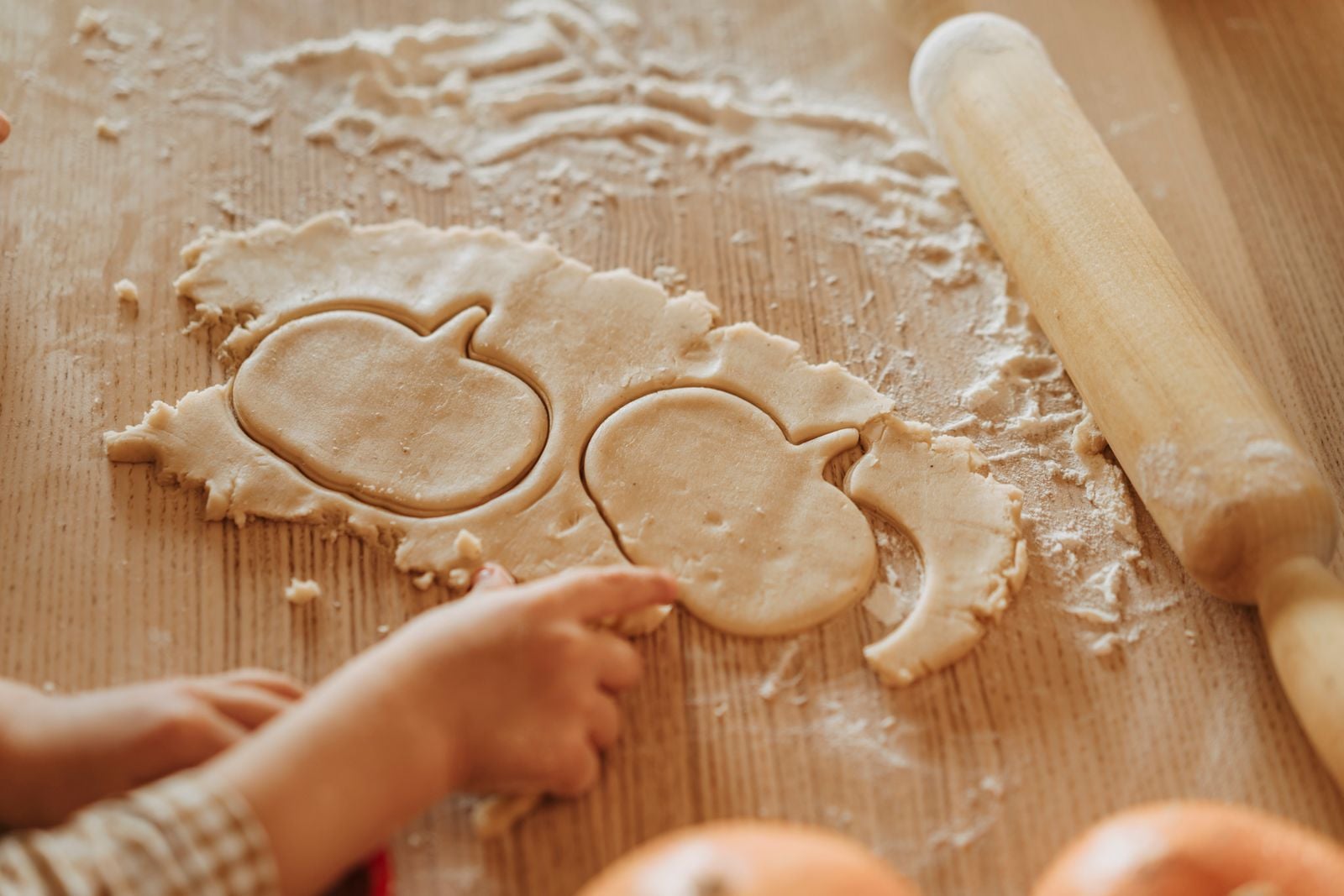
Kay Zufall was a nursery school teacher in New Jersey and Joseph McVicker’s sister-in-law. She had read a magazine article suggesting wallpaper cleaner could be used to make Christmas ornaments — soft enough to roll, firm enough to cut with cookie cutters, dry enough after a low oven bake to hang from a tree.
The cleaner was already hard to find. She tracked down a can at a hardware store and brought it to her class.
What she saw wasn’t ornaments. It was the way three- and four-year-olds handled the stuff. Traditional oil-based modeling clay of the era was stiff, waxy, and cold — too hard for small hands to manipulate. The Kutol compound was warm, soft, and forgiving. Kids pressed it flat. They pinched off pieces. They ate a little (it was salty enough to stop them from eating much).
Zufall called Joseph McVicker. In Tim Walsh’s oral history of the toy, quoted in Susanna McLeod’s account for The Kingston Whig Standard, according to accounts of the story, Zufall described how her students used cookie cutters to make shapes with the dough, which she then dried in her oven at home.
McVicker drove over to see. According to Zufall’s account, McVicker was enthusiastic about the idea when he saw how the children used the product.
She suggested a name. Play-Doh.
The reformulation was small
To go from wall to table, the compound needed only modest changes. The detergent came out. The harsh cleaning smell was replaced with almond scent. Food coloring went in — the patent for the composition specifies roughly 2 ounces of blue and red dye, and 4 ounces of yellow, per 1,000-pound batch. The mixers and conveyors that had been rolling out wallpaper cleaner rolled out the new product without modification.
The base was still flour. Still water. Still salt.
Joseph McVicker’s brother-in-law Bill Rhodenbaugh later described the margin math with the flatness of someone who had watched it happen: as recounted in Walsh’s book, they had been selling wallpaper cleaner for 34 cents a can, and were now selling Play-Doh — same substance, same can — for $1.50.
Cincinnati schools, then Captain Kangaroo
The company launched Rainbow Crafts as a subsidiary in 1956 and, uncertain that toy retailers would take it seriously, aimed first at the Cincinnati school board. The dough went out in nearly four-liter cans, lids color-coded red, blue, or yellow. It reached every elementary school in the city.
A trade convention brought the first retail order. Macy’s and Marshall Field’s followed. By 1957 Play-Doh was available in the three primary colors as consumer three-packs, wrapped with a pointy-eared pixie mascot that later evolved into Play-Doh Pete.
The real inflection came from television. Without a marketing budget, McVicker offered Bob Keeshan — Captain Kangaroo — a share of sales if he would feature the dough on his show. Keeshan featured it three times a week for years. Ding Dong School and Romper Room followed. Backorders stretched past a year.
Rainbow Crafts was soon shipping more than a million cans a year. General Mills bought the company. The brand later landed with Hasbro, where it lives now. According to toy historian Tim Walsh, speaking to Marketplace in December 2025, an estimated 95 million cans of Play-Doh are sold each year.
What’s actually in a can
The U.S. patent described the compound as a soft, pliable, non-toxic substance that could be molded into various shapes. A later Hasbro patent lists a surfactant, a starch-based binder, a preservative, and a retrogradation inhibitor — the last of these being what stops the starch from recrystallizing and going stiff on the shelf.
Underneath the chemistry, though, Hasbro still confirms the base is mostly flour, water, and salt. The salt is doing several jobs at once: it lowers water activity so bacteria and mold can’t easily grow, and it gives the dough that unmistakable savory smell that anyone who has been in a preschool classroom can conjure instantly. Hasbro has trademarked Play-Doh’s distinctive scent, which includes vanilla-like and wheat-based dough notes in its official description.
Why the recipe survived homemade versions for seventy years
Any parent who has spent ten minutes with a mixing bowl knows the same three-ingredient base works at the kitchen counter. Flour gives the structure. Salt preserves it and gives it that grippy, slightly resistant texture small fingers can push against. Water, added slowly, brings the whole thing together. Cream of tartar, added to most cooked stovetop versions, is the stabilizer — the pantry equivalent of the retrogradation inhibitor Hasbro lists on its patent.
The reason toddlers love it — and reach for it before crayons, before markers, before almost anything else on an open art shelf — has to do with the way squeezing, rolling, and pinching a dense material sends strong feedback up through the small joints of the hand and forearm. It calms the nervous system and builds the fine motor strength that later shows up in scissor grip and pencil control. The salt gives the dough just enough resistance to do that work. Pure flour-and-water paste would be too slack.
The variations parents build on top of that base — cinnamon and nutmeg for autumn, cocoa powder for a chocolate scratch-and-sniff, grated apple for our own apple pie playdough — are riffs on the same 1930s wallpaper-cleaner chassis. Which is a strange thing to think about while a four-year-old rolls a green snake across a kitchen table.
The teacher’s name, and what she got for it
Kay Zufall never took a formal role at Kutol or Rainbow Crafts. She didn’t hold the patent — that went to Noah and Joseph McVicker. She named the product. She proved the market. And then she went back to her nursery school class.
The company sent her some cans.
The trajectory Zufall set in motion is easy to trace on a shelf at any American drugstore: three primary colors in 1957, expansion to eight colors by the 1980s, glitter and glow-in-the-dark and scented editions after that. More than two billion cans have been sold since 1955, which is more cans than there are children who have ever been alive during the years of its production.
The Kutol wallpaper cleaner formula is not, in the technical sense, still the recipe on the factory line — the surfactants and preservatives and retrogradation inhibitors have all been tuned. But if you handed a can of the 1954 wall dough to a modern toddler, and a can of 2026 Play-Doh, and asked the toddler which one was the toy, the honest answer is: they would happily flatten both.
Somewhere in Cincinnati, in the winter of 1955, a nursery school teacher pressed cookie cutters into what had been sold as soap. Seventy years later, the smell of it — that salted, wheat-based, faintly almond scent — is one of the few things a Gen X parent, a millennial parent, and a Gen Alpha kid can all identify with their eyes closed.