
Freezer paper is a strange piece of kitchen history hiding in plain sight. One side is unremarkable matte paper. The other side carries a thin, glossy coating of polyethylene, the same family of plastic used in bread bags, milk jugs, and the sheets butchers still tear from big rolls to wrap a rib roast. Slide a maple leaf between two sheets of that paper, coated sides facing the leaf, run a warm iron across the top, and something quietly remarkable happens: the polyethylene softens, flows around the veins and edges of the leaf, and cools into a clear sandwich that holds autumn in place on the kitchen bench.
The trick is not craft-store magic. It is a small, exact piece of polymer chemistry, the kind of thing that has been sitting in a drawer next to the parchment for decades.
What freezer paper actually is
Freezer paper started as a butcher’s tool. The paper side breathes and takes a pencil line for labelling. The shiny side is a thin film of low-density polyethylene, laminated onto the paper so meat and fish can be wrapped tightly without the paper going soggy in the freezer. The plastic is a moisture barrier. The paper is the handle.
The Artful Parent
Family-life ideas and sharp reads, in your inbox.
Polyethylene is one of the most common plastics on Earth. It shows up in sandwich bags, cling film, squeeze bottles, and the coatings on paper cups. It is cheap, it is chemically dull, and it has one property that matters enormously here: it does not go from solid to liquid at a single sharp temperature. It softens gradually across a range, holding its shape long after it has become tacky enough to stick to things.
That gradual softening is the entire basis of the craft. When a warm iron passes over freezer paper, the coating does not vaporise or bubble away. It gets sticky. Sticky enough to grip a leaf.
Why the leaf stays
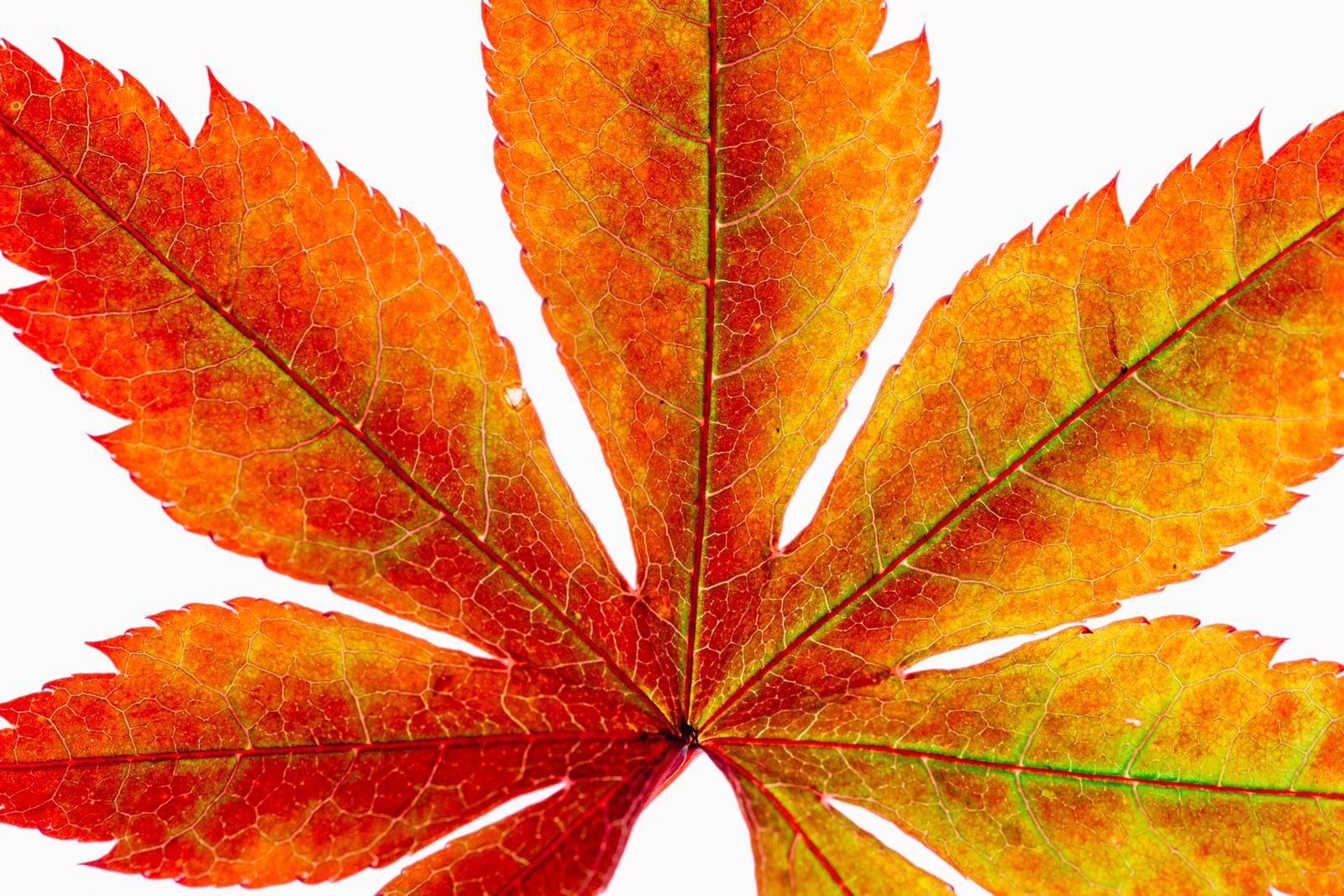
A leaf is not flat. Under a hand lens, the surface is ridged with veins, dusted with a waxy cuticle, and pocked with microscopic breathing pores called stomata. When two sheets of freezer paper are ironed with the leaf inside, the softened polyethylene on both sides flows into that texture and locks onto the leaf’s own natural wax layer. The plastic and the wax are chemically friendly, both being long, non-polar hydrocarbon chains, so they hold on to each other the way two pieces of tape do when pressed together.
Once the iron lifts and the sheet cools, the polyethylene stiffens again in seconds. The leaf is now suspended in a laminate: paper, plastic, leaf, plastic, paper. Trim the edges close and the result is a translucent panel. Trim wider and it becomes a paper-framed specimen.
The pigment inside the leaf, the carotenoids and anthocyanins that turned it orange or red in the first place, is now largely sealed away from air. That is what slows the fade. Not forever, but for a season or two on a windowsill, which is considerably longer than a leaf on a coffee table has any right to last.
The butcher-paper lineage
The coating was engineered for meat, not for children. Polyethylene film of this kind is made to sit in direct contact with food at freezer temperatures for months, holding moisture in and ice-crystal damage out. Much of a home kitchen’s supply chain quietly runs on this one polymer family: the wraps, the bags, the coatings that keep bread from going stale and cheese from drying out.
Butchers historically favoured the paper-plus-plastic combination because pure plastic sweats and pure paper leaks. The laminate did both jobs at once. When home cooks started buying rolls of it for the freezer, the same rolls migrated onto craft tables. Quilters found that freezer paper could be ironed temporarily onto fabric to make a cutting stencil that peels off clean. Printmakers used it as a resist. And somewhere along the way, parents worked out that it would catch a leaf.
The temperature window that matters
Here is where most explanations of this craft go slightly wrong, usually by making the heat sound gentler than it is.
A household iron’s lowest settings, the ones marked synthetic or silk, run in the region of 230°F to 290°F at the plate, and the wool setting sits above that. Polyethylene film does not survive that range untouched. SC Johnson, which makes Ziploc bags from the same polymer family, puts the softening point of its polyethylene bags at 230°F, and says on that basis that they should not be dropped into boiling water.
So an iron on its lowest setting is not sitting safely below the softening point. It is sitting right at it, or just above. That is precisely why the technique works. The film is not being kept intact; it is being deliberately taken to the temperature where it gives up its shape and flows. It does not need to liquefy or boil. It only needs a few seconds of going tacky.
The paper side does real work in this arrangement. It spreads the heat and keeps the metal plate off the coating, which is why the softened film flows into the leaf rather than smearing onto the iron.
Push past the low settings, towards cotton or linen, and the polymer can begin to smoke faintly and the paper can scorch. This is why leaf-pressing instructions converge on the same short list: the lowest workable heat, a few seconds of pressure, no steam, and a room with some air moving through it. Steam introduces water into a system whose whole purpose is to be a moisture barrier, and the seal turns cloudy.
What is happening to the leaf inside
A freshly fallen leaf is still mostly water. Ironing it between freezer paper does two things at once. The heat drives off a portion of that water as vapour through the paper side, which is porous, and the polyethylene simultaneously seals the leaf against further moisture exchange. The result is a leaf drier than it was when it went in, and enclosed with far less air contact than an open leaf on a table.
Air is what browns a leaf. Enzymes in the leaf tissue react with oxygen and gradually turn the yellows and reds towards a uniform brown, much the way a sliced apple browns on a plate. Cutting down the oxygen supply slows that reaction considerably. It does not stop it. A leaf sealed in freezer paper in October will still be recognisably red at Christmas, and still recognisably a leaf a year later, though duller.
It is roughly the same logic behind why jam keeps and bread does not. Reduce the available water, shut out the air, and biological decay slows to a crawl.
What the coating is rated for, and what it isn’t
Parents sometimes hesitate at the words plastic and iron in the same sentence, and the honest answer here is more specific than a blanket reassurance.
On the material itself, polyethylene is among the plastics generally regarded as the least concerning in food contact. America’s Test Kitchen, reviewing the research on cooking in plastic, reported that high-density polyethylene, low-density polyethylene, and polypropylene are considered the safest plastics.
What that does not establish is that freezer paper is certified for heating. Its rated job is the freezer. Manufacturers of comparable polyethylene film are explicit that sustained heat falls outside label use, which is exactly why the softening point gets published as a limit rather than a feature. Ironing a leaf is a craft application of a material approved for cold storage. It is a brief, low-temperature, non-food use, and it is a long way from anything the coating was tested against, in both directions.
In practice that argues for ordinary precautions rather than either alarm or false comfort. An adult handles the iron. The room has air moving through it. The heat stays at the lowest setting that does the job. The pressing lasts seconds rather than minutes. And the finished laminate goes on a window, not near food.
The material teaches something on the way through
Children who do this once tend to notice things adults miss. That the leaf’s veins print sharper than its edges. That the coating goes briefly clear where the iron passes, then whitens as it cools. That two leaves ironed together will stick to each other through their own waxes, with no paper at all, if the heat is right. The activity is a very small chemistry lesson wearing a craft costume.
It fits a wider pattern in process art, where the interesting learning sits in how the material behaves rather than in what the finished thing looks like. Similar mechanics show up in the way chalk pastels crush and blend under a fingertip, a soft material whose behaviour is legible to a five-year-old the moment they touch it. Freezer paper is legible the same way. The plastic gets warm. The plastic goes sticky. The plastic cools. The leaf is caught.
A note on what actually goes wrong
The two failure modes are almost always temperature and moisture. Too hot, and the paper scorches brown along the iron’s path, with a smell like a burnt paper bag, which is precisely what it is. Too damp a leaf, and the sandwich hisses and clouds, leaving a milky patch where trapped water has fogged the coating from the inside.
The standard workaround is to press leaves flat in a heavy book for a day or two before ironing them. A dry leaf laminates cleanly. A wet leaf steams itself.
Thick leaves such as oak and magnolia need a firmer press and want to cool completely under a weight, or the polyethylene relaxes around the raised veins and lets a little air back in. Thin leaves such as maple, birch, and aspen take almost no time and hold their colour longest.
Autumn on a shelf, for a while
A leaf preserved this way is not permanent. Given enough time, light will bleach the red pigments, and the polyethylene film itself will slowly yellow under UV. But a maple leaf collected on a walk in October, ironed into freezer paper before dinner, and taped to a kitchen window will still be recognisably that leaf, from that walk, the following autumn, long after the tree it fell from has grown and dropped a whole new crop.
Which is a fairly extraordinary thing for a roll of paper meant for wrapping meat to do. The butcher’s coating, applied at a mill somewhere to keep freezer burn off a Sunday roast, ends up holding a piece of one specific October in one specific kitchen. Waxy side in, paper side out, iron cooling on the board.