
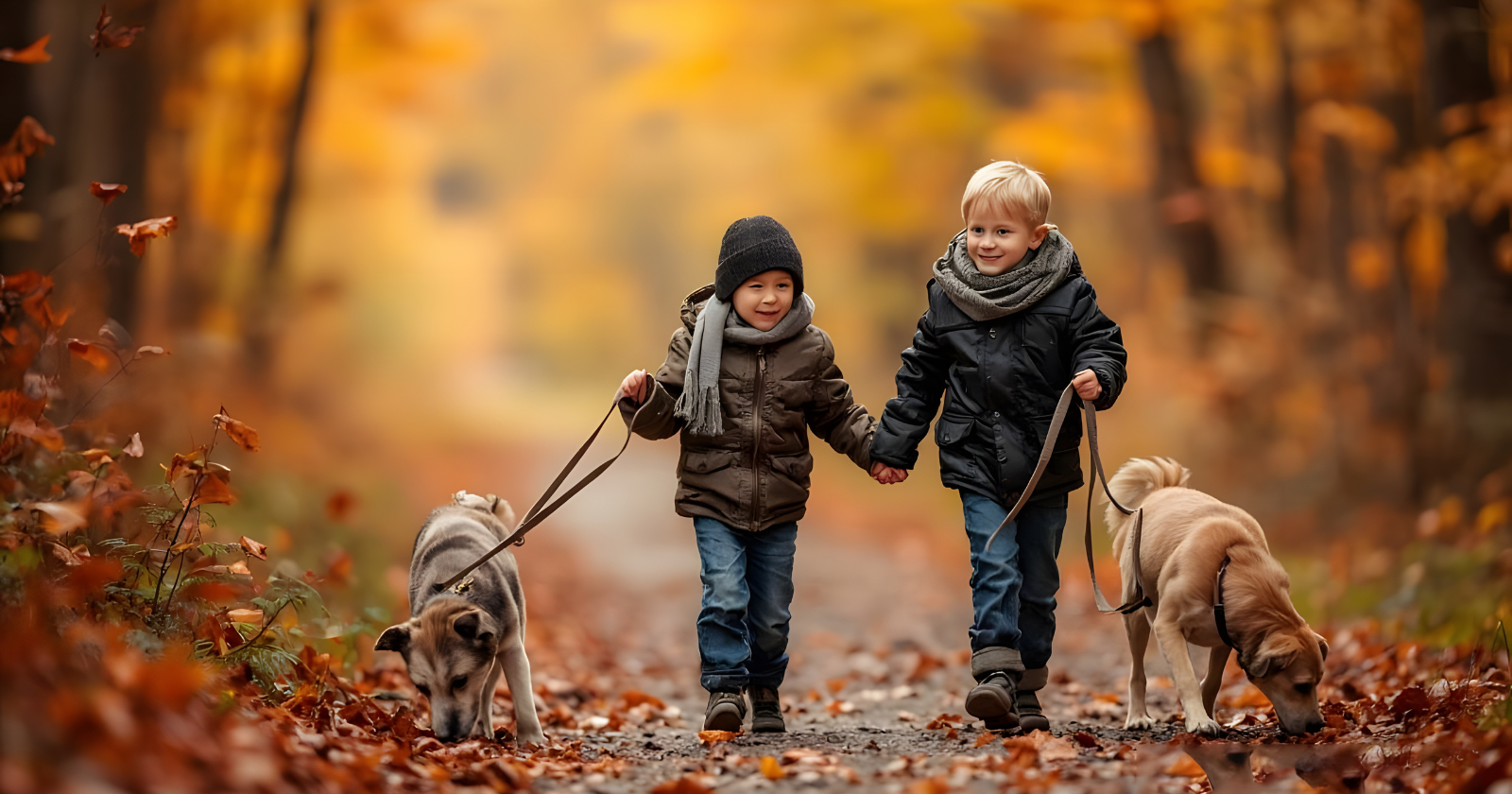
A family dog can become part of everyday childhood: a companion on walks, an eager participant in garden games, and a familiar presence at home. With adult guidance, caring for a dog can also give children opportunities to practice patience and gentle handling.
Choosing one means looking beyond an affectionate reputation. These ten breeds offer starting points for your research, alongside the exercise, grooming, training, and attention a dog will need. The right match depends on the individual dog and the life your family can realistically offer.
Before you picture weekend adventures, consider an ordinary school morning. Who will walk the dog, arrange veterinary care, and provide company while everyone is busy? Children can help in age-appropriate ways, but an adult needs to take responsibility for meeting the dog’s needs.
The Artful Parent
Family-life ideas and sharp reads, in your inbox.
Whatever the breed, young children and dogs need active adult supervision. The American Academy of Pediatrics advises never leaving a small child alone with a dog, even a familiar family pet. When an adult cannot supervise, keep them safely separated. Teach children to pet gently, avoid hugging or putting their face close to a dog’s, and leave dogs undisturbed while eating or sleeping. Every dog needs a quiet place to retreat.
1. Golden retriever
Golden retrievers are often affectionate, sociable companions. A family that enjoys walks and retrieving games may find plenty to enjoy with one. PetMD’s veterinary breed guide describes their family appeal while emphasizing socialization from puppyhood.
The practical commitment includes regular activity, training, and coat care. Goldens shed considerably, and their coats need brushing to prevent tangles. Think about whether an adult has time for both a walk and a grooming session during a busy week. A friendly reputation does not mean a dog will welcome every kind of attention from a child.
2. Labrador retriever
For families who enjoy being outdoors, a Labrador’s enthusiasm can be a real pleasure. Many are sociable and keen to join in, whether the plan is a walk or a game with a toy.
That enthusiasm needs adult guidance. Labs are substantial, active dogs, and children should not be expected to manage a strong dog on a lead by themselves. Plan for exercise, consistent training, and frequent brushing: their short coats still shed heavily. PetMD’s Labrador guide is a useful place to research those needs before deciding.
3. Beagle
A beagle’s curiosity and affectionate nature can make everyday walks interesting. Their smaller size may appeal to families who want an active companion without choosing one of the larger breeds on this list.
Size does not make them an effortless option. Beagles need exercise and opportunities to investigate scents, and they can be vocal. Their noses can also lead them away from home. The National Beagle Club emphasizes secure containment and walking on a lead. Consider your fencing, neighbors, and daily routine before falling for those expressive ears.
4. Poodle (standard or miniature)
Poodles can appeal to families who enjoy teaching a dog new skills. Both standard and miniature poodles need activity, company, and consistent training; choosing a smaller variety does not remove those needs.
Their coats shed little, but require regular brushing and clipping. The American Kennel Club’s care guidance makes clear that grooming is an ongoing commitment, whether you learn the skills yourself or budget for a professional.
Low shedding does not mean allergy-safe. The American Academy of Allergy, Asthma & Immunology explains that no dog breed is truly hypoallergenic. If allergies are a concern, speak with an allergist before bringing a dog home.
5. Cavalier King Charles spaniel
Cavaliers are often affectionate companions who enjoy being near their people. Their appeal may be especially clear to a family looking for a smaller dog to include in both gentle play and quieter time at home.
Health needs deserve as much attention as temperament. Cavaliers are predisposed to conditions including mitral valve heart disease and syringomyelia, a neurological disorder. This veterinary guide explains the concerns. Discuss them with a veterinarian, ask breeders for documented health screening, and review any available medical history when adopting. The breed club’s testing guidelines provide a starting point for those questions; screening does not guarantee a dog will remain healthy.
6. Boxer
A boxer’s playful energy can be appealing in a household with older children and adults who enjoy an active dog. Their enthusiasm can make games and training sessions fun.
It can also be too much for a small child. Boxers often jump and paw during play, and PetMD notes that their boisterous behavior may make them a poor fit for households with young children. Adults need to provide exercise, reward calm greetings, and manage play carefully. Look at the individual dog’s behavior around your family rather than assuming affection will translate into gentle play.
7. Newfoundland
Newfoundlands have a reputation for a friendly, gentle temperament, and their company can be a delight for families prepared for a very large dog. That reputation should never turn into an expectation that a dog can supervise or protect a child.
The practical questions are substantial: can an adult safely handle the dog, transport them to the vet, and manage coat care? Veterinary care guidance highlights early training, regular brushing, heavy shedding, and drool. Price food, equipment, and veterinary care for a giant breed before committing, and consider the space they will occupy as an adult.
8. Collie
The Collie discussed here is the rough or smooth Collie, rather than the Border Collie. These are distinct breeds, so it helps to be precise when researching care and temperament.
Collies can offer companionship to families who enjoy an active, engaged dog. The American Kennel Club’s Collie profile describes their regular exercise needs and the different coat-care demands of rough and smooth varieties.
Think about the time you can offer for walks, training, and brushing. A familiar image from films can spark an interest in a breed, but meeting individual dogs and asking practical questions will tell you much more about a possible match.
9. Irish setter
Irish setters are often playful, affectionate dogs whose athleticism may appeal to an outdoorsy family. For adults who enjoy making exercise part of every day, that energy can be rewarding.
The important word is every day. Occasional weekend outings will not cover an active dog’s ongoing needs. PetMD’s breed guide highlights their considerable exercise requirements, sometimes rambunctious behavior, and frequent brushing to prevent matting. Consider who will provide activity on a wet afternoon or during a busy school week, as well as how you will manage an exuberant dog around smaller children.
10. Shih tzu
A shih tzu may appeal to a family looking for a small, sociable companion for walks and play at home. Their size makes careful handling especially important: children need help learning to interact without grabbing, squeezing, or picking up the dog.
Small does not mean low maintenance. Their coats need regular brushing and trimming, and their short muzzles can make overheating a concern. PetMD’s veterinary guide covers grooming, exercise, and health considerations. Include those needs in your plans, and let the individual dog’s comfort guide how much contact they have with children.
Before you choose your family’s dog
Start with a conversation among the adults who will provide the care. Agree on who will handle walks, feeding, training, and veterinary appointments, and what you can budget for routine and unexpected costs. Make a plan for workdays and holidays, too.
Ask a rescue or responsible breeder about the individual dog’s health, behavior, and experience around children. Be specific about your children’s ages and any other pets. An adult dog with a documented history may be worth considering, and mixed-breed dogs belong in the search as well. No breed label guarantees a particular temperament or a safe match.
Children can help choose a walking route, learn a simple training cue alongside an adult, or practice giving the dog space to rest. These small, repeated acts of care give the relationship room to grow. The goal is a home where both the children and the dog have their needs understood and met.