

By the time children reach 12, many parents start thinking about what their kids can actually do on their own. Can they make a simple meal? Get themselves ready for school? Swim to safety, or cross a busy road? Some of these skills come with time. Others, the research suggests, come mainly with practice.
One study from Australia puts a spotlight on the kitchen. Researchers at La Trobe University in Melbourne asked the parents and guardians of 207 children aged 5 to 13 about the chores their children did and about their thinking skills. Children who regularly made meals for themselves, or helped prepare food for the family, were rated by their parents as having better working memory and self-control.
This is one study, not settled consensus, and it shows a link rather than proof that cooking builds these skills. But it adds to a useful picture of what everyday jobs can offer children on the way to adolescence.
The Artful Parent
Family-life ideas and sharp reads, in your inbox.
What the chores study measured
The study, led by Deanna Tepper with two La Trobe colleagues, was published in 2022 in the Australian Occupational Therapy Journal. About three quarters of the families lived in Australia, with the rest from other parts of Oceania, Europe, Asia and North America. Parents completed questionnaires in mid-2020 about which chores their children did and about their children’s executive functions, the mental skills that help people plan, hold instructions in mind, switch between tasks and stop themselves acting on impulse.
The chores parents were asked about included helping prepare meals, sorting laundry, unloading the dishwasher and organizing school belongings. The researchers grouped them into self-care chores, such as making a meal for oneself, family-care chores, such as making a meal for someone else, and pet care.
After accounting for children’s age, gender and whether they had a disability, children who did more self-care and family-care chores were rated as having better working memory and inhibition, the ability to think before acting. Pet care was not linked to these skills.
In the university’s announcement, Tepper suggested that most chores ask children to plan, keep their attention on a task and switch between steps, which may be why they line up with these thinking skills. She said parents may be able to use chores suited to a child’s age and ability to support this kind of development.
Why the kitchen may be a good place to start
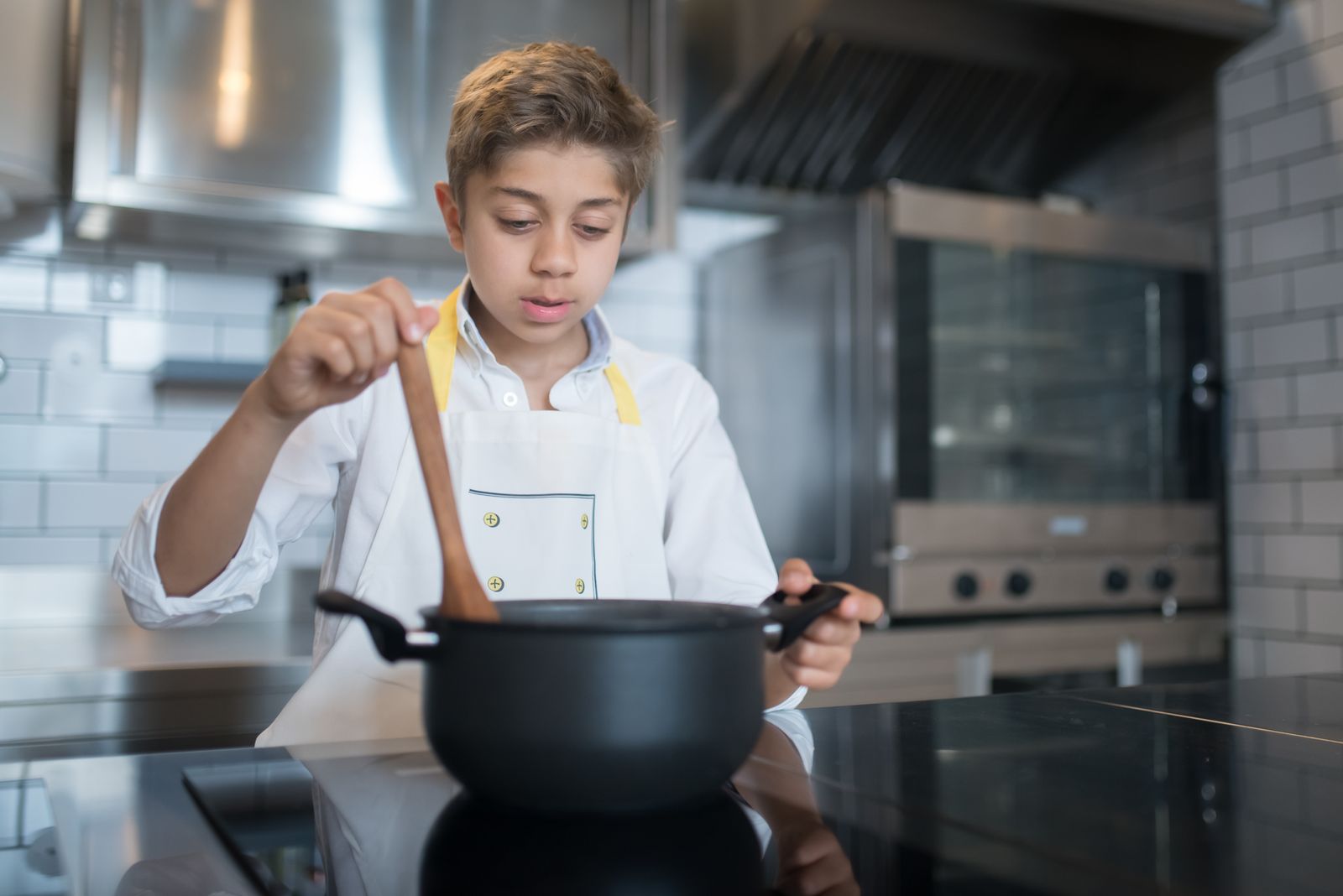
Making a meal is a small project. A child has to remember what comes next, wait for the water to boil instead of rushing ahead, keep track of more than one thing at a time and adjust when something goes wrong. That overlap with planning and self-control is part of what interested the researchers.
It is also a skill with an obvious payoff. A 12-year-old who can make a sandwich, scramble an egg or heat up leftovers safely has a bit more independence, and a family has a bit more help. Earlier research cited by the La Trobe team linked age-appropriate chores with a stronger sense of autonomy, more helpful behavior and greater life satisfaction in children.
None of this needs to be elaborate. Washing vegetables, measuring ingredients and setting the table count. So does letting children get it a bit wrong, then try again.
What the study cannot tell us
The results need careful handling. The study was a one-time snapshot, so it cannot show which came first. Children who already have stronger planning and self-control may simply be given more chores, or be more willing to do them.
A review by the British Psychological Society’s Research Digest pointed out other limits. The team collected information on families’ income and background but did not adjust for it, and parents’ ratings of their children’s thinking skills are only loosely matched to objective tests of the same abilities. The researchers themselves say future studies need to test whether chores actually cause the improvement.
So the fair reading is that cooking and family chores sit alongside better-rated thinking skills in this group of children. It would be a stretch to call kitchen jobs a brain-training program.
Two other skills that take longer than many expect
Cooking is not the only skill parents often assume children have by 12. Research on two others suggests it is worth checking rather than assuming.
One is swimming. Royal Life Saving Society Australia’s national benchmark says that by 12, children should be able to swim 50 meters without stopping, tread water for two minutes and perform basic survival and rescue skills. Yet in a 2025 Royal Life Saving report, teachers estimated that 48 percent of children in Year 6, the last year of primary school, could not swim 50 meters and tread water for two minutes. The organization has also found that three quarters of children stop swimming lessons before age 9.
The other is crossing the road. In a 2017 University of Iowa study, children aged 6 to 14 crossed a single lane of virtual traffic moving at 25 miles per hour in a realistic simulator. Even 6-year-olds walked as fast as adults. But 12-year-olds were still struck 2 percent of the time, mainly because they were less precise at timing their step off the curb, and only the 14-year-olds made it across without a collision. The 12-year-olds made up for some of this by waiting for bigger gaps, which is exactly the habit the researchers suggest parents encourage.
That study used a simulator and one kind of road, so it doesn’t predict how any particular child will manage. It does suggest that road judgment is still developing at 12.
Practice, not just age
What links these findings is that age alone doesn’t deliver the skill. Royal Life Saving links the swimming gap to children leaving lessons early. Children who never cook don’t get the practice. And road sense keeps maturing into the early teens, with patience doing a lot of the work in the meantime.
For parents, that turns a list of “should be able to” into something more hopeful: a set of everyday chances to practice. A child who helps cook dinner this week, swims a few extra laps this summer and waits for the bigger gap at the crossing is building the same independence, one ordinary task at a time.
Representative image. Photo: Kampus Production / Pexels.