
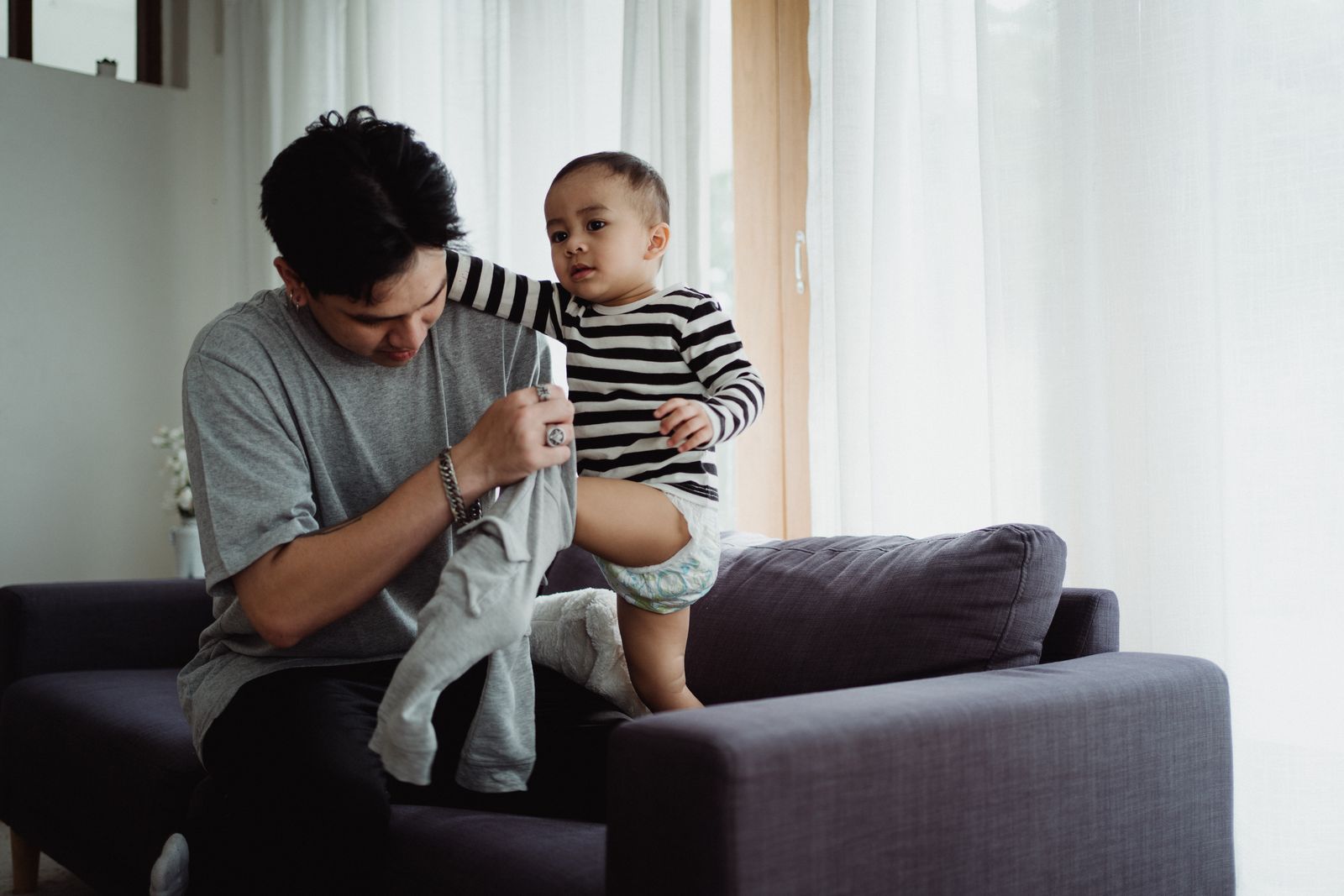

Most dads today want to be hands-on. They change diapers, do the bedtime routine and take the kids to appointments. Yet many fathers will tell you about small moments that leave them feeling like the backup parent: a sigh when they dress the baby “wrong”, a nurse who only speaks to mom, a quiet takeover when they are halfway through a task.
Those moments can seem trivial. But research suggests they may shape how involved fathers stay, and that the opposite, a little encouragement, can make a real difference.
A study of 97 new families
In 2008, Sarah Schoppe-Sullivan, then an assistant professor of human development and family science at Ohio State University, and her colleagues published a study in the Journal of Family Psychology looking at how mothers’ everyday behavior relates to fathers’ involvement with their babies.
The Artful Parent
Family-life ideas and sharp reads, in your inbox.
The team followed 97 married or cohabiting couples in the Midwest who were expecting a child. Before the birth, each couple filled out a survey about their beliefs on fathers’ roles in caring for children. About three and a half months after the baby arrived, researchers visited each home.
Couples answered questions about how often the mother responded to the father’s parenting with encouragement, such as telling him how happy he made the baby, or with criticism, such as looking exasperated or rolling her eyes. The researchers also videotaped each couple changing their baby’s clothes together, watching who did most of the work and how the father interacted with the baby.
Fathers were more involved in day-to-day care when their partners actively encouraged them. That link held even after the researchers accounted for both parents’ views on how involved dads should be, how well the couple worked together as parents, and how much mothers worked outside the home.
Criticism mattered too. Fathers who believed dads should be very involved generally were, but not when their partners were highly critical. Under heavy criticism, fathers’ beliefs about their role did not translate into what they actually did. As Schoppe-Sullivan put it, mothers can open the gate to fathers’ involvement by encouraging them, or close it by being critical. Researchers call this pattern maternal gatekeeping.
Not about blame
It is important to read these findings carefully. Schoppe-Sullivan noted that the study could not prove which came first. Encouragement may lead to more involvement, but it is also likely that more involved dads draw more encouragement. She suggested the effect probably runs both ways, though mothers may have the larger influence because they are still widely seen as the primary caregivers.
Gatekeeping is also often understandable. New mothers usually carry much of the early responsibility and may have strong views on how things should be done. Later research by Schoppe-Sullivan’s group found that mothers who were more anxious tended to show less encouragement and more control, possibly out of a wish to protect their close bond with the baby. Fathers’ own anxiety and tendency to keep their distance also played a part in how much encouragement they perceived.
The point is not to blame either parent. It is that small, everyday reactions between partners can quietly shape who does the caregiving.
Feeling sidelined beyond the home
Dads describe similar experiences outside the family. In a 2024 international study published in the journal Midwifery, researchers collected written responses from 889 expectant and new fathers in 28 countries about attending pregnancy and baby health appointments. Most wanted to attend and take part. Yet many described feeling restricted, excluded or invisible, and the study’s title quoted one father who said he always felt like he wasn’t supposed to be there.
A 2025 study from Federation University in Australia, led by nursing researcher Esther Adama, found that fathers and other non-birthing partners caring for premature babies often felt invisible, stressed and unsupported. Health professionals, Adama said, feel responsible for mother and baby but often forget to check in on how partners are coping.
Why it matters for children
These small moments matter because fathers’ involvement matters. A 2008 review in Acta Paediatrica, which looked at long-term studies of father involvement, found that active engagement by fathers was generally linked with better social, behavioral and psychological outcomes for children. Schoppe-Sullivan’s research also found that couples’ coparenting relationship was most closely tied to fathers’ involvement and competence when mothers were highly encouraging.
In other words, the same habits that help dads feel like full partners may also support children’s development and make parenting feel more like a team effort.
Small changes that help
For couples, the research points to simple shifts:
- Notice and say it. A quick “She loves it when you do that” or “Thanks for handling bath time” can go a long way.
- Resist the takeover. If Dad is doing a task differently but safely, let him finish. Different is not the same as wrong.
- Talk about it. If one parent feels sidelined or the other feels they are carrying everything, say so calmly, away from the moment.
- Include Dad by default. Share appointment details, invite him to ask questions and make sure care providers know he is a full parent too.
For dads, it helps to step in early and often, ask questions at appointments and speak up if you feel overlooked. For health workers, simply greeting the father, asking how he is doing and directing information to both parents can change how included he feels.
None of these steps is complicated. But as the research suggests, it is often the little things, a word of thanks or a quiet eye-roll, that shape whether a dad feels like a true partner in raising his child.
Representative image. Photo: Ketut Subiyanto / Pexels.