
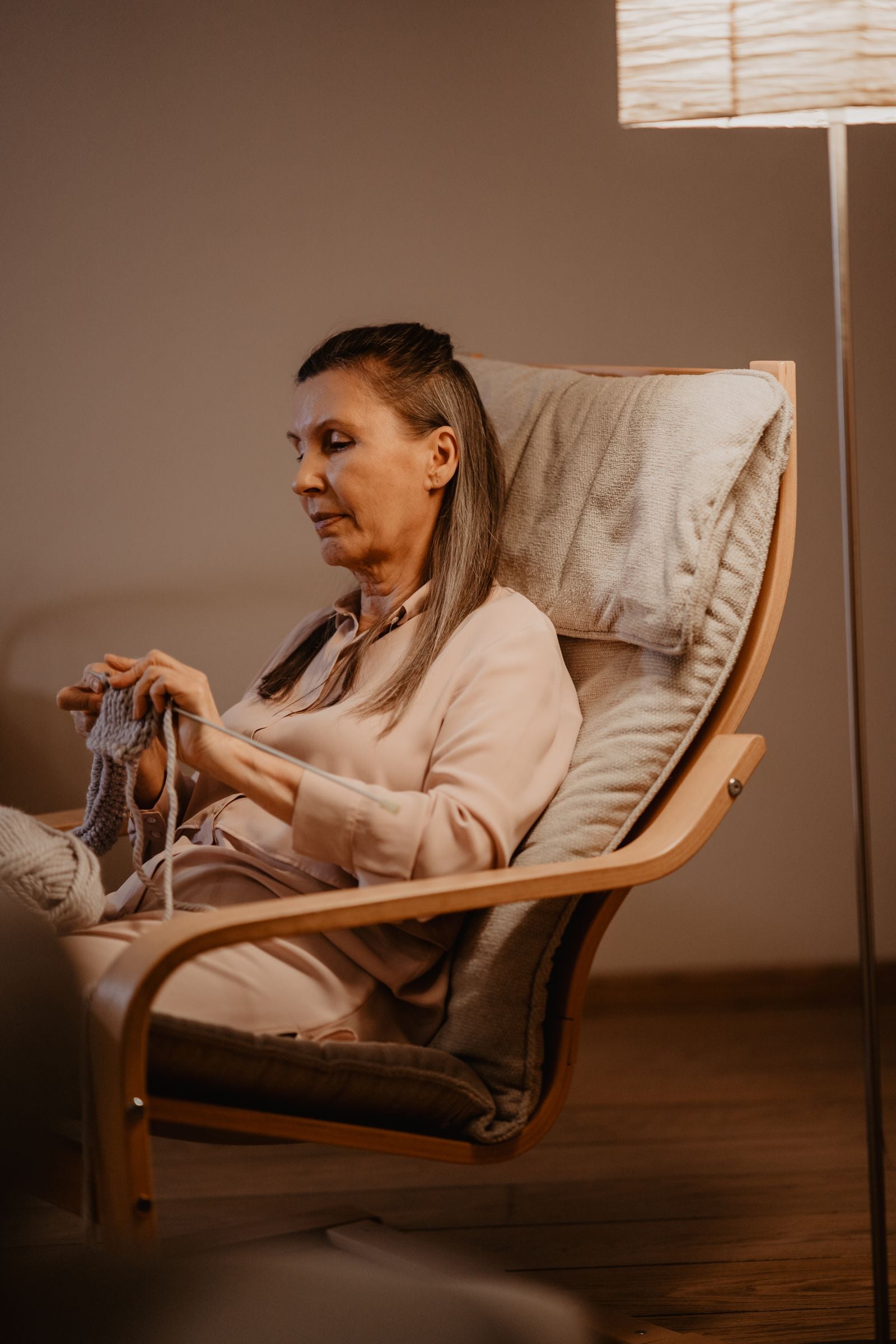
Between packed lunches, school pickups, and whatever craft project is currently drying on the kitchen table, a parent’s own creative hobby is often the first thing to disappear from the week. A 2024 study out of Anglia Ruskin University gives a concrete reason to protect it anyway. Researchers Helen Keyes and colleagues analyzed data from England’s national Taking Part survey, a large government-run study of cultural participation, looking specifically at whether creating art or crafts predicted people’s sense of wellbeing.
The study, published in Frontiers in Public Health, drew on responses from 7,182 adults in England. About 37 percent had done some kind of creative activity, drawing, sewing, painting, or a similar craft, in the past year. Those who had reported meaningfully higher happiness, higher life satisfaction, and a stronger sense that their life is worthwhile than those who had not. The size of that last effect, the boost to feeling that life is worthwhile, was comparable to the boost usually associated with simply being employed.
This is one large survey study, not a controlled experiment that can prove creative activity itself caused the difference; people who already feel more settled in their lives may simply be more likely to pick up a hobby in the first place, and the researchers cannot fully rule that direction out from this kind of data. But a sample of more than seven thousand adults, drawn from an official national survey rather than a small self-selected group, makes this a meaningfully large and carefully collected piece of evidence rather than an anecdote.
The Artful Parent
Family-life ideas and sharp reads, in your inbox.
The honest limit of what the data actually found
It would be easy to round this finding up into “crafting cures anxiety,” and that is specifically not what the study found. The researchers looked directly at anxiety and loneliness as separate outcomes, and creative activity was not significantly associated with lower levels of either one. The clear benefit showed up for happiness, life satisfaction, and a sense of purpose. It did not show up, in this dataset, as a reliable fix for anxious feelings or for feeling disconnected from other people.
That distinction matters for how a parent might think about carving out time for a hobby. The research supports treating a creative hobby as something that can genuinely add to a sense that life feels worthwhile and satisfying. It does not support treating it as a replacement for addressing anxiety or loneliness directly, which may need a different kind of attention entirely.
Why this matters beyond the parent doing the hobby
There is also a reason this connects to more than just one adult’s own wellbeing. Children absorb a great deal from watching how the adults around them relate to their own time, including whether creative activity is treated as indulgent and expendable or as something worth protecting. A parent who occasionally sits down with their own sketchbook, knitting, or half-finished woodworking project is modeling something that no amount of encouraging a child’s own art time can substitute for: that making things is a genuine, adult-sized source of satisfaction, not just an activity handed to kids to keep them occupied.
This does not mean a parent needs to manufacture time for an elaborate hobby they do not actually enjoy, or feel guilty on the days when there genuinely is none to spare. The research points to something more modest and more sustainable: creative activity that a person already finds satisfying appears to be linked to real, measurable gains in day-to-day life satisfaction, gains large enough to be comparable to the wellbeing boost that having a job typically provides.
What this looks like in an ordinary week
None of this requires a parent to find several free hours a week, which for most families with young children simply does not exist. The study measured whether people had engaged in a creative activity at all over the course of a year, not how many hours per week they logged, which leaves real room for something modest: fifteen minutes with a sketchbook after the kids are in bed, a half-finished cross-stitch picked back up during a quiet Saturday morning, a small woodworking project worked on in ten-minute increments over several weekends. The research does not tell us that more time produces a bigger effect in a straightforward way. It tells us that people who engaged with a creative activity at all reported meaningfully higher life satisfaction than those who did not, which is a lower bar to clear than most parents assume a “real” hobby requires.
That reframes the guilt many parents feel about their own art supplies gathering dust. The research does not support the idea that a hobby only counts, or only helps, if it is pursued seriously or often. It supports something more forgiving: that returning to a creative activity, even occasionally, tracks with a genuinely better sense of how worthwhile life feels, regardless of how modest or interrupted that return actually is.
What this does not prove
The Taking Part survey measured people at points in time rather than tracking the same individuals as they took up or dropped a hobby, so it cannot establish a strict cause-and-effect relationship, and the researchers themselves note this limitation. It also cannot say which specific creative activities matter most, or how much time or regularity is actually needed to see a benefit. What the study does offer, drawn from one of the largest general-population samples yet examined on this question, is a genuinely well-supported case that creative activity tracks with feeling more satisfied and more purposeful, alongside an equally honest finding that it is not, on this evidence, a fix for anxiety or loneliness specifically. Taken together, that is a more precise and more useful claim than “hobbies bring peace” as a blanket statement. A hobby, this research suggests, is genuinely worth defending as a source of satisfaction and purpose in a busy parent’s week, while any anxious or lonely feelings that also need attention are likely better addressed on their own terms.