
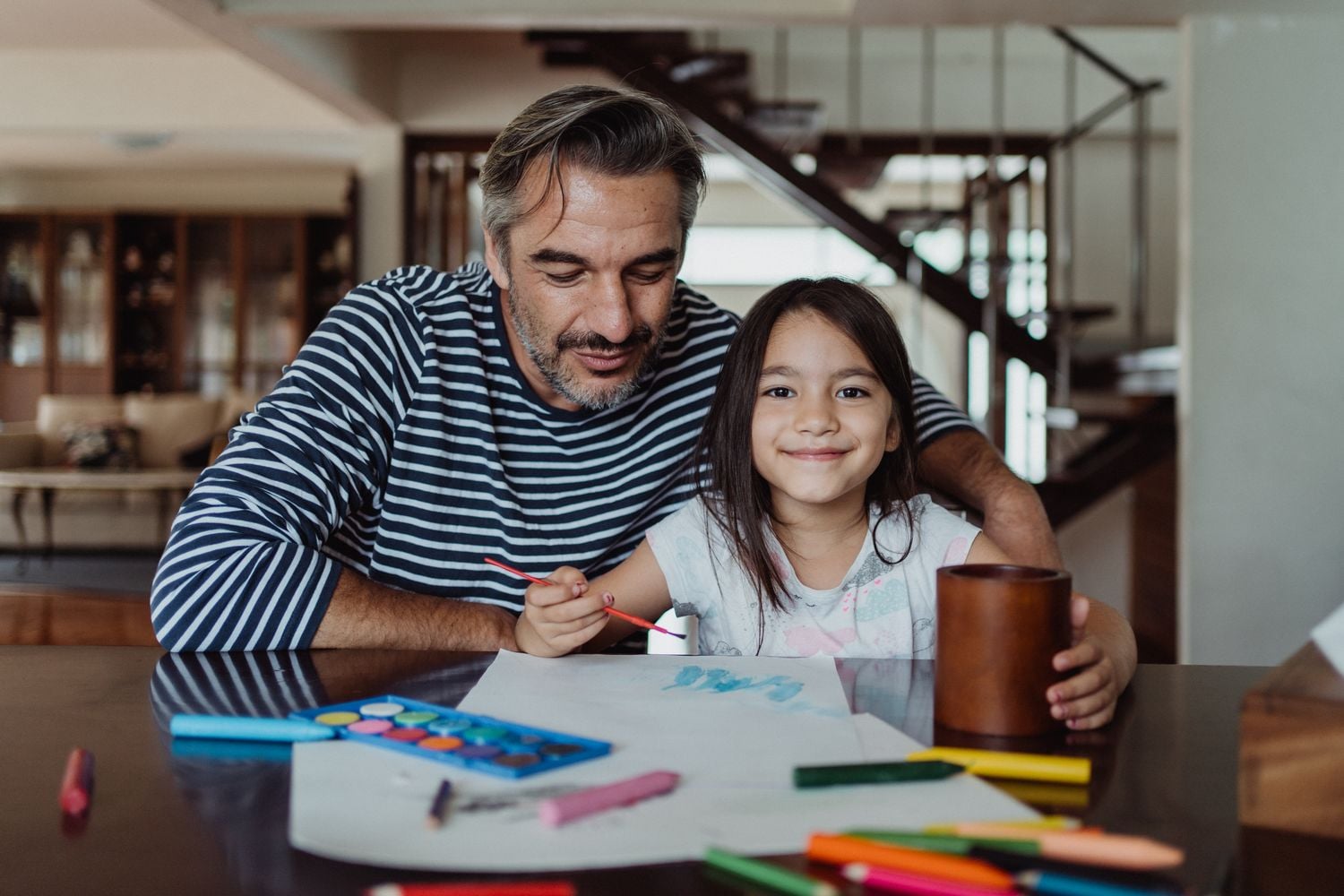
A kid is halfway into gluing pom-poms onto a paper plate, and a parent, wanting to help, starts explaining. Try this color here. Maybe glue that one down first. Do you want to make a face, or a pattern, or both? By the time the sentence ends, the child has stopped gluing and started listening, waiting to find out what they are actually supposed to be doing.
The usual mistake
The instinct to narrate, guide, and add options comes from a good place. It looks like engagement. But there is a real gap between what feels like helpful involvement and what a young child can actually process while their hands are busy. The CDC’s own guidance for parents of toddlers is blunt about this: give one instruction at a time, because a young child’s attention and working memory can only hold so much at once, and a string of options or steps delivered all together tends to overwhelm rather than help. A long, well-meaning explanation is not more respectful of a child’s intelligence. It is often just more than a small working memory can hold onto while the hands are already doing something else.
This shows up constantly in craft and art time specifically, because the temptation to narrate is strongest exactly when a parent is sitting right there, watching the glue go on. The research on giving directions is about compliance and daily routines more than art projects specifically, but the underlying limit, how much verbal information a young child can take in and use at once, does not change because the activity is fun instead of a chore.
The Artful Parent
Family-life ideas and sharp reads, in your inbox.
What research on parent involvement during play actually supports
A 2022 study in Frontiers in Education, by Justin Baker and colleagues, looked closely at parents and children playing together outdoors, paying particular attention to what happened at moments the researchers called impasses, points where a child got stuck, frustrated, or unsure how to continue. The parents who supported their child’s autonomy most effectively were not the ones talking the most. They were the ones who mostly stayed quiet and let the child work through the activity on their own, stepping in briefly and specifically at the actual impasse, rather than narrating or directing throughout.
This is one study, focused on outdoor play rather than tabletop art, and it should not be read as a rule that parents should never talk during a shared activity. But the pattern it documents lines up with what a lot of us have noticed doing this at our own kitchen tables: a short, specific comment offered right when a child is genuinely stuck does more good than a running commentary offered the whole time, and it leaves far more of the activity actually belonging to the child.
What getting to the point looks like in practice
Getting to the point during a craft is not the same as staying silent. It means giving the child one clear thing to do or try, waiting, and watching what they do with it, rather than filling the quiet with more instructions than the moment calls for. If a child pauses holding a paintbrush, looking unsure, the useful move is usually one short prompt, not three options delivered at once. If they are already moving and making choices on their own, the useful move is often nothing at all.
This applies just as much to praise and process talk as it does to instructions. A running narration of “I love how you’re using orange, that’s such an interesting choice, have you thought about adding some blue” during a five-minute painting session is a lot of language for a young child to process while also holding a paintbrush and making decisions. A single, specific comment, offered once the child pauses rather than while they are mid-brushstroke, tends to land better and interrupt less.
This is easier with a two-year-old, where the limit on how much language they can absorb at once is obvious and immediate, and harder with a six- or seven-year-old who can clearly follow a longer sentence. But even older children who can technically process a longer explanation are still in the middle of their own project, and a long explanation still pulls their attention away from the materials in front of them for as long as it takes to listen. The relevant question is less “can they understand this” and more “does this need saying right now, while their hands are already occupied.”
The realistic limit
None of this means a quieter parent produces a more creative child, and neither piece of research supports treating narration or conversation during art time as harmful. Plenty of children enjoy a running back-and-forth with a parent while they work, and that connection matters in its own right, separate from any effect on the activity itself. The point is narrower: when the goal is to let a child work through their own project with their own hands and their own ideas, less talk, offered at the right moment, tends to leave more room for that to actually happen than a well-intentioned stream of options and suggestions.
Getting to the point, here, is not a communication style to master. It is mostly a matter of noticing how much a child can hold onto at once, and trusting that the quiet in between is doing something, too.