
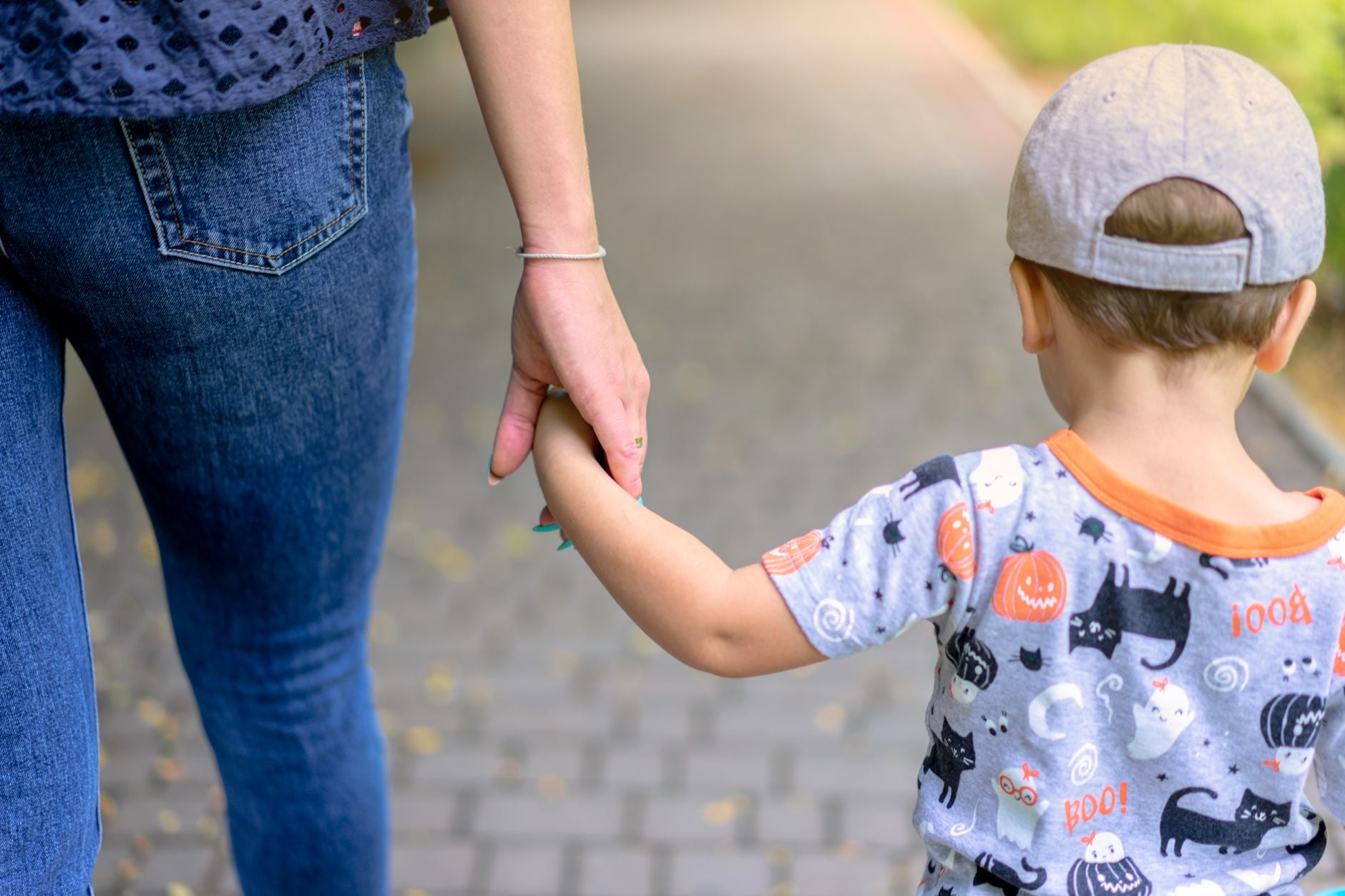
A daily walk with a small child is rarely a walk. It is a series of stops, reversals, sitting down on the curb, and a long negotiation with one particular crack in the sidewalk. Parents who set out to do this every day usually give up somewhere in the second week, not because the idea was wrong but because the thing they pictured and the thing that happens are not the same activity.
It helps to know what a small child’s body is actually doing.
In a 2012 study in Psychological Science, Karen Adolph and colleagues at New York University recorded how much 12 to 19 month olds moved during ordinary free play. The infants averaged 2,368 steps and 17 falls per hour, taken in short bursts rather than steady stretches. The paper’s own framing is that a century of walking research had studied children moving in straight lines over uniform surfaces, which is not how they move when nobody is directing them. You can read the abstract here.
The Artful Parent
Family-life ideas and sharp reads, in your inbox.
That study was done indoors, during free play, with a specific and narrow age band. It is a result from one dataset, not a rule about every child. It does not tell us how a three year old handles a mile of sidewalk, and it was never trying to.
But it does describe the shape of the thing. Small children move in bursts, change direction constantly, and fall a lot without minding. A parent who expects a steady outbound-and-back walk is expecting a gait pattern the child does not yet have much use for.
What usually goes wrong
The most common failure is a destination. The moment the walk has a place it is supposed to reach by a certain time, the adult sets the pace, and the child’s part becomes compliance. That works for exactly as long as the child feels like complying.
The second failure is the loop back home. Many families find the outbound leg goes fine and the return is a meltdown, which makes sense if you consider that the interesting part was in front of them and now it is behind them.
The third is the distance itself. A walk that feels short to an adult can be genuinely long for legs that are a third the length, and a child who wants carrying at the halfway point is usually not being difficult.
None of this means the walk failed. It means the walk was being measured with the wrong instrument.
What tends to work instead
In our experience the daily walk becomes sustainable when it gets smaller and less ambitious. A block. Ten minutes. The same route, most days, so the child starts to know it.
The sameness is the part parents tend to want to fix, and it is often what makes the habit work. A route a child already knows is a route they can lead, and a child who is leading is not being marched. They notice what changed since yesterday, which is a thing they can only do if there was a yesterday.
Some things that help, when they help:
- Let the child set the direction on the way out, even when it is the boring direction.
- Build in the stops rather than fighting them. If the walk includes ten minutes of standing still watching a drain, plan for a walk with standing still in it.
- Bring a bag or a pocket for whatever gets collected, with the cautions below in mind.
- Have a shorter version and use it without guilt on the days that call for it.
- For a child who has recently started walking, expect the walk to be mostly practice and very little transit.
What to expect changes quickly with age. A newly walking toddler will cover very little ground and will be entirely satisfied. A two or three year old can manage a real loop but will want to stop constantly and may need carrying at the end. A four to six year old can walk further than most parents assume and will usually do it happily if there is something to look at or something to bring home. Older children often prefer the walk to have a job attached, like posting a letter or checking on something specific.
A note on what gets picked up
If your child is still putting things in their mouth, which is common under about three, treat everything collected on a walk as a choking hazard until you have looked at it. Acorns, small pinecones, pebbles, seed pods, bottle caps, and broken sticks are all the wrong size in the wrong way. Collecting is fine. Unsupervised pockets are not.
Berries, mushrooms, and unfamiliar plants should not be picked or tasted. Some common garden and roadside plants are toxic if eaten and a few irritate skin, and identification from a photograph is not reliable enough to bet a child on. The plain rule most families end up with is that anything growing gets looked at, not gathered.
Roads are the real risk on a daily walk, not the mud. A route you can walk while a child wanders is worth more than a scenic route you have to police, and a young child near traffic needs a hand or a boundary they have practiced, every time, including on the day you are tired.
What the walk is and is not doing
There is a lot of writing that treats a daily outdoor walk as an intervention, something that will build focus, motor skills, and resilience if you do enough of it. That claim is bigger than the evidence behind it, and it puts a strange pressure on something that is mostly just pleasant.
What can be said plainly is that health bodies recommend a lot of daily movement for young children. The World Health Organization’s 2019 guidelines for children under five recommend that one and two year olds spend at least 180 minutes a day in physical activity of any intensity, spread through the day, with three and four year olds doing the same and including at least 60 minutes of moderate to vigorous activity. The same guidelines suggest young children not be restrained in a stroller or seat for more than an hour at a time.
That last line is useful to know and easy to turn into a stick to beat yourself with, so here is the context. In WHO’s own assessment of the evidence, the overall quality behind these recommendations was rated as very low, and the 180 minute figure came originally from Australian expert consensus in 2010 rather than from a trial. It is a reasonable target set by careful people. It is not a measurement of what your child needs.
So a daily walk is a straightforward way to get some of that movement into a day, in the same way that a trip to the mailbox is. It does not need to be more than that to be worth doing.
The honest limits
Weather, illness, and a week where nobody sleeps will all break the streak, and a habit that only counts when it is unbroken is a habit designed to fail. Some children hate it for a stretch and then like it again. A walk with two children of different ages and different leg lengths is a harder problem than a walk with one, and often the answer is a stroller for the smaller one and no apology about it.
The version of this that survives is usually short, close to home, and repeated often enough to become ordinary.
What tends to happen after a few weeks, if it sticks, is that the walk stops being an activity you are running and starts being a time when things get said. Children talk sideways, while moving, about things they will not sit down and discuss. That is not a reason to start walking every day, but it is often what parents notice they are getting.