
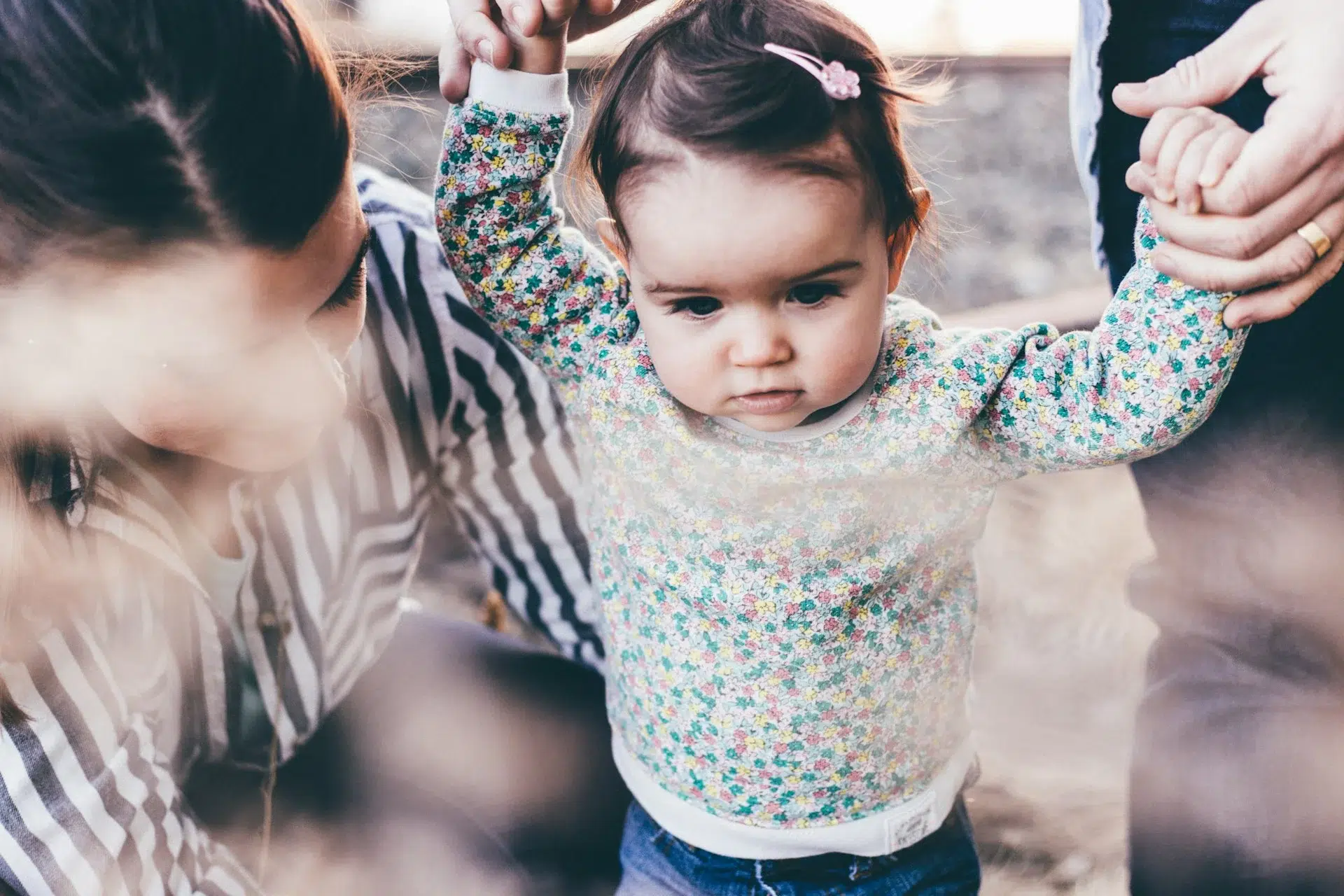
A child hears “I’m listening,” then watches a parent put down their phone. They hear “I’m sorry,” then see that parent handle the next disagreement differently. The words and the response belong together.
The ten phrases below are examples of caring language, not a test of whether someone was loved. Families express affection differently. Some parents said very little and showed their love through meals, lifts and long hours at work. Some said it in another language. And reassuring words can also sit alongside hurtful behavior. What follows the words deserves attention too.
Researchers at Harvard’s Center on the Developing Child describe responsive, back-and-forth exchanges between children and caring adults, which they call serve and return, as an important part of healthy development. It’s a helpful way to think about these phrases. Each one is half of an exchange. The other half is what the adult does next.
The Artful Parent
Family-life ideas and sharp reads, in your inbox.
Whether you’re remembering your own childhood or raising children now, here’s what each phrase offers, and what it takes to make it mean something.
1. “I love you, no matter what.”
This phrase tells a child that love doesn’t depend on grades, behavior or a good day. The hard part is that it matters most at the moments it’s hardest to say: after a tantrum, a broken rule or an argument that went too far.
It doesn’t mean dropping limits. Love and limits can be said together: “I’m not going to let you hit your brother. And I love you, even when we’re both upset.” Once everyone is calm, it can help to say it again, so the child doesn’t have to wonder whether the argument changed anything.
2. “I’m proud of you.”
Pride lands best when it’s tied to something you actually saw. “You tried another way to join those pieces when the tape wouldn’t hold” tells a child you were paying attention. The American Academy of Pediatrics encourages parents to make praise as specific as they can, and to let children know they’re appreciated as they are.
It also helps not to turn every drawing into a performance to be judged. Sometimes it’s enough to describe what you see (“You used so much blue”) or simply to let a child paint without advice. The same AAP guidance notes that stepping back from some activities can show a child they’re doing fine on their own.
3. “I’m listening. Tell me more.”
This is an invitation, and it only works if you can follow through. Put down what you’re doing when possible. The AAP’s guidance on active listening suggests putting down devices, getting to the child’s level and focusing on understanding rather than responding.
You won’t always be able to listen right away. When you can’t, say when you can: “I need to finish cooking. Tell me after dinner?” Then come back to it after dinner. And when they do talk, let them finish before you explain, correct or reassure.
4. “It’s okay to make mistakes.”
Children believe this phrase when they see what actually happens after something goes wrong. A child who has just spilled a cup of paint needs help with the spill before a lesson about perseverance. “The water spilled. Let’s get a towel” does more than a speech.
It also helps when children see adults make mistakes and deal with them calmly. “I forgot to buy milk. We’ll have toast instead” is a small, ordinary example of getting it wrong without it becoming a disaster.
5. “You can always come to me.”
This phrase is tested the first time a child brings you bad news: a broken window, a bad grade, a friend in trouble. If the first response is shouting, they may think twice about coming next time.
That doesn’t mean there are no consequences. It means the first thing they hear is that they did the right thing by telling you: “Thank you for telling me. Let’s work out what to do.” If you need a moment before you can respond calmly, it’s fine to say so: “I need a minute to think, but I’m glad you came to me.”
6. “I believe in you.”
Belief means more when it comes with room to try. If you say “I believe in you” and then take over the zipper, the shoelaces or the science project, the message gets mixed.
Let them struggle a little, within reason, and stay nearby. “You can do this” works best as encouragement for something a child wants to try, not as pressure to do something they dread. If they’re truly stuck, you can offer the smallest help that keeps them going: “Want me to hold this side while you tie?”
7. “Thank you.”
Thanking children for real help shows them their contributions count. It’s most meaningful when it’s specific (“Thank you for setting out the spoons. That saved me time”) and when the help is real.
That last part takes patience. Letting a four-year-old help with the laundry is usually slower than doing it yourself. But if you thank them and then quietly redo it all, they may notice. Where you can, let their version stand.
8. “I’m sorry.”
A parent’s apology shows a child that adults can be wrong and repair it. The most useful apologies name the action. The AAP suggests modeling full apologies, such as “I am sorry I yelled at you,” rather than a vague “sorry.”
Try something like: “I shouted when you knocked over the cup. I’m sorry. Next time I’m going to take a breath before I say anything.” Leave out the demand for immediate forgiveness, and avoid adding “but you shouldn’t have…” Then let the next similar moment show that you meant it.
9. “I like spending time with you.”
Tell your child what you enjoy about being together: “I liked hearing your story on our walk” or “I’m glad we had time to draw together.” Then make room for their interests, including the games and conversations you wouldn’t have chosen yourself.
The action behind it is simple and hard to protect: some time where the child has your full attention and gets to choose what you do. Ten minutes of their game, played their way, says more than an afternoon where you’re mostly on your phone.
10. “You don’t have to win for me to enjoy watching you play.”
“You are enough” is a lovely idea, but it’s abstract for a young child. A concrete version is easier to understand and easier to show.
After a game, a recital or a school event, try asking about their experience before the result: “Did you have fun? What was your favorite part?” If the first question is always about the score, a child may conclude that’s what you’re really watching for. If your face lights up when they walk off the field, win or lose, that tells them something different.
Where to start
Choose one phrase you already say and notice what you do afterward. If you promise to listen after dinner, make time after dinner. If you apologize for interrupting, let your child finish the next time they speak.
And if some of these phrases weren’t part of your own childhood, you can still learn to say them now, with your own children, a partner or a friend. It may feel awkward at first, and that’s fine.