
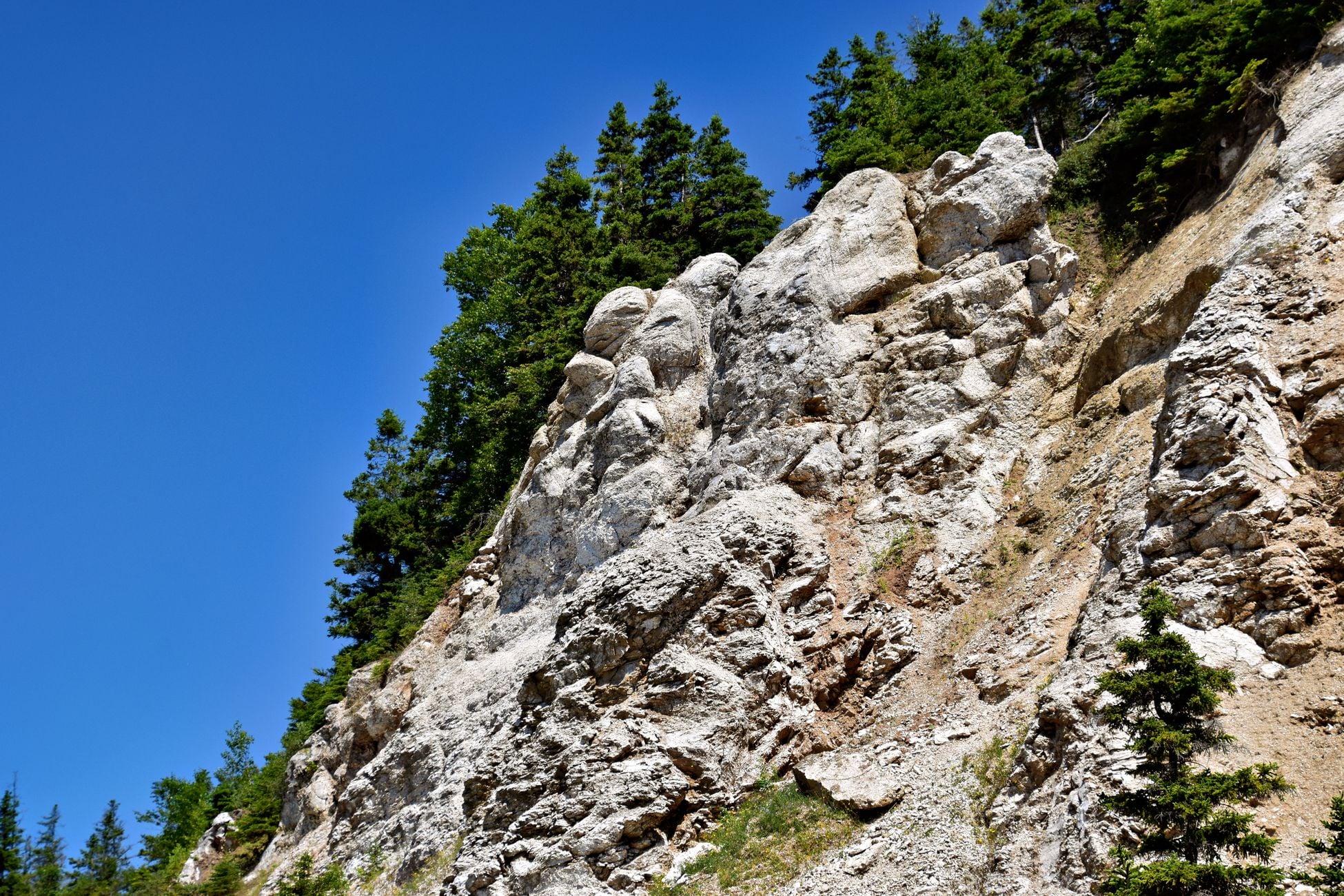
On the wind-scoured island of Værøy, in the Lofoten archipelago, a small russet-colored dog called the Norwegian Lundehund can press the back of its skull flat against its own spine, splay its front legs outward like a lizard, and scale a wet basalt cliff on six-toed feet to pull nesting puffins from cracks barely wider than a fist. The breed’s name comes from the Norwegian words lunde (puffin) and hund (dog), and for centuries the fishermen of Værøy and Røst bred these dogs for one job: harvesting Fratercula arctica from sea cliffs that no human hand could reach.
Every trait that makes a Lundehund strange is a tool. The six toes, the rubber neck, the shoulders that rotate outward at ninety degrees, the ears that fold shut against dripping seawater — none of it is ornamental. This is a working animal shaped by a very specific coastline.
Six toes, and every one of them works
Most dogs have four toes and a dewclaw on each foot, and the dewclaw is usually a floppy vestige that veterinarians sometimes remove. The Lundehund carries at least six toes on every foot, and on the hind feet the count often reaches seven when accessory pads are included. Crucially, the extra toes are fully muscled and jointed. They are not decorative nubs. Each front paw carries two functional inner toes with their own tendons, giving the dog eight pads of contact with the rock instead of the usual four or five.
The Artful Parent
Family-life ideas and sharp reads, in your inbox.
The technical term is preaxial polydactyly, and in most breeds it shows up as a genetic fault. In the Lundehund it is the standard — a fixed trait selected across generations because it worked. Extreme selection in small founder populations can lock in features that would be culled elsewhere. Grip, on a cliff slick with guano and salt spray, is worth more than symmetry.
A neck that folds backward
A Lundehund can tilt its head backward until the occipital bone touches the vertebrae between the shoulder blades. Most dogs cannot come close. The trait lets the dog reverse direction inside a narrow rock tunnel without turning around — it simply looks over its own back and walks the other way. In a crevice barely wider than the dog’s ribcage, the ability to fold rather than pivot is the difference between a caught puffin and a stuck animal.
The mobility comes from unusually loose ligaments between the cervical vertebrae and a spine adapted for extreme extension. The Lundehund’s neck sits at the far end of what a canid skeleton can do without injury. The dogs also carry the trait into the shoulders: their front legs rotate outward at the joint until the elbows point sideways, letting the animal flatten against a vertical surface the way a gecko does.
Ears that close on command
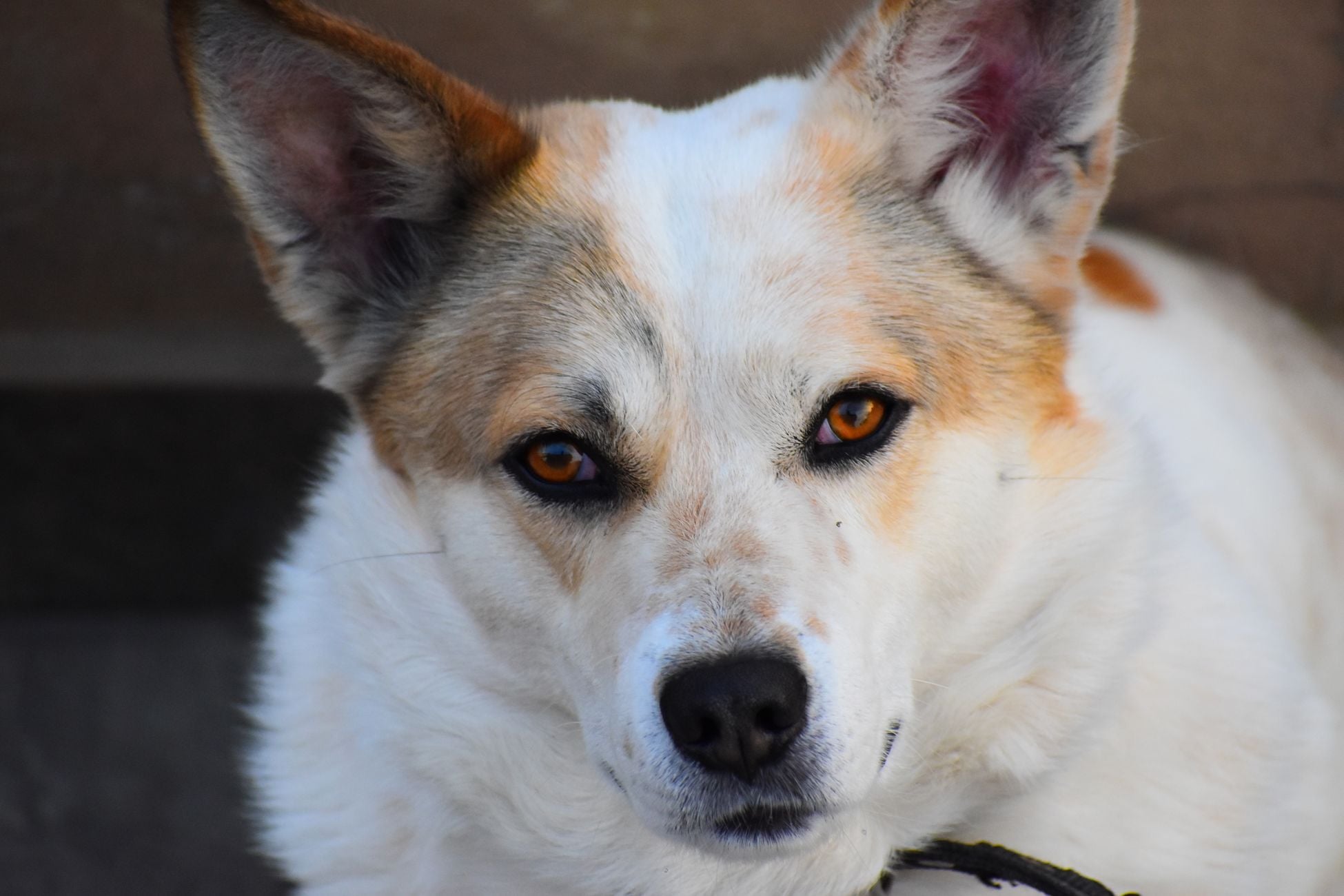
Puffin burrows drip. Sea caves are wet. The Lundehund’s ears fold forward or backward and effectively seal the ear canal when the dog folds them shut, keeping water, dirt, and insects out during a hunt. The cartilage is unusually flexible, and the muscles controlling ear position are more developed than in a typical spaniel or retriever.
Combined with a low, narrow chest and short legs, the whole package produces a dog that looks almost salamander-like when it climbs. Photographs from the mid-twentieth century show Lundehunds moving up near-vertical rock with their bellies pressed against the stone, all six toes splayed, ears clamped shut, and heads craned backward to check the burrow above them.
The puffin economy of Værøy
Until the mid-1800s, puffin meat and down were a significant part of the winter economy on the outer Lofoten islands. Fishermen kept Lundehunds in stone kennels called hundexer, and a good working dog could bring in dozens of puffins in a single evening. The dog would enter a burrow, seize the bird gently enough not to damage the feathers, and reverse out through the same tunnel — the folded neck and the six-toed grip both essential to the maneuver.
The practice was already old when Norwegian authorities introduced tax exemptions for Lundehund owners. Written records mention the dogs as early as the 1500s. The breed’s specialization is so complete that when the puffin harvest collapsed — first because of a dog tax in the late 1800s, then because of stricter conservation laws — the Lundehund nearly went extinct with the job.
Down to six dogs, and back
The breed nearly disappeared twice. A canine distemper outbreak swept Værøy during the Second World War and killed almost every Lundehund on the island — Christie’s kennel on the mainland was largely what kept the breed alive at that point. Then in 1963, another distemper outbreak levelled the surviving population, and only six purebred dogs were left worldwide: one on Værøy and five in the town of Hamar, the latter all descended from the same mother. Every Lundehund alive today traces back to that tiny founder group. The genetic bottleneck is visible in modern health records: the breed suffers from a specific gastrointestinal condition, Lundehund syndrome, that affects protein absorption and appears to be tied to the narrow gene pool.
The recovery is largely credited to Eleanor Christie, a dog breeder based in Hamar who became interested in the Lundehund after reading a Norwegian magazine article about the near-extinct breed in the 1920s. In 1939 she acquired her foundation stock — three females and a male — from a Værøy fisherman named Monrad Mikalsen, and at its peak her Luxor kennel held more than sixty Lundehunds. When distemper wiped out most of her dogs during the war, she sent survivors back to Værøy to help repopulate the island. Værøy later returned the favour when distemper struck the mainland. Global numbers now sit at roughly 1,500 dogs, most of them in Norway, with smaller populations in the United States, Finland, and the Netherlands.
In 2014, the Norwegian Kennel Club and the Norwegian Lundehund Club began an outcross program with the Norwegian Buhund, the Icelandic Sheepdog, and the Norrbottenspets, hoping to widen the gene pool without erasing the six-toed, rubber-necked traits that make the breed what it is. The first-generation crosses do carry the polydactyly, though not always as cleanly.
Why the coastline made the dog
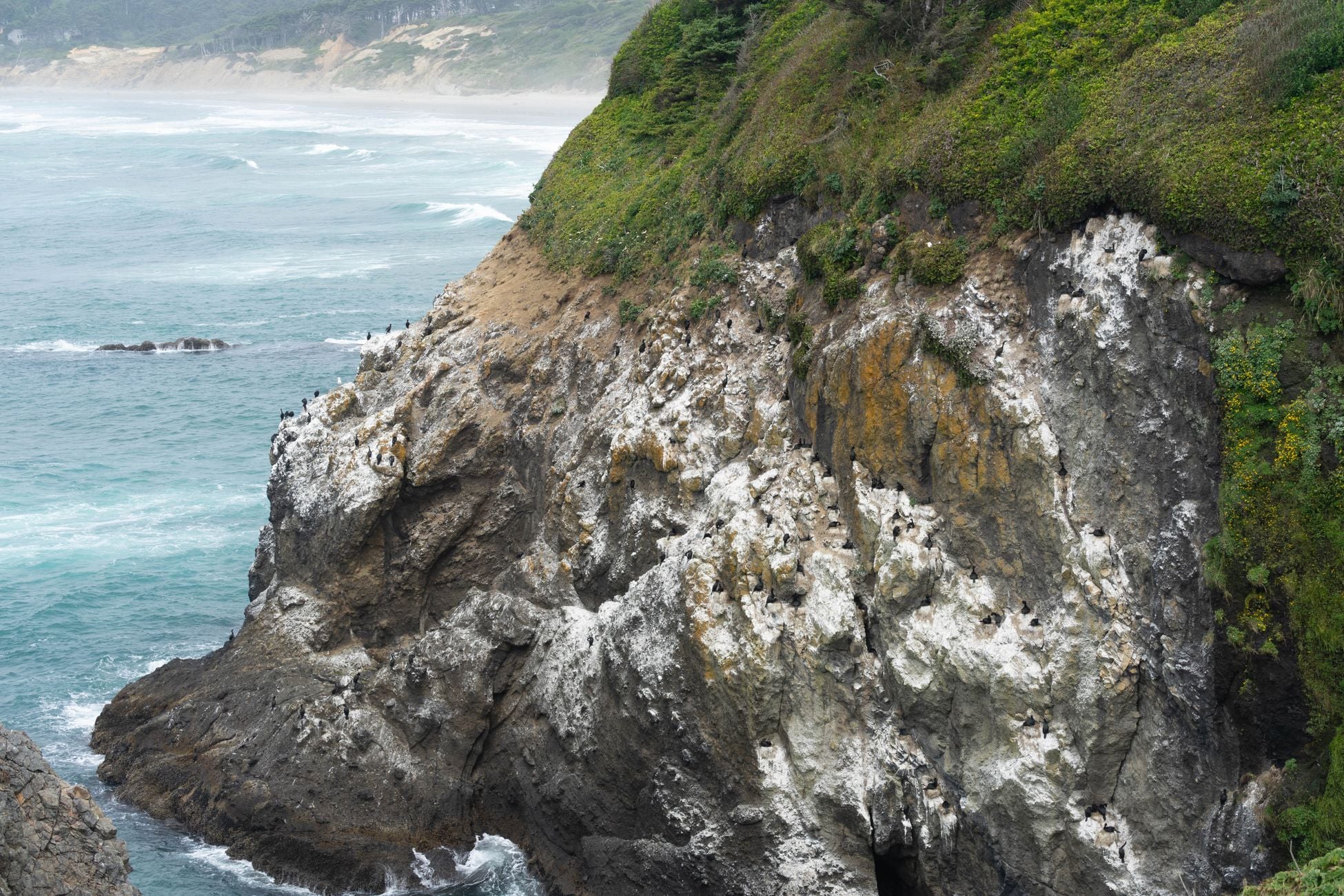
The cliffs of Værøy and Røst rise hundreds of meters straight from the North Atlantic. Puffins nest in burrows dug into thin turf on ledges or in cracks in the basalt itself, often several meters back from any surface a human could reach. A dog small enough to enter the burrow, flexible enough to turn around inside it, and grippy enough to climb to it in the first place is not an obvious animal — it is an engineered one, engineered by centuries of selection on an island with no other option for reaching the birds.
The parallels to other extreme specialists in the animal kingdom are striking. When a species commits fully to one ecological role, the skeleton reshapes itself around the job, and features that seem impossible become standard. The Lundehund did in centuries what wild evolution usually takes millennia to achieve, because the selection pressure was applied by human hands and the reward — dinner, tax breaks, survival — was immediate.
Tool use, in a manner of speaking
The dogs themselves are, in a functional sense, tools. But they also participate in a hunting technique that resembles the kind of behavioral specialization documented across the animal world. Narrow niches drive tightly coupled anatomical and behavioral traits. The Lundehund is a canine version of the same story: a dog whose ears, spine, shoulders, and toes all evolved together for one specific prey animal in one specific geography.
Modern Lundehunds do not hunt puffins. The Atlantic puffin is now a protected species across most of its range, and the harvest that shaped the breed has been gone for over a century. What remains is the body — the six toes, the folded neck, the swiveling shoulders, the sealing ears — carried by dogs that spend their days on couches in Oslo and Minneapolis, occasionally startling visitors by tilting their heads at an angle no other dog can manage.
The dogs today
A Lundehund at rest looks unremarkable: 30 to 38 centimeters at the shoulder, seven to nine kilograms, russet coat with white markings, pricked ears, a curled tail. Then it stretches. The front legs rotate outward until the elbows point at the wall. The neck arches back until the nose points at the tailbone. The paws splay to reveal a fan of toes that would look wrong on any other animal. Even service work with rare breeds tends to favor golden retrievers and labradors, not specialists like these. The Lundehund remains what it was on Værøy centuries ago: a cliff climber without a cliff, waiting.
Somewhere on Værøy today, the puffins are still nesting in the same crevices they nested in when the dogs were catching them. The rock is the same. The wind off the North Atlantic is the same. What has changed is that the small russet dog watching from the shore is now a pet, and the burrows above the sea belong entirely to the birds.