
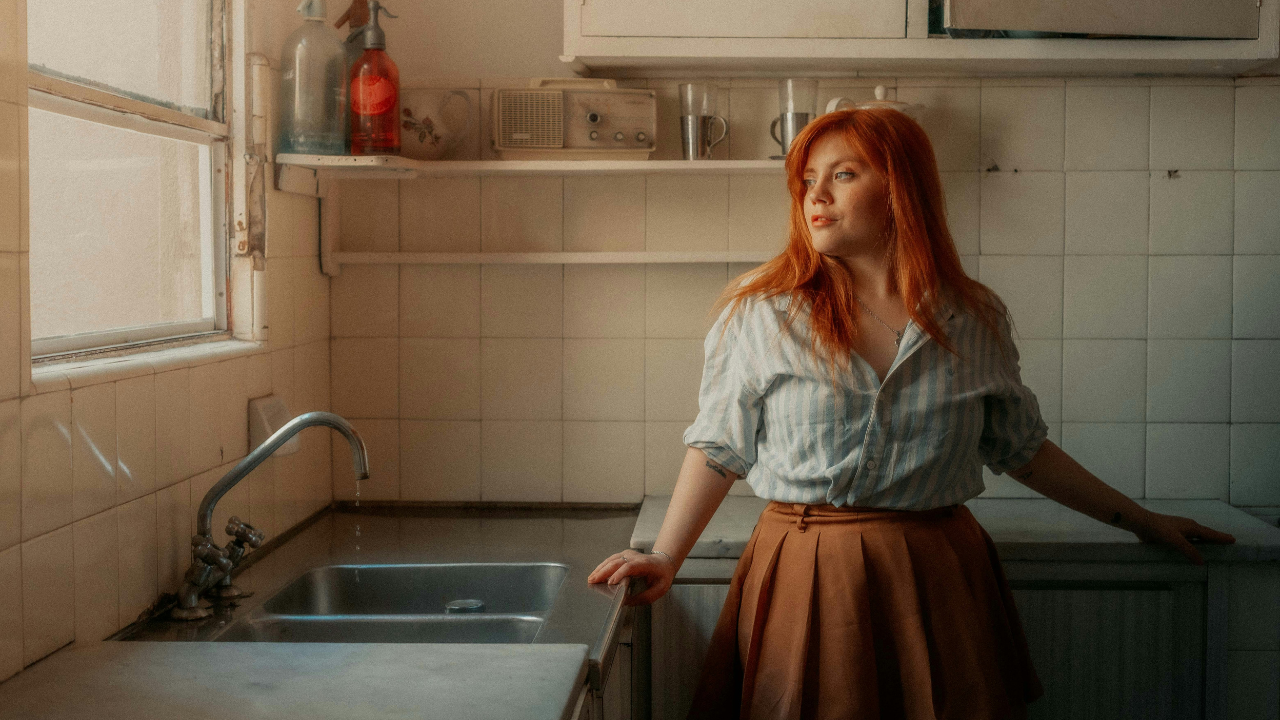
A woman is standing in the kitchen of the house she grew up in. She’s in her fifties. Her mother died last spring. Her father has decided to sell the house because he’s moving to a smaller flat closer to one of the grandchildren. Today is the day the estate agent is showing prospective buyers around, and the woman has been asked to stay out of the way but is, in fact, standing in the kitchen because she can’t quite bring herself to leave. She’s looking at the tile behind the sink she used to stare at while doing the washing up as a teenager. She’s aware, in a specific way, that this room won’t exist for her again. The buyers walk through, polite and interested. She smiles at them. She doesn’t say anything about the tile. Nobody in the room has a word for what she’s actually feeling.
The word
The word exists. It’s just not one most people have heard. In 2003, the Australian environmental philosopher Glenn Albrecht was looking for language to describe what he’d been observing in communities near Australian open-cut mines and drought-affected regions. The residents weren’t leaving. Their homes were being destroyed while they were still inside them. The distress they described didn’t match any of the existing terms. Nostalgia was wrong because they weren’t away from home. Grief was close but incomplete. What Albrecht landed on was solastalgia: a compound of the Latin solacium (comfort) and the Greek -algia (pain). The specific ache of losing your home while you’re still standing inside it.
In a 2007 paper in Australasian Psychiatry, Albrecht and colleagues laid out the concept in detail. They defined it as “the distress that is produced by environmental change impacting on people while they are directly connected to their home environment.” The original context was environmental. Drought, mining, climate change. The word has since travelled beyond that context because the underlying feeling turned out to be broader than the environmental research had assumed. The specific ache of losing a place while still inside it shows up in many situations the researchers hadn’t originally considered.
The Artful Parent
Family-life ideas and sharp reads, in your inbox.
Beyond the original context
The childhood home being sold is one of these situations. So is the neighbourhood being gentrified beyond recognition. So is the family house being cleared out after a parent’s death, with the person doing the clearing standing in rooms that no longer contain the life they used to contain. Albrecht himself has described solastalgia as “the homesickness you have when you are still at home.” The description travels well. It captures the specific quality of the feeling in a way that no other single English word does.
A note on what this is
We write about research here, not from a clinical chair. Solastalgia is a concept, not a diagnosis. It doesn’t appear in the diagnostic manuals. What it offers isn’t a treatment plan but a name for something people have been experiencing without language for it. Having a name for an experience isn’t the same as being cured of it, but it turns out to matter more than it sounds like it should.
Why having the word helps
There’s a specific kind of relief that arrives when a feeling that had seemed private and vaguely embarrassing turns out to have a name and a research literature behind it. The person standing in the kitchen looking at the tile isn’t being sentimental in a way she should get over. She’s experiencing something that has a technical name, has been studied in academic journals, and has been documented across many populations. The feeling is legitimate. It has a shape. It shows up predictably in circumstances like the one she’s in. Learning this doesn’t make the ache go away. It changes the ache from a private and slightly embarrassing thing into a recognisable one.
The words the culture usually offers for this kind of experience don’t quite fit. Nostalgia is about missing the past when you’re separated from it. Homesickness is about being away from home. Grief is about a specific loss of a person. Solastalgia is about losing a place while you’re still inside it, watching it stop being the thing it was. The word captures what’s happening at the level of the room, the wall, the specific tile behind the sink, in a way that other words don’t quite reach.
Most people, in the course of a normal life, will experience solastalgia at least once. The childhood home sold. The neighbourhood transformed. The country pub demolished. The tree in the front garden cut down by the new owners. Very few will have the word. Whether or not learning it makes the ache smaller, it does something else that turns out to matter. It tells the person that what they’re feeling is a thing other people have felt, that researchers have studied, that has a shape and a name. And on the accounts of people who have arrived at it, that recognition is, for many of them, a substantial part of the relief.