
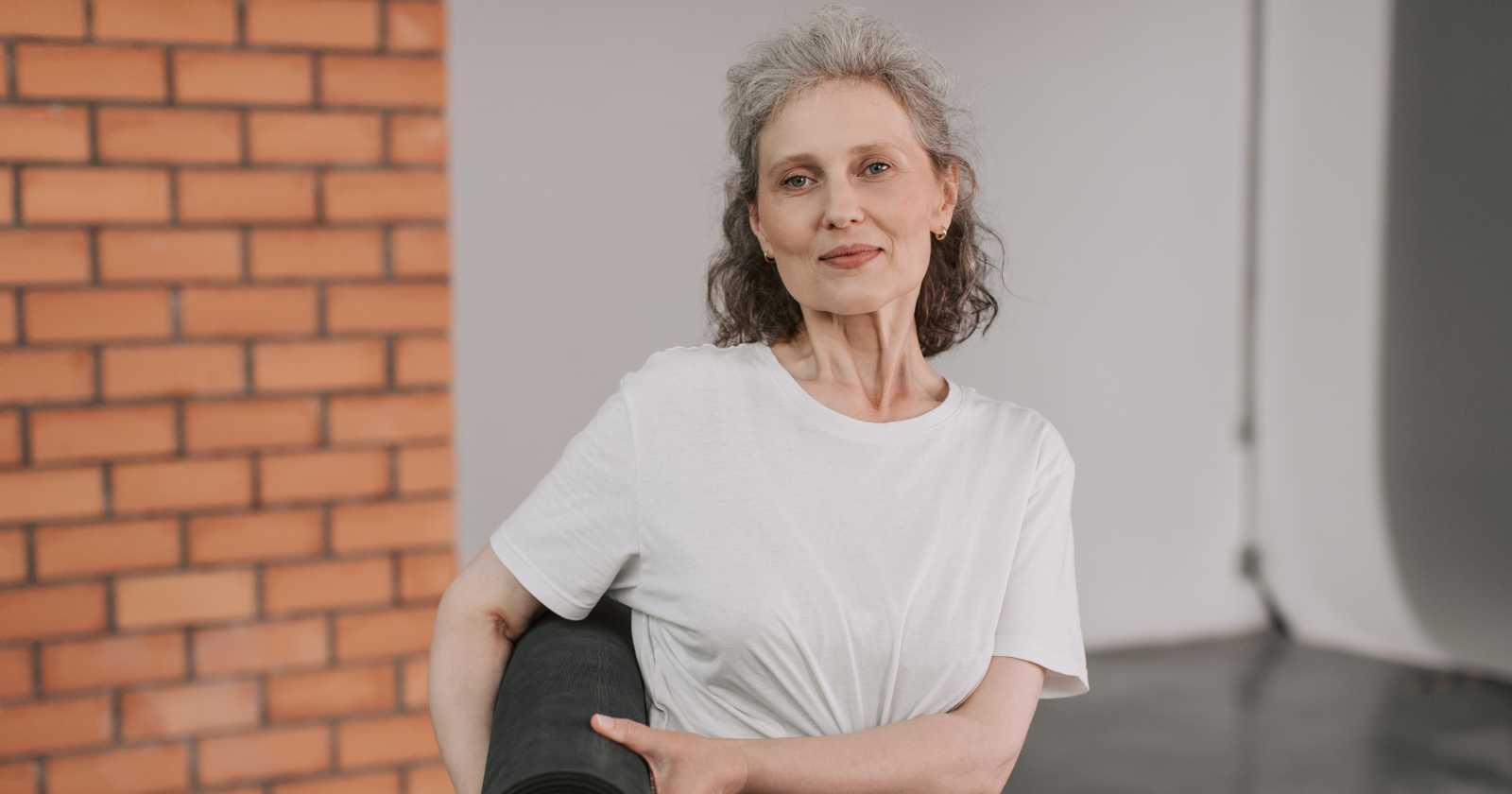

A 73-year-old woman is walking down a high street when she catches her reflection in a shop window. She stops, briefly. The woman in the window is wearing the coat she put on this morning. She is carrying the bag she has been carrying for years. She is also, indisputably, in her seventies. The woman doing the looking is not, in any version of her own inner experience, in her seventies. The two women, the one in the window and the one looking at her, have been moving through life together for several decades. They are not the same age.
This is not a quirk of one person. It is something almost every adult past forty starts to notice. The gap between how old somebody actually is and how old they feel widens, in most adults, somewhere around their forties, and then mostly stays put. By the time the person is in their seventies, the gap can be substantial. The mirror keeps updating. The person inside the head does not.
A study drawing on the U.S. Health and Retirement Study, published in 2019 and following more than 3,000 older adults aged 65 and over, found that on average, participants felt 15 percent younger than their actual age. The gap was not random. It was steady across the sample. The researchers noted something more interesting still. Older adults who felt close to their actual age, rather than younger, were more likely to show declines in cognitive function and walking speed. Feeling younger, in other words, is not a story older adults tell themselves. It tracks with how well they are actually doing.
A 2023 study from the Norwegian Survey of Health and Ageing looked at over 800 adults aged 60 to 96. Roughly 86 percent of them felt younger than their actual age. The average gap between their chronological age and their felt age was about 14 years. The few who felt the same as their actual age, or older, were mostly the ones with specific health problems: poor vision, poor hearing, incontinence. For the majority of older adults walking around in decent health, feeling significantly younger was the default state.
A note on what this is
We write about research here, not from a clinical chair. The findings above come from population-level studies of how people experience their own age, not from any specific person we know. The research can tell us this gap between how old you are and how old you feel is common, stable, and tracks with health. It cannot tell us what is happening in any one person’s head when they catch their reflection in a shop window.
What’s actually going on
The title’s framing, separating the version in the mirror from the person doing the looking, gets at something the research has been pointing at for years. There is the body, which ages. There is the face, which ages. There is the calendar, which advances at one year per year. And then there is the person doing the experiencing, the one looking out from behind the eyes, who has been doing that work since childhood and who does not, by their own report, change in the same way the body does. The forty-something version of a person and the seventy-something version of the same person are, in most internal accounts, recognizably the same person. They have learned more. They have lived more. They have not, in any felt sense, become a different person.
A useful comparison. Teenagers and people in their early twenties, on the same kind of research, tend to feel slightly older than their actual age. The gap runs the other way. The young person feels closer to the adult they are becoming than the child they recently were. Somewhere in the late twenties or early thirties, the two ages cross over. Somewhere in the forties, the felt age starts to lag behind the calendar. By the seventies, the lag is substantial. That lag is what produces the experience the woman in the shop window is having.
Why the gap holds
What does not, in any felt sense, change for most adults across the second half of life is the inside of the experience. The voice in the head sounds about the same. The way the person notices things, finds things funny, gets curious about things, reacts to small surprises, has been mostly stable since their twenties or thirties. The decisions they make in their seventies are made by something that feels like the same decision-maker who made the decisions in their forties. The decision-maker knows more now. The decision-maker has not, in their own experience, been replaced by a different person.
The wider culture still tends to treat older people’s reports of feeling younger as a kind of polite fiction, a refusal to face the calendar. The research suggests the opposite. The polite fiction is the assumption that the calendar is the most important measurement of who somebody is. The older person who says they feel younger is, in most cases, telling the truth about the more substantive measurement, which is the person doing the experiencing. The mirror has the numbers right. The person looking in it is not, in any internal way, in disagreement with what they see. They are just pointing out, often without anyone in the room hearing it, that the mirror does not tell the whole story.