

I have been watching my friends raising kids, and it has me thinking about my own childhood for the first time in a long time. The thing that keeps catching my eye is how tired they look. Not the ordinary tired of small children, which would be fair enough. Something more like the tired of a job they have decided to be perfect at. There is a schedule on the fridge, a tracker on the phone, an activity slotted into every hour the kid is awake, and an adult either running it or watching it happen.
Then I think about how I grew up, and the contrast is sharp.
The summers of my childhood went roughly like this. You were outside. You were back by dark. In between meal times, what you did with the day was up to you. My parents probably had no real idea where I was for most of the afternoon, and as far as I can tell they did not feel guilty about that. They were Boomers. The job description of “parent” they had inherited stopped at fed, clothed, warm, and roughly accounted for. The rest was your problem to figure out.
The Artful Parent
Family-life ideas and sharp reads, in your inbox.
Which meant boredom. A lot of it. Afternoons where there was nothing to do and no one to do it with, and no screen to step in and rescue you, and no parent waiting to entertain you. You had to invent something. You did, eventually, because the alternative was sitting there. I do not remember it as deprivation. I remember it as ordinary.
It also meant consequences. If you got into trouble, you were in trouble. You did not negotiate your way out, and whether the consequence felt proportionate or not, it landed. You moved on. The pact, as far as I can reconstruct it now, was simple: you had this much freedom, and in exchange when you misused it the bill came.
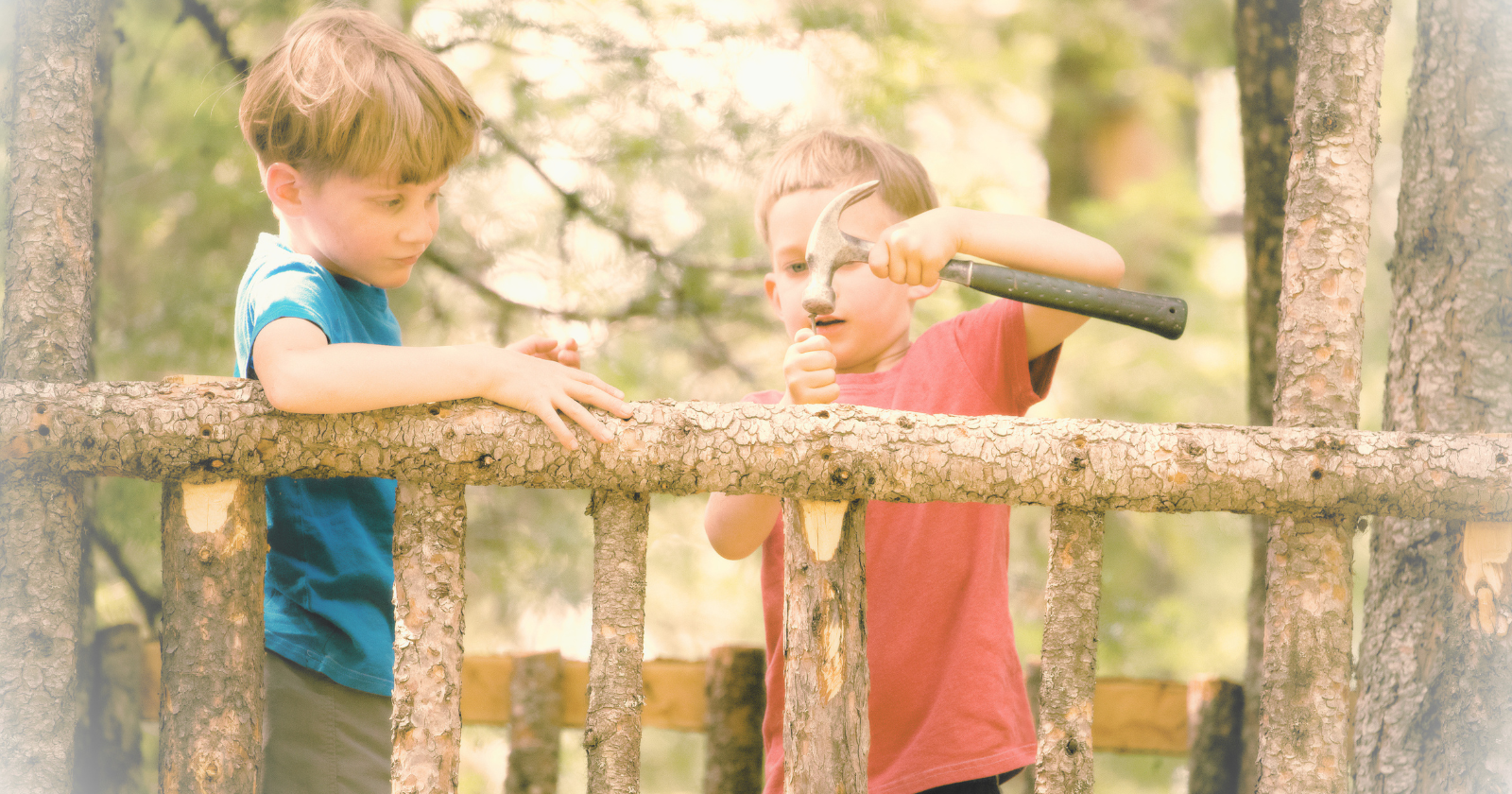
And there was the freedom to fail. Age-appropriate things you could plausibly get hurt doing. Climb the wrong tree. Fall off a bike. Try and not be able to and try again. Teaching yes, but not much hovering, and I am quietly grateful for that now.
What I watch my friends doing looks, from the outside, like care turned up to its highest setting. The schedule is care. The supervision is care. The long negotiations instead of consequences are care. None of it is wrong on its face. If anything, it looks more thoughtful and more attentive than what I had, which is part of why I have hesitated to say any of this out loud.
But I think it costs them. The most recurring sentence I hear is some version of we are exhausted. The most recurring image is the parent on the living-room floor running an activity they look completely uninterested in, while the child looks similarly uninterested, and both of them are doing it because the alternative — the kid being bored, or finding their own thing — has become unthinkable.
Peter Gray, a research psychologist at Boston College, has written for years about what changes when you remove unstructured play from a childhood. In a 2023 essay co-published with Jonathan Haidt, they put it as plainly as it gets: “The joy of play is the joy of freedom from adult control.” His read of the evidence, accumulated over decades, is that the long decline in children’s freedom tracks closely with the long rise in their anxiety and poor social development. I am not a psychologist but the shape of what he is describing matches the shape of what I see.
I did not turn out fine because my parents were geniuses. I think I turned out fine because the climate of the house had three ingredients the modern climate seems short of: time without an agenda, which forced me to invent one; consequences, which taught me that my actions and the results of my actions were the same conversation; and freedom to fail, which is still the only way I know of to build any actual confidence about anything.
I am not a parent, and I am not a clinician. I might catch myself doing exactly what my friends are doing — the scheduler app open at six in the morning, the tracker, the activity. I am not above any of it, and I am writing this without the credentials to be smug about it. If a household is genuinely struggling — with a child’s anxiety, with parental burnout — a family therapist or paediatrician is the right place to start, not a stranger writing about his own childhood. But if I had to bet on what the kids I know will thank their parents for in thirty years, my money is on the parents who left some of the day blank.
I think one thing we can say about Boomer parenting is that it had the courage of its laziness, and a lot of us are better for it. And the kindest thing I can say to my friends, the ones running themselves into the ground trying to do better, is that they are allowed to do less. Their kids might actually prefer it.