
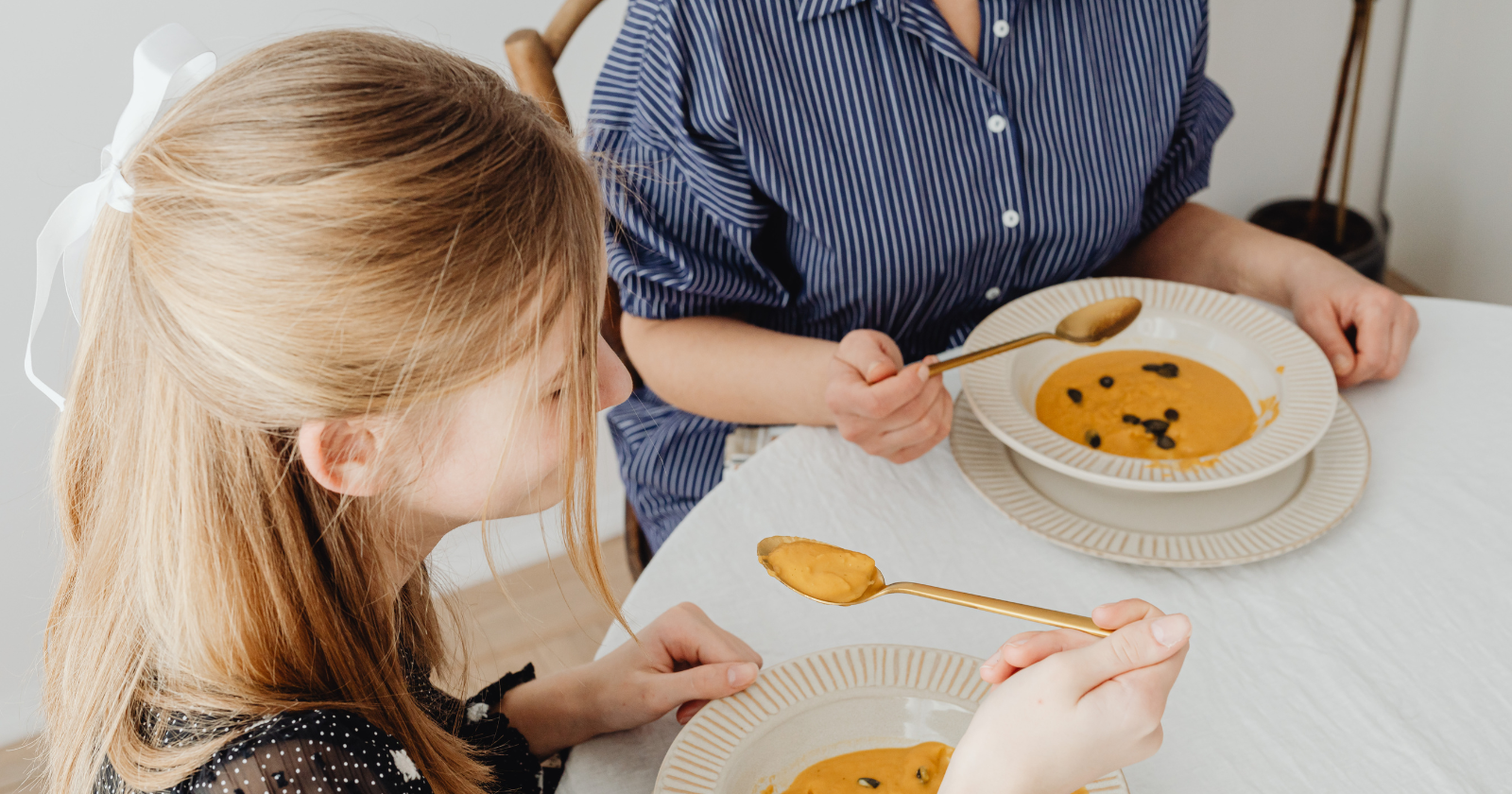
Children do not remember being optimized. They remember the parent who made soup on a weeknight, who took the longer road home for no reason anyone could name, and who seemed, for that stretch of time, in no particular hurry to be anywhere else.
That is a claim about attention rather than achievement, and it runs against a fair amount of what contemporary parenting culture rewards. The enrichment calendar, the tracked milestone, the curated outing all assume that a childhood is built the way a resume is built, one deliberate activity at a time, each chosen for what it will produce later. The research below, drawn from a decades-spanning review and a single later study of adolescents, points somewhere quieter, though neither should be mistaken for the final word on what children need.
The distinction the research keeps returning to is less about how much time a family has and more about what kind of time actually registers with a child.
The Artful Parent
Family-life ideas and sharp reads, in your inbox.
What five decades of research on family routines actually found
In 2002, the psychologist Barbara Fiese and five colleagues then at Syracuse University published a review of fifty years of research on family routines and rituals in the Journal of Family Psychology, working through thirty-two studies dating back to 1950. Their conclusion pointed toward something more modest: the ordinary, repeated, low-key structure of family life, the shared meal, the bedtime sequence, the drive, was consistently associated with parenting competence, child adjustment, and marital satisfaction.
The review is explicit about its own limits. The studies it draws on use inconsistent methods, rely heavily on convenience samples, and mostly cannot separate a routine’s direct effect from whatever else is going on in a household that also happens to keep routines. It is a pattern across five decades of research, not a single tidy finding, and Fiese and her co-authors treat it that way rather than overselling it.
The habit that quietly distinguishes an unhurried parent
What the review points toward, cautiously, is that predictability and presence do a kind of work that discrete, high-effort activities do not. A child does not need the drive home to be scenic. On the available evidence, what seems to matter is that it happens reliably, and that the adult behind the wheel is not visibly counting the minutes until it is over.
That is a hard thing to schedule.
It also cuts against the instinct to treat parenting as a set of inputs that can be optimized for a measurable output. An enrichment class has a start time, an end time, and a stated purpose. An unhurried evening does not advertise what it is doing, which may be exactly why it gets undervalued next to the version that shows up on a calendar.
What one study on adolescents adds, and where it stops
A separate line of research gets more specific about where the quantity of parental time actually matters. Melissa Milkie, Kei Nomaguchi, and Kathleen Denny published a study in the Journal of Marriage and Family in 2015, using data from the Panel Study of Income Dynamics’ Child Development Supplement, that found the sheer number of hours mothers spent with younger children showed little relationship to those children’s later behavior. For adolescents specifically, engaged time, meaning time spent actively doing something together rather than simply occupying the same room, was linked to fewer conduct problems and less substance use, according to the National Institute of Child Health and Human Development’s announcement of the findings.
The same study found something else worth sitting with. How anxious or low a mother said she felt tracked more closely with her children’s wellbeing than the total hours she had logged with them. That detail is easy to miss underneath the headline about time, and it may be the more interesting finding of the two.
This is one dataset, covering two age groups in one country. It does not settle the broader question of what children need from their parents, and the researchers were careful not to claim that it did.
There is also a practical wrinkle worth naming. Engaged time of the kind the study describes assumes a parent has some flexibility over their own schedule to give it, and that flexibility is not distributed evenly across families with different work hours, commutes, or numbers of jobs. A finding about what helps is not the same as a finding about what is equally available to everyone.
Where the optimization instinct overreaches
None of this is an argument against enrichment, activities, or ambition on a child’s behalf.
Soccer practice and music lessons aren’t what either study takes aim at.
The problem, if there is one, is the assumption that presence has to be productive to count, that an ordinary Tuesday evening spent making soup does not register unless it is somehow also teaching a skill. The research above suggests the opposite. The unremarkable, repeated, unhurried version of time together appears to be doing more of the load-bearing work than the version built for a highlight reel.
A parent cannot manufacture an unhurried mood by scheduling it, any more than a research review can settle what every family needs.
None of the studies above tell a parent what to do with a particular Tuesday.
They only suggest that a child in the room is keeping track of something other than the plan.