
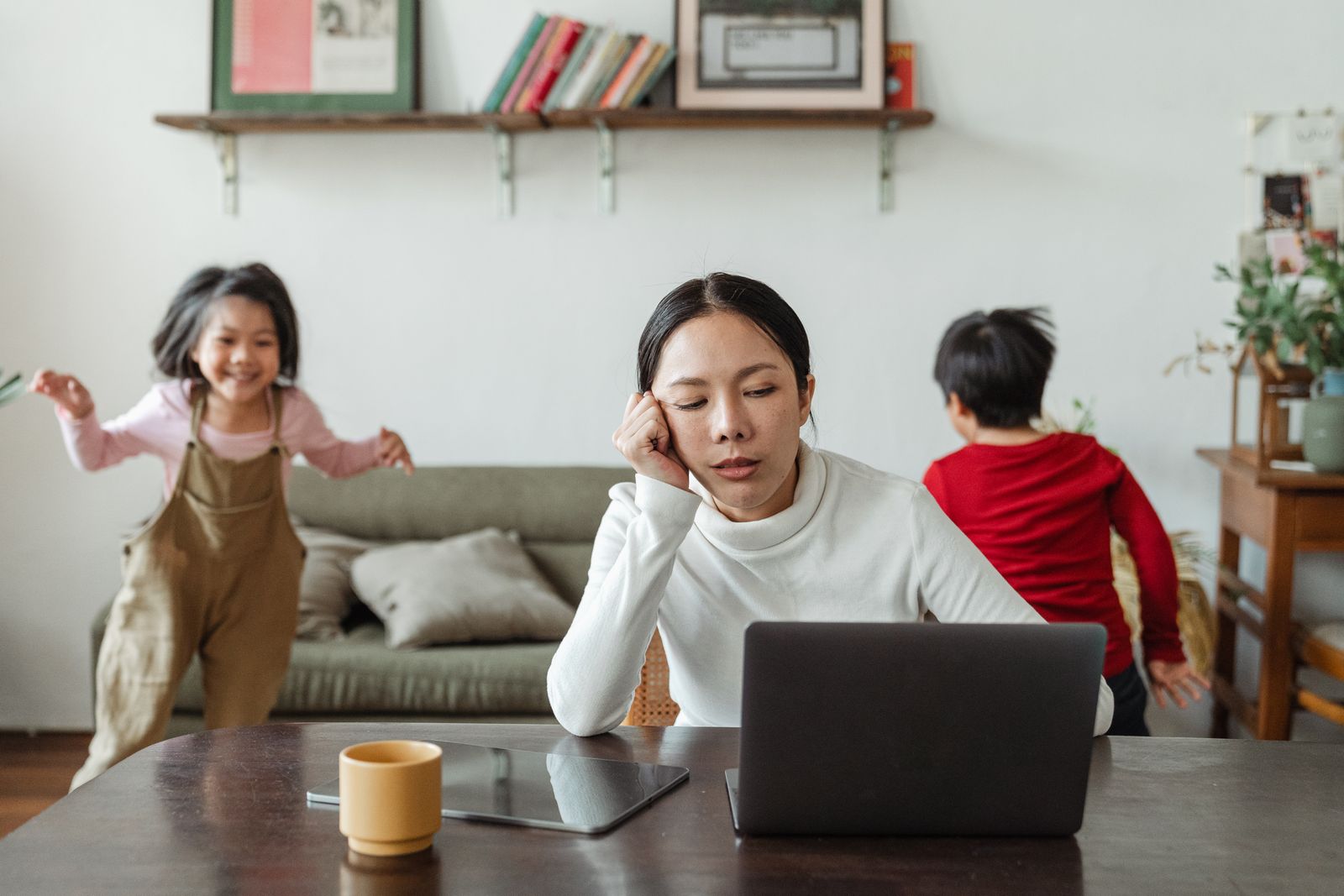

Parenting has always been tiring. But researchers who study exhausted parents have found that how worn out mothers and fathers become depends partly on where they live, and on the unwritten rules their culture sets for what a good parent should do.
In a study published in the journal Affective Science in 2021, an international team led by Isabelle Roskam of UCLouvain in Belgium surveyed 17,409 parents in 42 countries. The rate of parental burnout varied dramatically from one country to the next. Countries with individualistic cultures, which include the United States and much of Western Europe, showed noticeably higher rates and levels of burnout than more collectivist cultures.
The size of that link surprised the researchers. Individualism played a larger role in parental burnout than economic inequality between countries. It also mattered more than any individual or family factor they had examined, including the number and age of children and the hours parents spent with them. The authors concluded that cultural values in Western countries may put parents under heightened stress.
The Artful Parent
Family-life ideas and sharp reads, in your inbox.
What burnout looks like
Parental burnout is not the same as a bad week. Researchers describe it as a syndrome that develops from long-term parenting stress. It has three main features: an overwhelming exhaustion tied to the parenting role, an emotional distance from one’s children, and a sense of no longer being effective as a parent.
The consequences can be serious. In a 2018 study of 1,551 parents published in Child Abuse & Neglect, Moïra Mikolajczak, Roskam and colleagues found that parental burnout was linked to thoughts of escaping the family, sleep problems, conflict between partners, and neglectful and violent behavior toward children. Its link to neglect and violence was much stronger than the link for job burnout. Later research by the same group, which followed parents over a year, found that burnout appeared to drive increases in neglect and harsh treatment of children.
Mikolajczak has said that being a perfect parent is impossible and that trying to be one can lead to exhaustion. The irony, she noted, is that parents who try too hard to do the right thing can end up doing harm.
A very high bar
Where do those pressures come from? Part of the answer lies in what parents believe a good parent should do.
Patrick Ishizuka, then at Cornell University, asked more than 3,600 American parents to rate short scenarios about parents and children aged 8 to 10. In one, a child complains of being bored after school. One version of the parent suggests signing the child up for a sports team or music lessons. Another suggests the child go outside and play with friends.
About 75 percent of parents, with or without a college degree, rated the intensive, hands-on approach as “very good” or “excellent.” Only about a third gave the same rating to the more relaxed approach. The study, published in Social Forces in 2019, found the preference held across income, education, race and gender. Ishizuka said the results point to exceptionally high standards and significant pressure on parents to spend large amounts of time and money on their children.
Those standards shape everyday choices. Research suggests that several of the things parents do because they feel they should are not always what helps children most.
Filling every hour
Many parents feel that a good parent keeps a child busy with lessons, sports and enrichment. A 2014 study from the University of Colorado Boulder, published in Frontiers in Psychology, tracked the activities of about 70 six-year-olds for a week. Children who spent more time in less-structured activities, such as free play, reading and family outings, showed stronger self-directed executive function, meaning the ability to set their own goals and work out how to reach them. Children who spent more time in structured activities scored lower.
The researchers cautioned that the study showed a correlation and did not prove cause, and the children came from fairly affluent families. Still, it suggests that open time is not wasted time.
Praising everything to the skies
Parents are often told that praise builds confidence, and many respond by turning it up. A 2014 study in Psychological Science, led by Eddie Brummelman, found that adults tend to give the biggest, most exaggerated praise to children with low self-esteem. In one experiment, about a quarter of the praise parents gave their children was inflated.
That well-meant habit can backfire. When children with low self-esteem were told they had done “incredibly” well, they were more likely to avoid a harder task afterward. The researchers suggested that over-the-top praise may set a bar those children fear they cannot reach again.
Stepping in at every turn
Close supervision can feel like the responsible choice. A study published in Developmental Psychology in 2018 followed 422 children from age 2 to age 10. Led by Nicole Perry, then at the University of Minnesota, it found that overcontrolling parenting at age 2, such as constantly directing how a child plays, was associated with poorer emotional and behavioral control at age 5. That, in turn, was tied to more emotional and school problems at age 10.
Perry stressed that parents still play a vital role. The point is to guide children through hard moments without taking over every one.
Putting yourself last
Perhaps the most widely expected habit of all is self-sacrifice. Many parents believe that time spent resting, seeing friends or pursuing their own interests is time taken from their children. The burnout research suggests the opposite. Mikolajczak and her colleagues have said that whatever helps parents recharge and avoid exhaustion is good for children, and that self-care should be seen as part of good parenting rather than a luxury.
Easing the pressure
None of these studies suggests that parents should stop caring or stop trying. Lessons, encouragement and attention all have value. The research points instead to balance: some structured time and some free time, honest praise rather than inflated praise, guidance without control, and enough rest for parents to stay present.
The cross-cultural findings also carry a reassuring message. Much of the strain parents feel comes from expectations rather than from children themselves, and expectations can change. A parent who lets a bored child find something to do, or who takes an evening off, may not be falling short at all.
Photo by Ketut Subiyanto on Pexels