
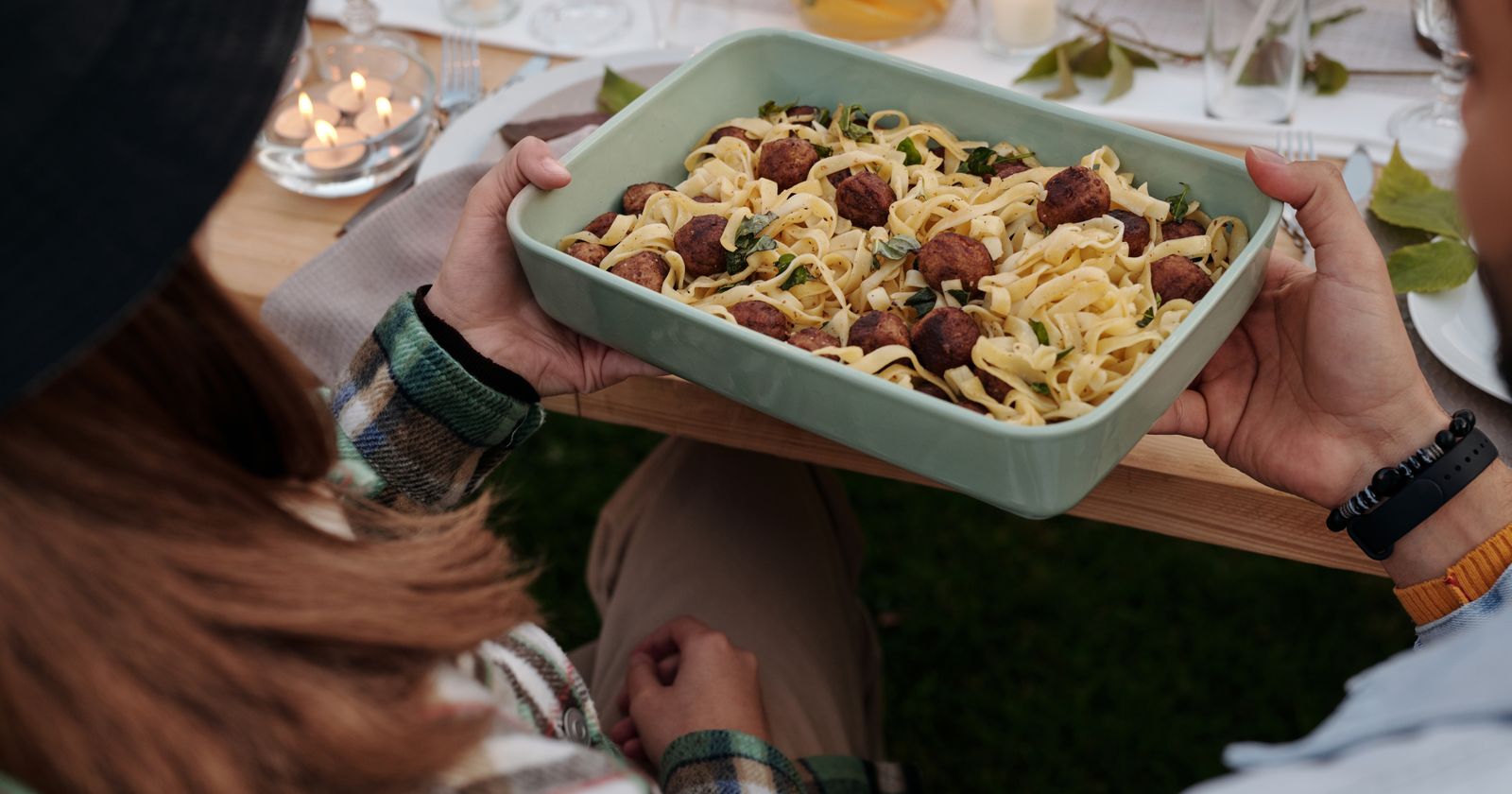
In a lot of 1970s households, dinner was the one fixed point of the day. It happened at about the same time every evening, at the same table, with whoever lived in the house. Nobody called it family time. It was just dinner.
Not every home ran this way. Plenty of parents worked shifts, plenty of meals were eaten off TV trays, and some tables were tense places to sit. But for many people raised in that decade, the dinner table doubled as a classroom, and the lessons were taught by repetition more than by explanation.
Here are eight of them, along with what each was really teaching.
The Artful Parent
Family-life ideas and sharp reads, in your inbox.
1. Be home when dinner is on the table
Dinner had a time, often set by when a parent got in from work, and children were expected to organize their afternoon around it. Bikes were dropped on the lawn at five to six.
The lesson underneath was that other people’s effort deserves your punctuality. Someone had cooked. Turning up late meant a cold plate and, often, a comment.
Schedules are harder now. Practices run late and parents’ hours vary. Even one or two fixed nights a week can teach the same thing.
2. Eat what the family is eating
There was one meal. Meatloaf, tuna casserole, liver on a bad night. Nobody was asked what they felt like, and a second dinner was not on offer.
It taught children that sharing a meal involves considering several people’s tastes, and that unfamiliar food is sometimes better than it looks.
The harder edge of this rule, sitting at the table until the plate was clean, is one many families have since let go of. The gentler version survives well: this is what we’re having tonight, and you’re welcome to try a little.
Serve the family meal with at least one food your child already enjoys. Offer unfamiliar foods without requiring a taste or a clean plate.
3. Pass the dish before you fill your plate
Food arrived in serving dishes and traveled around the table. You offered it to the person beside you, took a fair share and noticed whether there was enough left for whoever came last.
That small routine carried a lot: awareness of other people, restraint, and the idea that the last pork chop is a question to be asked aloud.
Plating food at the stove is quicker, and plenty of families do it. Putting even one dish in the middle of the table brings the passing back.
4. Wait your turn to talk
With five or six people and one conversation, children learned to hold a thought until there was a gap. Interrupting a parent mid-sentence was corrected on the spot.
It could be frustrating, and in stricter homes it tipped into children being expected to stay quiet altogether, which taught something less useful.
At its best it taught timing: how to enter a conversation, how to let someone finish, and how to keep hold of what you wanted to say.
The rule applies to adults too. A parent who cuts in can hand the conversation back: “You were telling us about the match before I interrupted. What happened?”
5. Listen when the conversation isn’t about you
Much of what was said at a 1970s table had little to do with the children. The price of gas. A neighbor’s new car. Something that happened at the plant.
Sitting through it taught patience. It also gave children a window onto adult life: how grown-ups talked through a problem, what worried them, what they found funny.
Children today are often asked more about their own day, which has real value. Hearing adults talk to each other about ordinary things is a different lesson. Let children hear ordinary adult conversation, explain unfamiliar references when they ask, and leave openings for them to join in.
6. The phone can wait
The telephone was often on the kitchen wall, and when it rang during dinner someone might answer just long enough to say, “We’re eating. Can she call you back?” Many homes had no answering machine, so the caller simply tried again later.
The message to everyone at the table was that the people in front of you come first for this half hour.
This may be the lesson that has become hardest to teach, because the phone is now in every pocket, including the parents’. A basket by the door for the length of the meal is the modern version of letting it ring.
7. Ask before you leave the table
“May I be excused?” sounds formal now. In practice it meant that a meal had an ending everyone shared, and that you didn’t drift away the moment your own plate was empty.
It taught children to stay a few minutes past their own interest for the sake of the group, and to say something before walking off.
The exact phrase matters less than the habit. “Can I go?” does the same job.
8. Help clear up
In homes where children helped clear and wash up, dinner came with a visible reminder that feeding a household involved work. One child cleared, another washed, another dried. The schedule was argued over and occasionally traded for favors.
The lesson was that a meal doesn’t end when you stop eating, and that the person who cooked shouldn’t also be the one who cleans. Saying “thank you for dinner” belonged to the same idea.
A dishwasher changes the task but not the principle. Today that might mean one child gathers the napkins, another carries suitable dishes, and an adult handles the hot pans. Carrying their own plate to the counter is a start when they can manage it safely.
What’s worth keeping
It would be a mistake to remember the 1970s table as perfect. Some of its rules were enforced harshly, and children’s opinions were not always welcome there. Many families today teach the same things in other ways, with more room for children to speak.
What that table had going for it was repetition: the same people, at the same hour, most nights of the week. If one of these lessons seems worth bringing back, choose a single night and a single rule, such as phones in the basket on Sundays, and let the repetition do the teaching.