
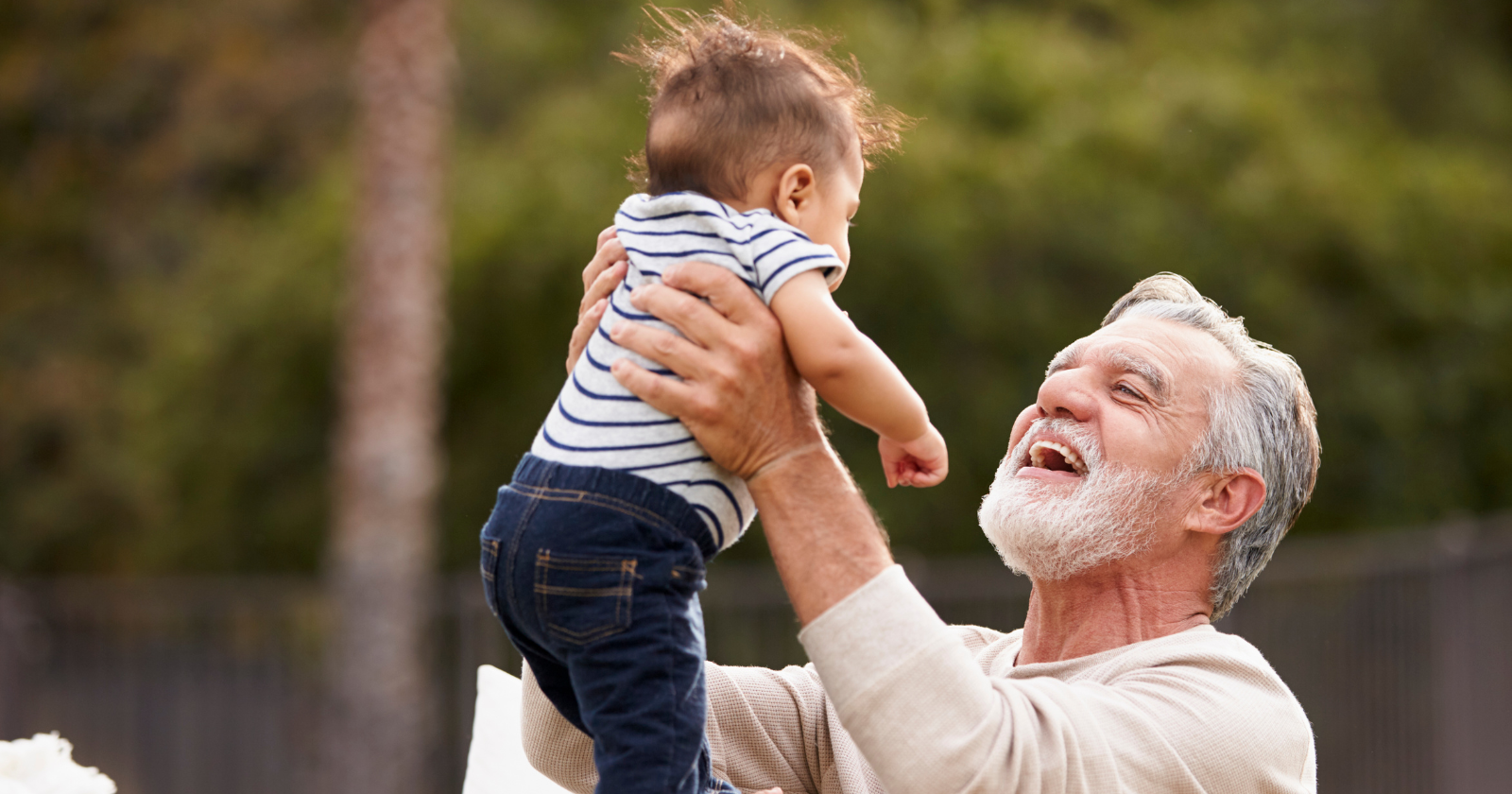
A twenty folded into a birthday card. The Tuesday pickup that lets a parent keep a shift. A freezer stacked with labelled meals, a lift to a match nobody else could drive to, an hour on the phone about a boy or a bad week. Taken one at a time, these look like nothing more than affection — the ordinary overflow of a grandparent who loves the children and has the time. That is usually how we file them, too: under sentiment, not support.
The interesting question is what happens when you stop filing and start counting. If you added up the lifts and the loans and the recitals attended, treated them as a transfer of time and money rather than a mood, would anything show up on the other end — in how the grandchildren themselves are actually doing? For a couple of decades now, researchers have been trying to do exactly that, and the answer is a careful, qualified yes.
How you would even measure a grandmother’s help
The trick is to turn warmth into something you can add up. One of the largest efforts to do this surveyed 1,515 secondary school students, aged eleven to sixteen, across England and Wales, and asked them not how much they loved their grandparents but how much their grandparents actually did. The list was concrete: looking after them, sharing their interests and hobbies, getting involved in their school activities, acting as a mentor or advisor for future plans and for problems, helping out with money. Add those up and you get a number — a rough index of how far a grandparent has really gotten involved, or, as the people who ran the study put it, “stuck in.”
The Artful Parent
Family-life ideas and sharp reads, in your inbox.
That distinction turns out to matter more than it sounds. When the numbers were analysed, it was involvement, not emotional closeness on its own, that tracked with how the children were faring. A grandparent a child felt warmly toward but rarely saw did not move the needle in the same way as a grandparent who turned up and did things. The doing was the part that counted.
And the scale of the doing is not trivial. Across ten European countries, one review found that 58 percent of grandmothers and 49 percent of grandfathers had provided some care for a grandchild over a single year; German grandparents in their late fifties and sixties averaged nearly thirteen hours a month minding grandchildren. In Switzerland, economists put the value of unpaid grandparental childcare at at least two billion francs a year. This is not a fringe activity dressed up as data. It is one of the larger informal welfare systems most societies have, and almost nobody thinks of it that way.
What the numbers actually say
In that survey of English and Welsh teenagers, greater grandparent involvement was associated with more prosocial behaviour and with fewer emotional problems — the prosocial link the stronger and more reliable of the two. Children whose grandparents were more involved were, on average, a little more likely to be the ones who shared, helped, and noticed when someone else was upset.
“On average” and “a little” are doing real work in that sentence, and we will come back to them. But the direction is consistent, and prosocial behaviour is the finding that has held up most dependably as other researchers have gone looking for it. There is something quietly plausible about it, too. A child who has spent years being patiently attended to by someone with no particular hurry — someone whose whole role is to have time — has been shown, over and over, what unhurried attention looks like. That is a hard thing to measure and an easy thing to recognise.
One more pattern is worth naming, because it is the most consistent one in the whole literature: it is the maternal grandmother, the mother’s mother, who is on average the most involved of the four grandparents, with the most contact and the closest relationships. The help is real, and it is not evenly distributed.
Where the help lands hardest
The most striking result was not about grandchildren in general. It was about which grandchildren.
Grandparents were roughly as involved across every kind of family — the researchers found no real difference in how much help flowed into two-parent, lone-parent, and step-families. But the association between that help and a child’s adjustment was stronger in the lone-parent and step-families than in the two-parent biological ones. Where a household was already carrying more — a parent doing it alone, a family reshaped by separation — a grandparent’s involvement lined up with a larger difference in how the young person was doing.
The researchers’ own reading was modest and, we think, right: the protective role of grandparents in lone-parent and step-families deserves more attention than it gets. When a family is stretched, a grandparent is often the slack in the rope — and you can see it, faintly, in the numbers.
The part the studies won’t promise
None of this is a prescription. What follows is what the studies found, read by people who work through research for a living — not a route map for your own family, and no substitute for a family therapist or counsellor when a household is genuinely under strain.
The studies themselves are careful in ways the headline version usually isn’t. Every one of these findings is correlational: they show that involvement and wellbeing travel together, not that one produces the other. It is entirely possible that easier, sunnier children draw more effort out of their grandparents, rather than the effort making the children sunnier — the arrow could point either way, and probably points both. The researchers who work on this say so directly, and note that healthier, better-off grandparents tend both to live longer and to have grandchildren who do well, which muddies any simple story.
The effects are also modest. In ordinary, low-risk families, a grandparent’s involvement is the kind of thing that shows up reliably across fifteen hundred teenagers and would be almost impossible to spot as you watched any single child grow up. It is not uniform, either. The prosocial link is robust; the idea that grandparents straightforwardly reduce behavioural problems is not, with several studies finding no such effect at all. And more is not always better: researchers have found that both very low and very high levels of grandparental involvement can weigh on a child rather than lift them. Grandparental care, as one review put it flatly, is not a panacea.
What the research can offer, then, is not a lever to pull. It is a correction to a habit of mind — the habit of treating a grandparent’s help as decoration, a nice-to-have, sentiment with no weight. Counted honestly, it carries weight: small, uneven, easiest to see when a family is under pressure, and impossible to prove down to the last inch, but real.
So the next time someone waves off a grandparent’s constant turning-up as spoiling, or as something sweet but beside the point, it is worth remembering that somewhere in a survey of fifteen hundred teenagers, that turning-up left a mark you can actually measure — not a large one, but real, about the size of a twenty folded into a card and added up over years.