
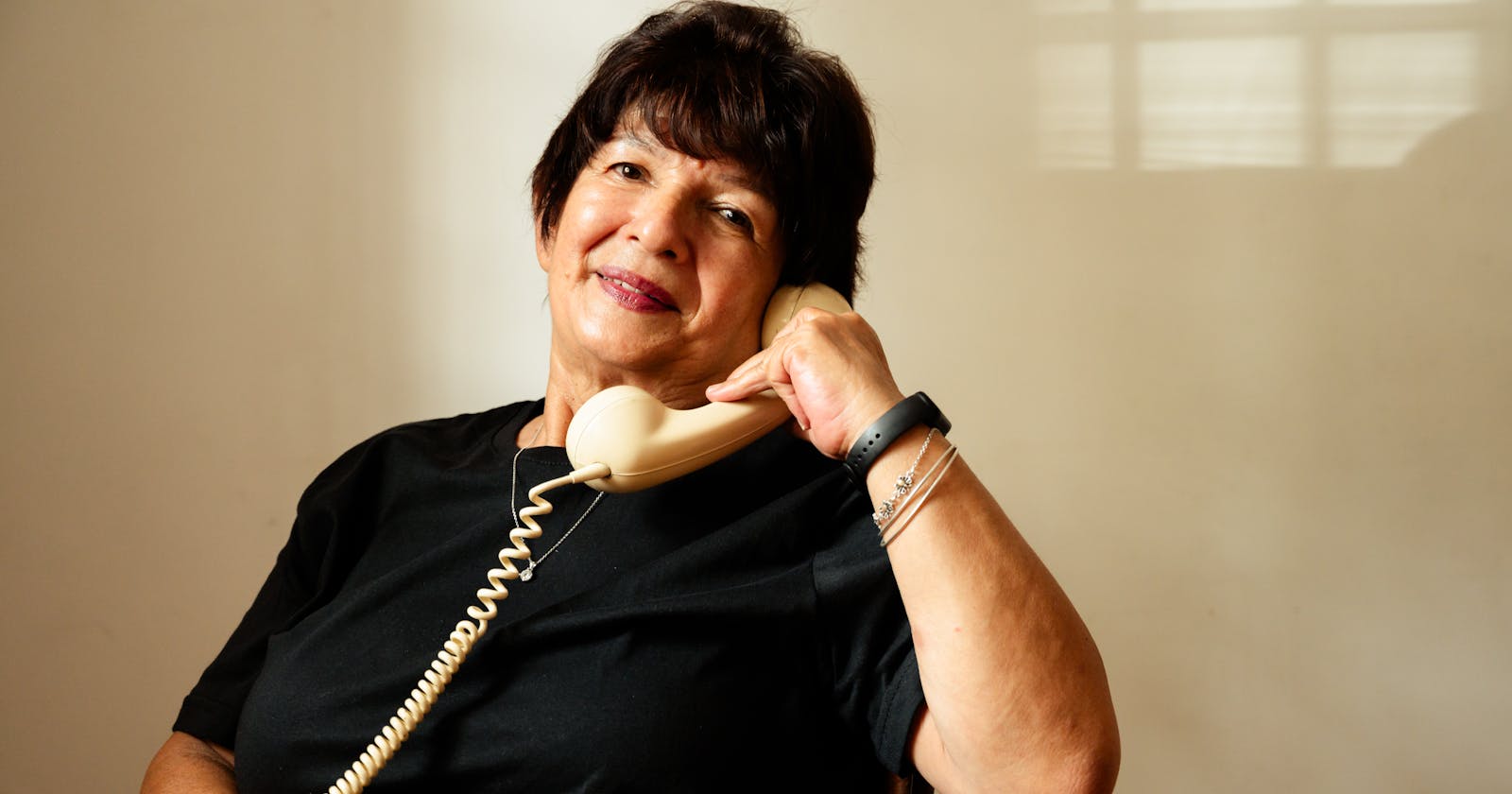

There is one in almost every extended family. The person who knows that your cousin’s surgery is on Thursday, that your nephew started a new job, that your aunt isn’t speaking to her brother again and that the table at the reunion should be arranged accordingly. The person whose phone holds everyone’s birthdays. The one who sends the card, books the restaurant, and notices, three weeks out, that nobody has thought about Thanksgiving.
We tend to explain this person away. She is just organized. She likes that sort of thing. She has the time. But step back and the pattern is too consistent to be personality. Look across a whole family, then across many families, and the same figure appears again and again, doing the same kind of work, and usually wearing the same face.
One person, and usually the same person
The researcher Carolyn Rosenthal gave this its first careful description in 1985. What she noticed was structural rather than incidental: families generally identify one person as the keeper of kin ties, rather than spreading the job evenly between partners. There is a position, in other words, and someone occupies it. In her data, the person occupying it was overwhelmingly a woman.
Nearly four decades later, the picture has barely shifted. A 2023 study in the journal Sex Roles by Maaike Hornstra and Katya Ivanova put numbers to it, asking thousands of adults in the Netherlands which parent did the connective work of the family: buying the presents, organizing the outings, relaying the news, talking through the problems. The gap between mothers and fathers was not subtle. Mothers were about ninety percent less likely than fathers to be doing none of this work, and among those who did pitch in, mothers handled a wider range of it, roughly half again as many kinds of tasks as fathers. In families where both parents were still together, close to seven in ten mothers were involved in all four activities; more than four in ten fathers were involved in none.
The researchers are studying recent families, with a modern survey, and they find what Rosenthal found in 1985 and what others have found in between. A pattern that survives that many decades and that many methods is not a quirk of one dataset.
A name for the work
What is easy to miss is that this is work at all. We are writers here, reading across sociology rather than conducting it, and the single most useful idea we came across belongs to the anthropologist Micaela di Leonardo, who in 1987 named it the work of kinship. Studying Italian-American families in Northern California, she described a whole category of labor that sits alongside housework and a paying job: “the conception, maintenance, and ritual celebration of cross-household kin ties,” the visits and letters and phone calls and cards, the holiday gatherings, and, tellingly, “the mental work of reflection about all these activities.”
Her own word for it was sharper than “invisible.” This work, she wrote, was “unlabeled,” with “no retinue of experts prescribing its correct forms” — a “heretofore unacknowledged array of tasks” that is “culturally assigned to women.” Housework at least has a name and a thousand opinions attached to it. The work of keeping a family in touch has, until recently, had neither. It simply got done, by someone, and the rest of us enjoyed the results without quite seeing the effort that produced them.
Di Leonardo also found something the surveys cannot capture. When she sat with women and traced their lives, “the very existence of kin contact and holiday celebration depended on the presence of an adult woman in the household.” When a marriage ended or a mother died, she wrote, “the work of kinship was left undone” — until another woman arrived and quietly rebuilt the network of calls and visits and dinners that everyone had taken for granted.
What happens when the arrangement breaks
The newer research adds a wrinkle that is worth sitting with, because it complicates any simple story about men who can’t be bothered. In the Dutch data, divorce changed fathers. Fathers who had separated and repartnered did noticeably more of this connective work than fathers who were still married, as though the buffer of a wife had been removed and the task fell to them at last. The same divorce did not change mothers, who were already doing it. And stepmothers, the study found, could be just as effective as biological mothers at keeping a father close to his own children.
There is also a gentle finding underneath all of this. Parents who did more of this work tended to have somewhat closer relationships with their grown children. The effect was small, and which way it runs is genuinely unclear, but it points at something true to experience: the cards and the dinners and the passed-along news are not nothing. They are part of how a family stays a family.
What the research does not settle
This is one body of work, not a closed case, and it has real limits. The studies lean Western and lean toward older generations raised under more traditional expectations about who tends the home. The Dutch survey is a snapshot in time, built from what adult children report about their parents, and it counts how many kinds of these tasks someone does rather than how heavy each one feels. Di Leonardo’s account is rich but rests on one community and one fieldworker’s interviews, with no statistics behind it; she was careful to call her broader claim a suggestion.
The most important caveat is about the word “cost.” It is tempting to read all this as a story of unpaid burden quietly crushing the family’s organizer, and none of these studies actually shows that. The surveys measure who does the work and find that it tends to strengthen family ties; they do not measure what it takes out of the person doing it. Di Leonardo, who looked closest, found something genuinely two-sided. The women she studied felt real guilt about letting any of it slide, “about their failures to keep families close.” But they also experienced kin work as a source of connection and even of quiet power within the family, “an act of nurturance” and a way of holding things together that they did not always want to give up. She described kin work, in her words, as something that embodies “both love and work.” Both halves are true, and a piece that kept only the grievance would be telling half the story.
What this can and cannot do
Naming a pattern is not the same as diagnosing your own family, and it is certainly not advice. What this research can do is make a familiar arrangement visible, so that the work of remembering and gathering and smoothing-over is at least seen as work, by the family and sometimes by the person doing it. What it cannot do is tell you whether, in your house, that arrangement is a comfortable fit or a slow accumulation of resentment. Only the people in it know that, and they often know it better once it is said out loud. If the imbalance has hardened into something that strains a marriage or a parent-child bond, that is the sort of thing a family counselor is far better placed to help with than any study.
It may be enough, this year, to notice. To ask who has been keeping the thread of the family from breaking, and to consider that it is a job rather than a temperament. The gatherings tend to be remembered fondly and at length. The person who made them happen tends to be remembered as simply the kind of person who does that sort of thing.