
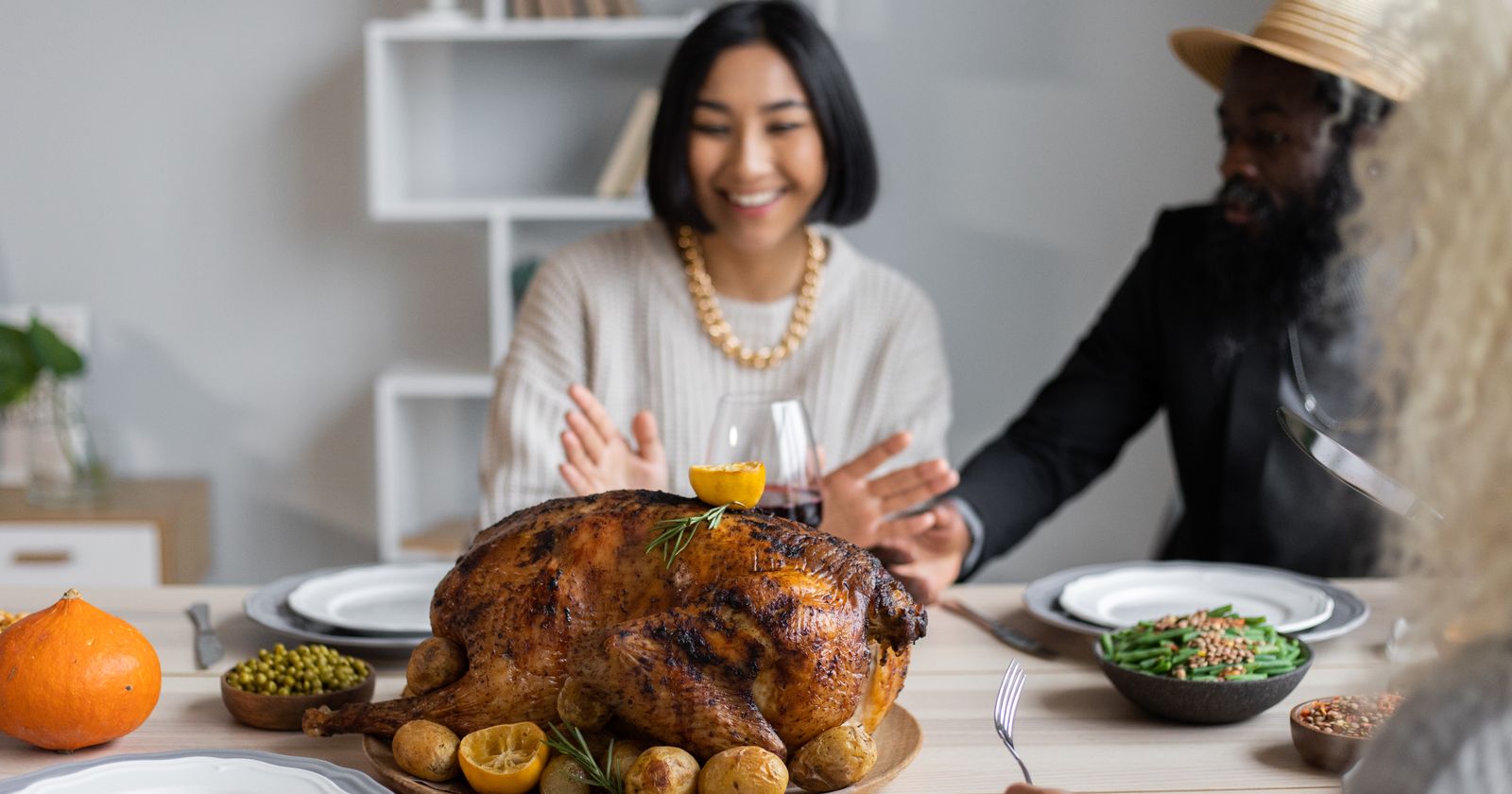
Thanksgiving and Christmas sit about a month apart, which makes the first a kind of preview of the second. It’s natural for grown children to drive home from one thinking about the other.
No single dinner settles that. But a few small things on the day can make coming back in December an easier yes. None of them involves a better turkey.
Christmas may already belong to another household, a work schedule or a travel budget. A warm Thanksgiving can leave someone looking forward to another visit, even when December isn’t possible.
The Artful Parent
Family-life ideas and sharp reads, in your inbox.
1. They put someone else’s dish on the table
For years the menu may have been yours alone: your stuffing, your mother’s cranberry recipe, the pie that only you make. When a grown child offers to bring something, it can feel like a small challenge to the way things are done.
Saying yes, and serving it without a side-by-side comparison, tells them the meal belongs to them too. “Put it right here in the middle” is enough.
If there’s a dish you’d be sad to lose, keep it. There’s room on most tables for two kinds of stuffing.
2. They laugh off the lumpy gravy
Something goes wrong at most big meals. The rolls burn, the turkey runs an hour late, the gravy refuses to behave.
“Well, the gravy has character this year” is one way through. You don’t have to turn every mishap into a joke. “The turkey needs another hour. Could someone put out a snack?” gives everyone something useful to do and takes some pressure off the cook.
You’re allowed to be tired and disappointed. “I need ten minutes and someone to stir this” is more useful than carrying on alone.
3. They think about who sits where
Seating can shape someone’s whole afternoon. A new partner placed between two strangers, or a thirty-year-old sent to the kids’ table again, has a harder time of it.
A little thought helps: the newcomer beside someone warm and talkative, the relative with strong opinions at the far end, the parents of a toddler near the door.
Or ask. “Where would you two like to sit?” lets them choose their own neighbors.
4. They keep the thankful round optional
Going around the table to say what you’re grateful for is a lovely tradition in many families. It can also put people on the spot, especially someone having a hard year or a guest who has just met everyone.
An easy way out keeps it kind: “Share if you’d like to, or just say ‘pass the potatoes.'”
If the round means a lot to you, say so and go first. Short and sincere can set the tone for the rest.
5. They ask before telling the old story
Every family has the story: the school play, the haircut, the thing that happened at camp. It’s told with affection, and for the hundredth time.
In front of a new partner or an in-law, the same story can feel different to the person it’s about.
A quick check gives them the choice: “Am I allowed to tell the canoe story?” If the answer is a groan and a no, there are other stories. If it’s a yes, they may want to tell it themselves.
6. They stop disagreements becoming personal
Plenty of families hold more than one view of the world, and Thanksgiving is rarely the day anyone changes theirs.
A host can set the tone before the plates are filled: “Let’s keep the headlines out of it until the pie is gone.” It works best when the host keeps to it as well, including when a remark from across the table is hard to let pass.
Families can disagree without making someone’s partner, identity or life choices the subject of the meal. If a remark becomes personal, the host can step in: “We’re not going to speak about them that way.” Ordinary political debate can wait; someone being targeted shouldn’t have to wait for support.
7. They send everyone home with leftovers
A container of turkey and a wedge of pie for the road keeps the day going a little longer. The meal turns up again as Friday’s sandwich, three hundred miles away.
Having containers ready that don’t need to come back makes it simple. Pack from the fridge as people are leaving, and ask what they’d like: “Dark meat or white? Do you want the last of the stuffing?”
For a long drive, pack chilled leftovers in a cooler with ice or frozen gel packs, keeping them at 40°F or below.
If they’re flying or would rather travel light, a “no thanks” is fine.
8. They mention Christmas as an invitation
At some point the next holiday comes up, and how it’s raised makes a difference.
“So we’ll see you on the 24th?” asks for an answer on the spot, in front of everyone. “We’d love to have you at Christmas if it works for you. No need to decide today” gives them time to work it out.
If you need to know by a certain date for your own planning, say that too: “Could you let me know by the first week of December?” And if they’ll be with the other side of the family this year, there may be another day that suits everyone.
Before the doorbell rings
Most of these take a sentence. The one worth preparing is the last, because it tends to come up when everyone is putting on coats.
Decide ahead of time how you’d like to say it, and what date you’d need an answer by. Then, when the leftovers are packed and the car is running, you can say it once, warmly, and wave them off.