

I was six years old when I started school in Kazakhstan.
My parents accompanied me to the opening ceremony of the school year, and afterwards we went out for a nice meal to celebrate. It was a big occasion. A transition into independence, if you wish.
The next day, I put on my backpack full of textbooks and walked to school on my own.
The Artful Parent
Family-life ideas and sharp reads, in your inbox.
My neighborhood public school was about five minutes away. I studied in the afternoon shift, which meant my classes started at 2 p.m. and finished around 7 p.m.
I remember waiting downstairs for my classmate Zarina. We’d walk to school together, chatting away. On the way home, there were usually four of us, and we’d walk together until we reached our apartment buildings, watching each friend disappear inside before continuing to the next.
By 7 p.m., it was often already dark.
Nobody I knew was dropped off or picked up by their parents. It simply wasn’t something we did.
Being a kid, I just assumed that was the way everyone around the world lived their lives. And when I enrolled in a Canadian matriculation program in Malaysia and met peers from all over the world, I started realizing how different things were in other countries.
According to the National Center for Safe Routes to School’s 2011 report, 48% of American children aged 5 to 14 usually walked or bicycled to school in 1969.
By 2009, that number had fallen to just 13%.
Meanwhile, the percentage arriving in private vehicles rose from 12% to 45%. School bus use remained almost unchanged, moving from 38% to 39%. These figures reflect how parents described their children’s usual journeys in 1969 and 2009, not the situation today, and the two surveys used different methods.
Mimamori
I don’t remember any American students in my batch, but there were a couple of Japanese classmates. They also shared stories of gaining independence quite young and feeling safe doing so.
Years later, I came across a Japanese show on Netflix called Old Enough!, and it reminded me of those conversations.
The premise is both adorable and slightly terrifying. Japanese toddlers, some as young as two, are sent out to complete their first errands without their parents. They walk to shops, buy groceries, deliver things to neighbors, occasionally forget what they were supposed to do, and sometimes burst into tears along the way.
Watching a two-year-old navigate the world with a tiny shopping bag is incredibly endearing. But I also found myself wondering whether I could ever let my own child do something like that.
There is, of course, an important detail behind the scenes. The children aren’t entirely unsupervised. The production team checks their routes beforehand, informs people in the neighborhood, and has disguised camera crews and safety staff following them. These aren’t ordinary toddlers being sent out into traffic without anyone watching.
Still, the show draws on a real Japanese tradition of encouraging children to take responsibility from an early age.
And that independence extends well beyond television.
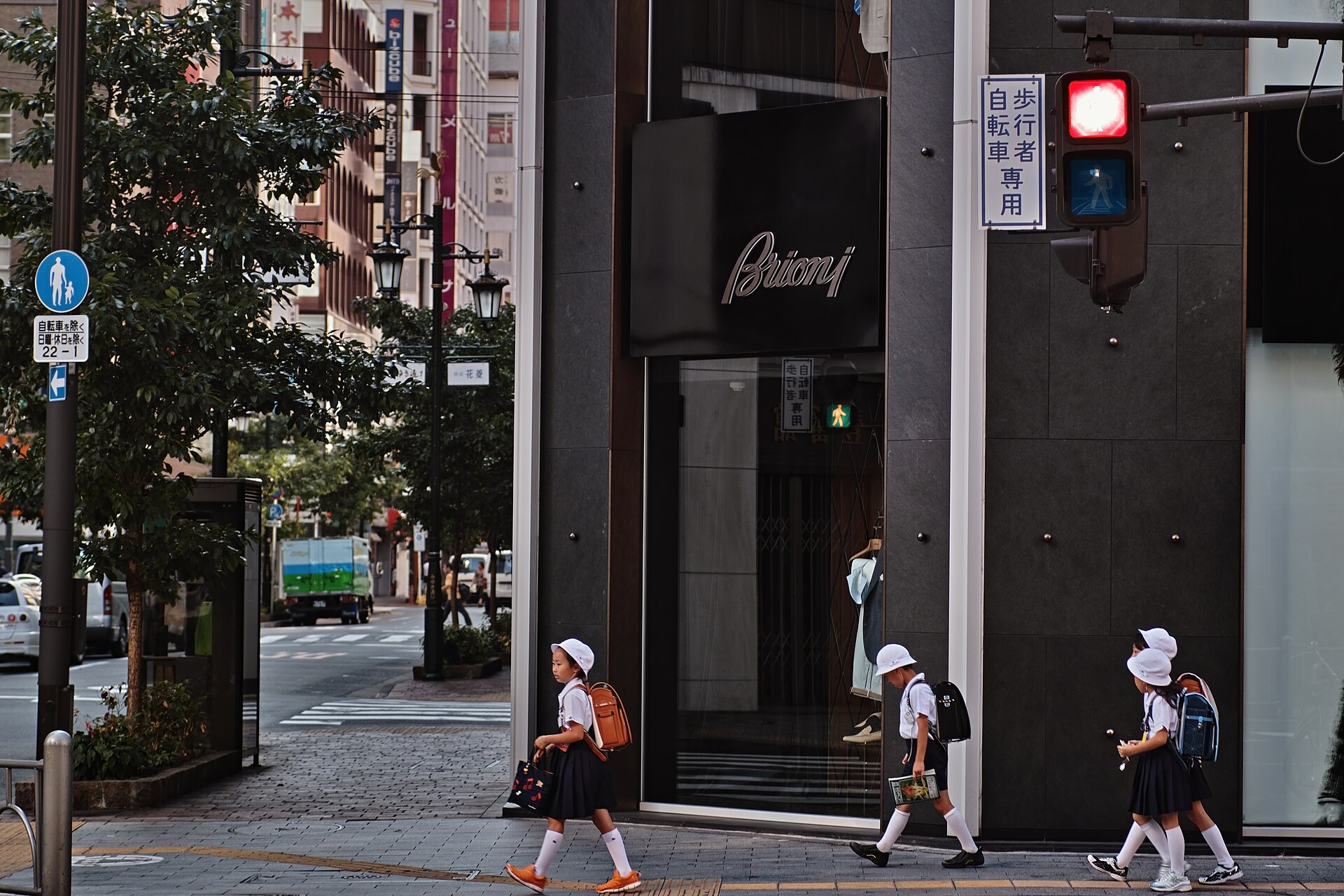
In an online survey conducted in 2023 and published in 2024, involving 6,000 mothers of municipal elementary-school children, researchers found that 82% of children walked to school and 67% walked home daily during the surveyed week. Some traveled with neighborhood friends, while 15% walked to school completely alone.
Even more remarkably, 77% of parents said their children were allowed to walk home independently. The Japanese figures aren’t directly comparable with the U.S. numbers because the studies covered different children, years and methods.
This doesn’t mean Japanese parents are unconcerned about safety. Survey respondents identified strangers as a concern during school commutes, and road accidents and heatstroke as concerns about other outings. But walking to school without an adult is an established part of everyday life for many Japanese children.
And perhaps the question isn’t simply how much Japanese parents trust their children, but how much they can trust the world outside their front doors.
I emailed Professor Kimihiro Hino of the University of Tokyo, who co-authored the study, to understand why walking to school without a parent has remained so ordinary in Japan.
“I believe the most important factor is Japan’s relatively low crime rate,” he told me.
“Because walking to school is taken for granted in Japan, schools, parents, and local communities have developed systems to ensure children’s safety on their journeys,” he explained.
“In this sense, public safety and the social norm of walking to school have reinforced each other.” His team’s 2025 research also found an association between parents’ perceptions of safety from crime and children’s independent mobility. That doesn’t establish cause and effect.
One of those systems is called mimamori, which roughly translates to “watching over.” It refers to the adults and community members who help keep an eye on children as they travel through their neighborhoods.
What I found really curious about Hino’s explanation is that Japanese children aren’t necessarily being left to fend for themselves. Their independence is supported by an entire community.
Why walking became harder in America
Things look quite different in the US. One major reason fewer American children walked to school has little to do with parenting styles.
Many began living farther from their schools.
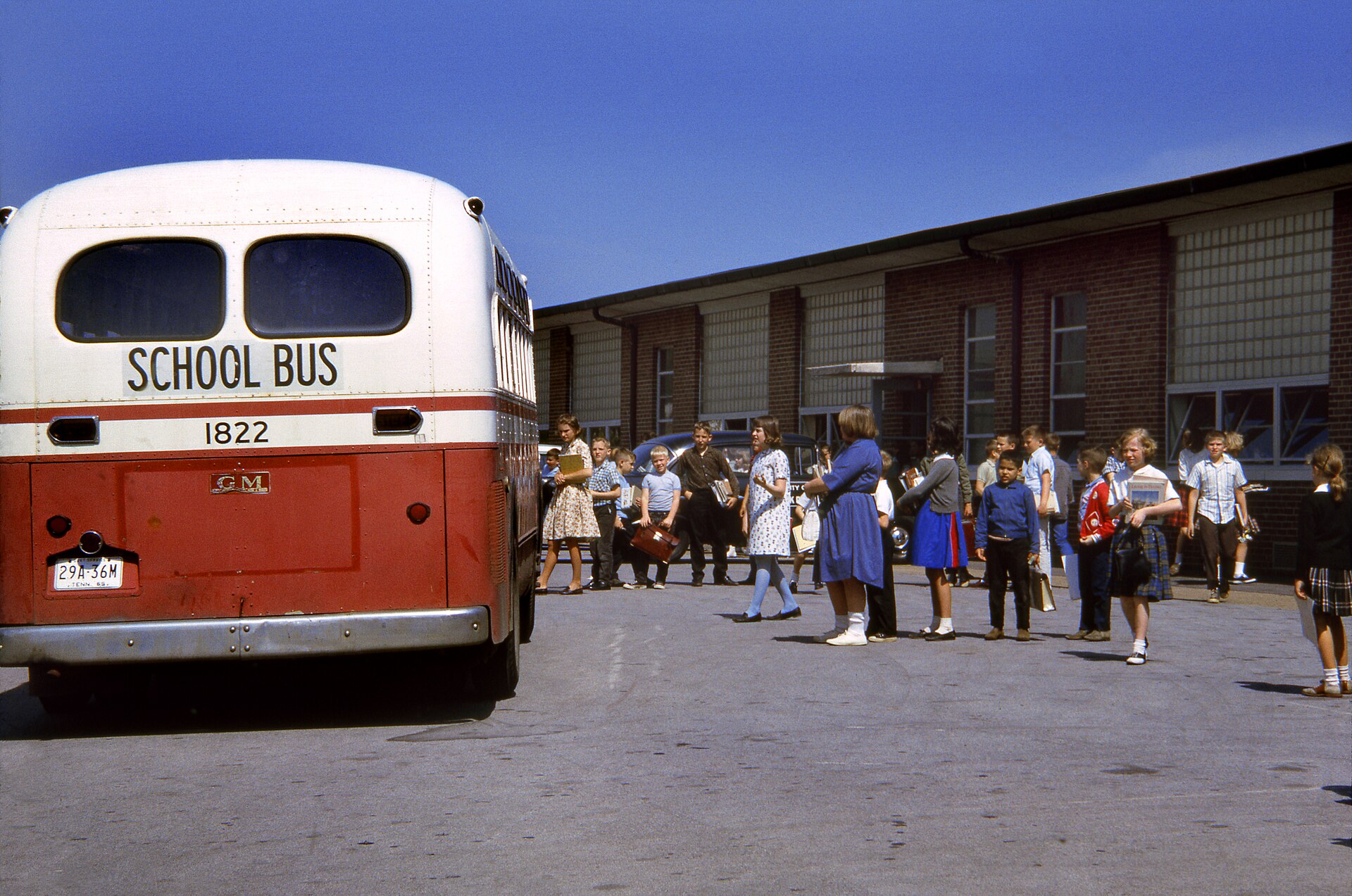
Photo: Ed Westcott / U.S. Department of Energy, public domain.
In a 2007 study, transportation researcher Noreen McDonald examined school travel patterns between 1969 and 2001. Her analysis estimated that increasing distances between homes and schools accounted for 47% of the decline in walking to school over that period.
As American suburbs expanded and schools consolidated, more children ended up living farther from their schools. My five-minute walk in Kazakhstan wouldn’t have been possible if my school had been several miles away.
But distance doesn’t explain everything.
According to the federal travel report, nearly 89% of American children living less than a mile from school usually walked or cycled there in 1969.
By 2009, only 35% did. Meanwhile, the percentage arriving by private vehicle within that same distance rose from about 7% to 43%.
These children still lived relatively close to school. Yet many more were arriving by car.
In a 2004 national survey analyzed by the CDC, 61.5% of parents of children aged 5 to 18 cited distance as a barrier to walking, while 30.4% mentioned traffic danger. Crime was cited by 11.7%.
A school can be ten minutes away and still require a child to cross a busy road without a safe crossing. Distance alone doesn’t tell us whether a journey is safe.
And there’s an unfortunate cycle here. Parents who drive because walking feels unsafe may inadvertently contribute to the traffic that makes other families reluctant to walk.
What Paris is doing differently
I tried to look for an example where someone already tried to solve a problem in a big city with high traffic. In Paris, city planners have been experimenting with a relatively simple idea: giving the streets outside some schools back to children.
I contacted Marcel Moran, an urban planning researcher who visited all 272 sites in Paris’s School Streets program in the summer of 2025. Not all were fully pedestrianized, and some had existed for years.
Some streets have received little more than gates and signs. Others have added trees, benches, drinking fountains and redesigned pavement. Moran also found that some gates were left open, allowing drivers to enter despite the restrictions.
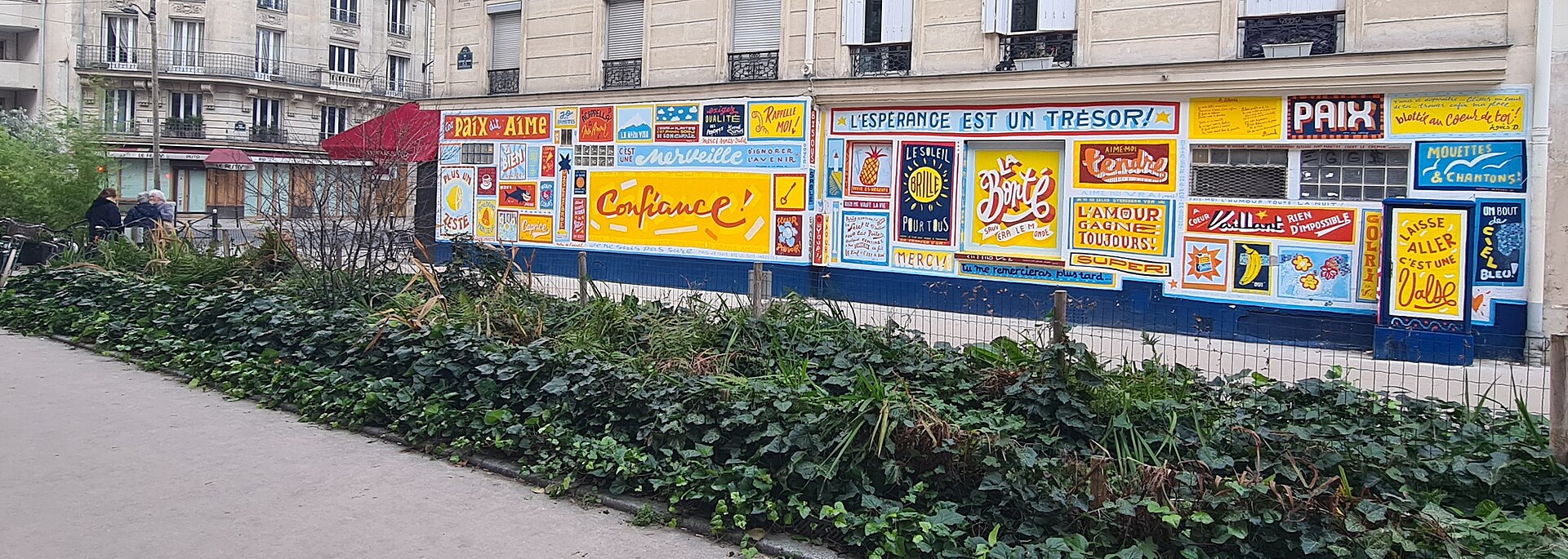
Photo: Guallendra / Wikimedia Commons, CC0 (public domain dedication).
Moran told me that the streets were becoming gathering places for families before and after school. On weekends, children played soccer, learned to ride bicycles and enjoyed spaces that had previously been occupied by cars.
But there’s an important distinction between making streets more welcoming and actually getting more children to walk to school.
Moran and his French colleague Manon Eskenazi are now interviewing parents to investigate whether these changes influence how families travel and how safe they feel. They haven’t yet established whether the changes are getting more children to walk to school.
Still, Moran believes American cities don’t necessarily need expensive, large-scale projects to start making a difference.
They could replace parking spaces with planters, introduce seating or temporarily close a street using traffic cones to see how families respond.
“We can start with the materials we have, and show the concept works,” he told me.
Final thoughts
Looking at all this research, it makes total sense to me now why walking to school was so ordinary in Kazakhstan when I was growing up.
For one, we attended neighborhood public schools. Mine was just five minutes from home, and most of my classmates lived in the surrounding apartment buildings.
Our city was also relatively easy to navigate on foot. There were playgrounds, little parks and benches with grannies catching up with each other and keeping an eye on the children passing by.
And because so many children walked, we always had someone to walk with. It was simply how things worked.
After speaking to these researchers, I realize that our independence depended on much more than how much our parents trusted us. We had schools close to home, familiar streets, friends living nearby and neighbors who looked out for one another.
When I think back to those walks home with Zarina, I realize how many things had to come together to make them possible.
At six years old, I never gave any of them a second thought.
Sources
McDonald (2007), Active Transportation to School: Trends Among U.S. Schoolchildren, 1969-2001
CDC (2005), Barriers to Children Walking to or from School—United States, 2004
Moran (2026), Pedestrianizing School Streets in Paris: Field Collection and Remote-Sensing Analysis
Nippon TV, Old Enough! production overview
Netflix Tudum (2022), How Is Old Enough! Made?
Original reporting: Email interviews with Kimihiro Hino (October 2026) and Marcel Moran (October 22, 2026).