
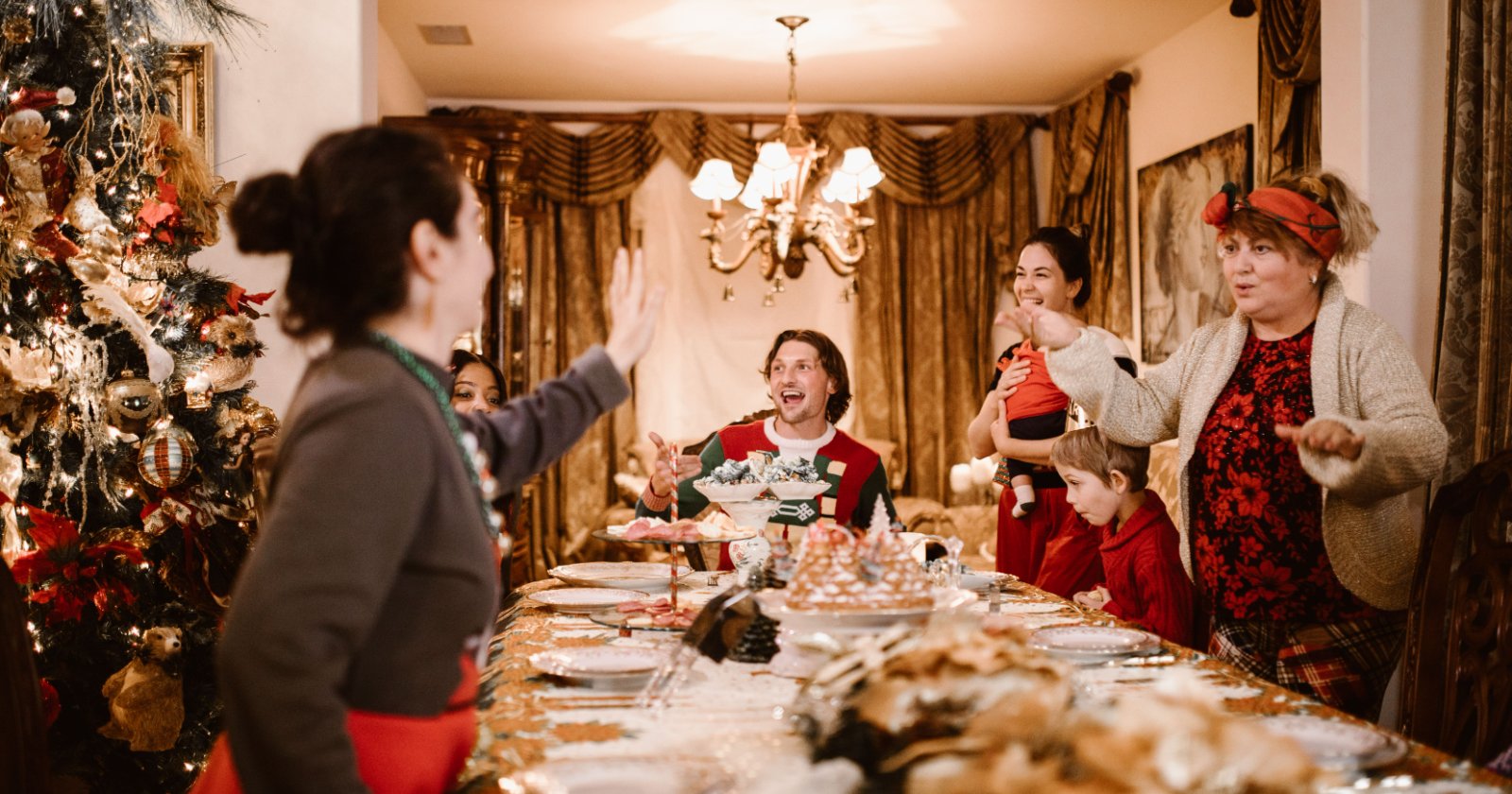
For a lot of grown children, the drive home for Christmas comes with mixed feelings. There’s the tree, the food and the people they love. There’s also the old bedroom, the old arguments and the sense, somewhere around day three, of being 15 again.
Holiday stress is common. In a 2023 American Psychological Association survey of 2,061 U.S. adults, 89 percent said something about the season caused them stress, and 22 percent named experiencing or anticipating family conflict.
Some families manage to make home a place people want to come back to, year after year. It rarely comes down to a perfect dinner. It’s usually a handful of small, repeatable habits. Here are eight of them.
The Artful Parent
Family-life ideas and sharp reads, in your inbox.
1. They ask what everyone is looking forward to
Psychologist Barbara Fiese, who studies family routines and rituals, says holiday stress tends to come from “unrealistic expectations and emotional strain.” In an interview with the University of Illinois, she suggested gathering the family to “identify the three things you really look forward to and the three things you really dread,” then seeing what can be dropped or shared out.
A quick text in early December does the job: “What are you most excited about this year? Anything you’d happily skip?” The answers are often surprising. The thing a parent spends two days on may matter less than a walk everyone takes after lunch.
2. They keep a few traditions, and don’t sweat which ones
Rituals do seem to help. In a set of studies published in 2016, a team led by Ovul Sezer, asked almost 1,100 adults about their holidays. People who took part in family rituals, like opening presents together or a family dinner, enjoyed the holiday more and felt closer to their families.
The type of ritual didn’t seem to matter much. In the Christmas study, opening presents, a family dinner, decorating the tree, going to church and playing games all went with similar levels of enjoyment: what counted was doing something together. The studies were mostly correlational, so they can’t prove the rituals caused the enjoyment, but it seems a good argument for keeping the traditions people love and letting go of the ones nobody would miss.
3. They don’t keep score
Once children have partners, Christmas often means two families, sometimes three, wanting the same few days. Marriage and family therapist Moraya Seeger DeGeare told NPR’s Life Kit that couples often aim for a perfectly even split, and that it’s the wrong goal. “Fairness is definitely not, like, equal time,” she said.
Parents whose kids look forward to coming home tend to take “we’re with Sam’s family this year” gracefully, without a sigh or a tally of the last time. A warm “We’ll miss you, let’s do a call on Christmas morning” makes next year easier for everyone.
4. They treat their kids like the adults they are
The pull back into old roles works on parents too. “Parents often unconsciously assume pre-existing authoritarian roles when their adult children return home,” clinical psychologist Carla Marie Manly said in a 2021 Salon article. That, she said, “can create difficult challenges for the adult child who wants to be seen and treated as an adult.”
In practice, this looks like not asking when they’ll be home, not commenting on how much they’re drinking or sleeping, and asking them about their work the way you’d ask a friend. A 35-year-old with a mortgage doesn’t need a curfew, even an implied one.
5. They build in downtime
Even close families have limits. In a 2019 OnePoll survey of 2,000 Americans who travel for the holidays, commissioned by Motel 6, respondents said they lasted an average of three hours and 54 minutes before getting sick of their relatives, StudyFinds reported. One in four said they’d retreat to a quiet room, and 37 percent said they’d make up an excuse to leave.
It was a marketing poll, not a scientific study, but the point holds up. Parents who say “Go have a nap” or “Take the car, see your friends” without a hint of hurt make the whole visit easier. A comfortable bed for every guest doesn’t hurt either.
6. They leave politics on the side
After the 2024 election, an APA survey of 2,083 adults found that 72 percent hoped to avoid talking politics with family over the holidays. And 38 percent said they were avoiding family members they disagreed with altogether.
That doesn’t mean pretending nobody has opinions. It means not opening with the latest headline, and being willing to say, “Let’s leave that for another day,” when the table starts to tense up.
7. They skip the commentary
“Have you put on weight?” “Any news on the job front?” “So when are you two getting married?” Each question is small. Together, over three days, they can make a grown child feel inspected rather than welcomed.
Parents whose kids love coming home tend to let their children bring up the big topics themselves. If something’s going well, they’ll usually say so. If something isn’t, a parent who hasn’t been pressing is an easier person to tell.
8. They don’t run themselves ragged
Fiese points out that it’s often “the simple things that are most meaningful and memorable,” not the elaborate trimmings. A parent who has spent a week cleaning, cooking and wrapping can arrive at Christmas Day exhausted and tense, and grown children notice.
Let them bring a dish. Order the pie. Hand someone the potato peeler. Plenty of grown children would happily trade a fancier meal for an hour in the kitchen with a relaxed parent.
None of these habits takes much money or effort. Together, they say the same thing: you’re welcome here as you are now, not as you were at 15. For a lot of grown children, that’s what makes the drive feel short.