
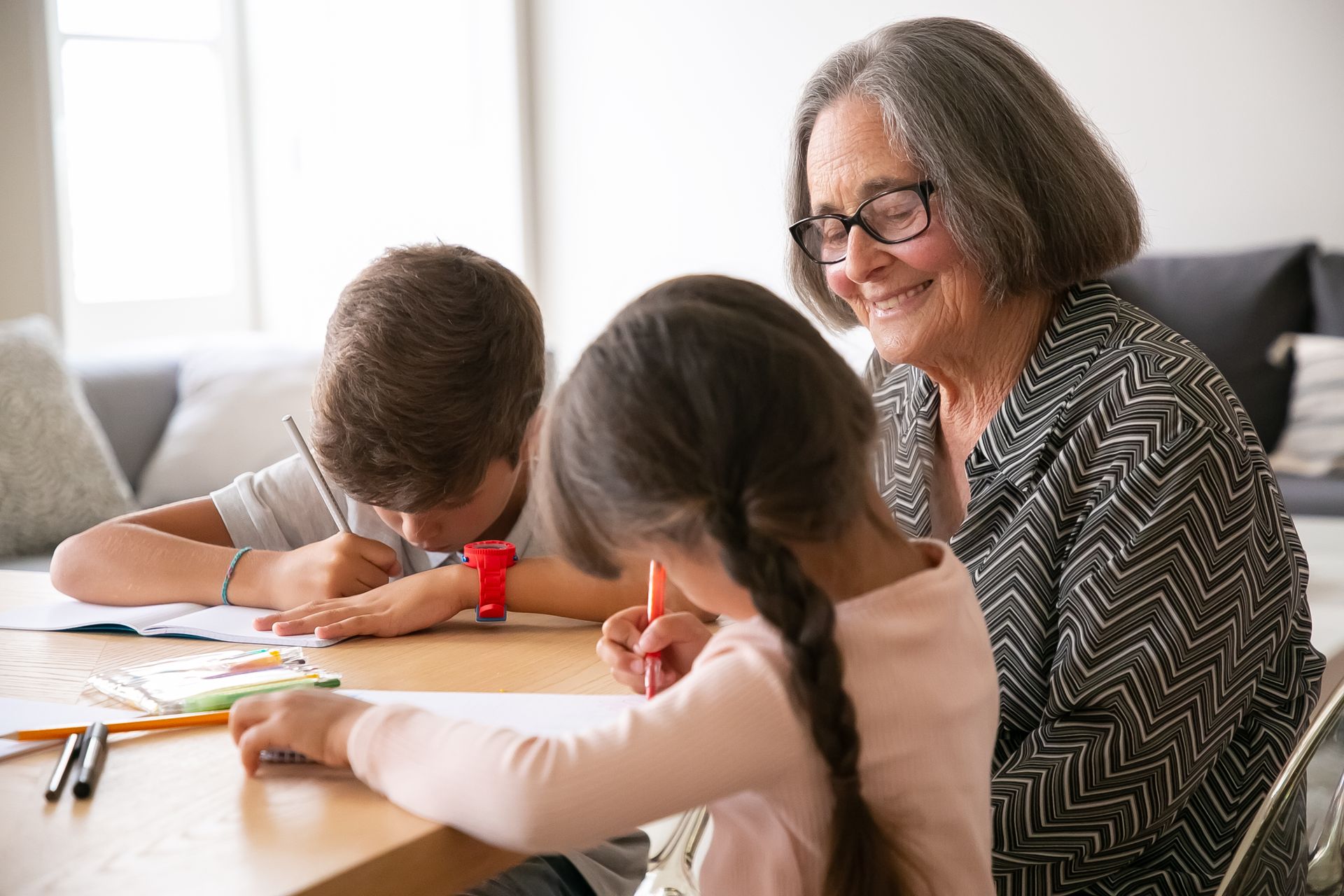
Grandparents can end up giving some grandchildren more attention than others without ever meaning to. One grandchild lives nearby, another chats easily, a third shares your love of fishing. Grandchildren tend to notice.
In a 2024 conference abstract by family researchers Destiny Ogle, J. Jill Suitor and colleagues, 229 adult grandchildren from 94 families were asked about their grandmothers. Eighty percent felt their grandmother was emotionally closer to particular grandchildren. Firstborns and those in more frequent contact were more likely to see themselves as the closest. The grandchildren averaged 28 years old and the grandmothers 92. The findings show links rather than causes and do not establish whether any differences were intentional.
The aim isn’t to treat every grandchild identically, or to make each one believe they’re loved most. It’s for each child to feel individually known and fully included. These nine habits help.
The Artful Parent
Family-life ideas and sharp reads, in your inbox.
1. They have a little language of their own with each grandchild
A nickname only one child gets. A running joke about the cat who stole the sandwich. A made-up handshake that has grown three extra steps over the years. None of these ranks anyone, and none of them needs to be kept secret from the others. They simply mark a relationship as belonging to the two of you.
Let the child shape it. Some children love a pet name and some wince at it, and plenty outgrow one. If a nickname stops landing, drop it and find what fits now.
2. They keep comparisons out of the conversation
“Your cousin was already reading chapter books at your age.” “Why can’t you sit still like your sister?” Whatever the intention, a child hears that they’ve been measured against someone and come up short.
Most research on this involves parents, not grandparents. In a study of 260 Chinese adolescents, those who reported more critical comparisons with their siblings from their parents had more emotional and behavior problems six months later. Teens with more behavior problems also drew more comparisons over time, so the relationship ran in both directions.
Flattering labels can do quieter damage. If one grandchild is “the artistic one,” the others may hear that drawing belongs to someone else. Let each child be good at several things, and talk about what they did rather than where they rank.
3. They aim for fair, not identical
Matching gifts and stopwatch-equal attention can feel like the safe route, but they’re not the only route to fairness. In a 2002 study of 135 children aged 11 to 13 and their older siblings, children who saw their parents’ uneven treatment as fair had fewer emotional difficulties and higher self-esteem. Being held to stricter rules than a sibling, though, was still linked to more behavior problems. The study looked at parents at a single point in time, so it doesn’t show what grandparents’ choices would cause, but it suggests differences matter less when children understand them.
In practice, the grandchild who loves cooking might get an afternoon in the kitchen while the one who dislikes crowds gets a quiet museum morning, rather than a matching pair of outings neither of them wanted. When one child gets more of your time for a while, a short, general explanation is enough: “Your cousin and I have Tuesdays for now. Saturdays are still ours.” There’s no need to share the details of another child’s situation.
4. They bring the same enthusiasm to every child’s firsts
The first grandchild can arrive to a burst of attention: every first step filmed, every drawing framed. By the fourth or fifth grandchild, it’s possible for a lost tooth to feel like familiar news to the adults.
It isn’t familiar to the child. The youngest grandchild’s first bike ride is their first bike ride. Ask for the details and ask to see it. The celebrations don’t need to match. Families differ, circumstances change and some children would rather skip the fuss. What matters is comparable warmth and interest. If you kept a baby book, a growth chart on the door frame or a box of mementos for the first grandchild, check that the later ones have a place there too.
5. They make sure every child is represented on the walls
A fridge covered in one grandchild’s paintings says something, whether or not you meant it to. So does a hallway of photos where one child is forever three and the newest grandchild doesn’t appear at all.
Give each child a spot: a frame, a clip on a string or a corner of the fridge. Let them choose what goes in it on each visit, and move the old piece into a folder with their name on it, with the date written on the back. If space is tight, a single shared frame or album that rotates between grandchildren works just as well, as long as everyone gets a turn. Older grandchildren who’ve outgrown crayons can contribute a photo they took, a poem, a recipe or a screenshot of something they built in a game.
6. They speak to each child, not just “the kids”
A shared holiday card to the whole family is perfectly fine. Alongside it, something with one child’s own name on the envelope, even a one-line note, feels different.
The same applies to calls. Ask each child a question that only fits them, about the soccer team, the book series or the friend who moved away. Respect how they like to communicate, too. Some children enjoy a phone chat, while others would much rather send a voice message, a photo or a drawing. Keep it light so it never feels like a quiz.
7. They notice things worth appreciating about each child
Report cards, trophies and recitals are easy to see. Quieter things are easy to miss: the grandchild who always clears the table without being asked, who is patient with a younger cousin, or who has been teaching themselves card tricks for months.
Look for something specific in every child, not only the ones whose achievements come with a certificate. Name what they actually did (“You kept rebuilding the tower until it stood up”) rather than a general “You’re so clever.” Some children enjoy being appreciated in front of the family, while others would rather hear it quietly, one on one. Follow their lead.
8. They notice when attention has drifted
Uneven attention often builds out of ordinary circumstances rather than a decision. Distance, health, energy, custody and work schedules all shape how often you see each grandchild. So do the children themselves: some want more of your company than others, and a teenager’s preferences deserve as much respect as a toddler’s eagerness.
Not every difference needs correcting. But every few months, it’s worth asking a simple question: when did each grandchild last get your full attention, just the two of you? If one name keeps coming up as “a while ago,” that’s a good place to start, whether through a regular call, an outing built around an interest you know less about, or patience with a quieter child. Time with one grandchild at a time makes this easier, as does adapting as grandchildren grow into teenagers.
9. They listen when a child says they feel left out
If a grandchild says, “You like my cousin better,” a quick “Don’t be silly” can end the conversation before you understand what prompted it. Try, “What happened that made you feel that way?” Then give them time to answer.
You don’t have to agree with every comparison to take their concern seriously. If you notice something you missed, name it: “I talked a lot about your cousin’s game and didn’t ask about your play. I’m sorry. I’d like to hear about it.”
Follow the conversation with something you can actually do: put their drawing up, return the call you missed or make a plan you can keep. Avoid offering a bigger gift to settle the feeling. The point is to show that they can tell you when something hurts and you’ll pay attention.
None of this asks you to keep a spreadsheet of minutes and dollars. It asks you to keep noticing each child as an individual. The aim isn’t for them to believe they’re loved more than the others. It’s for them to know they don’t need to be.