
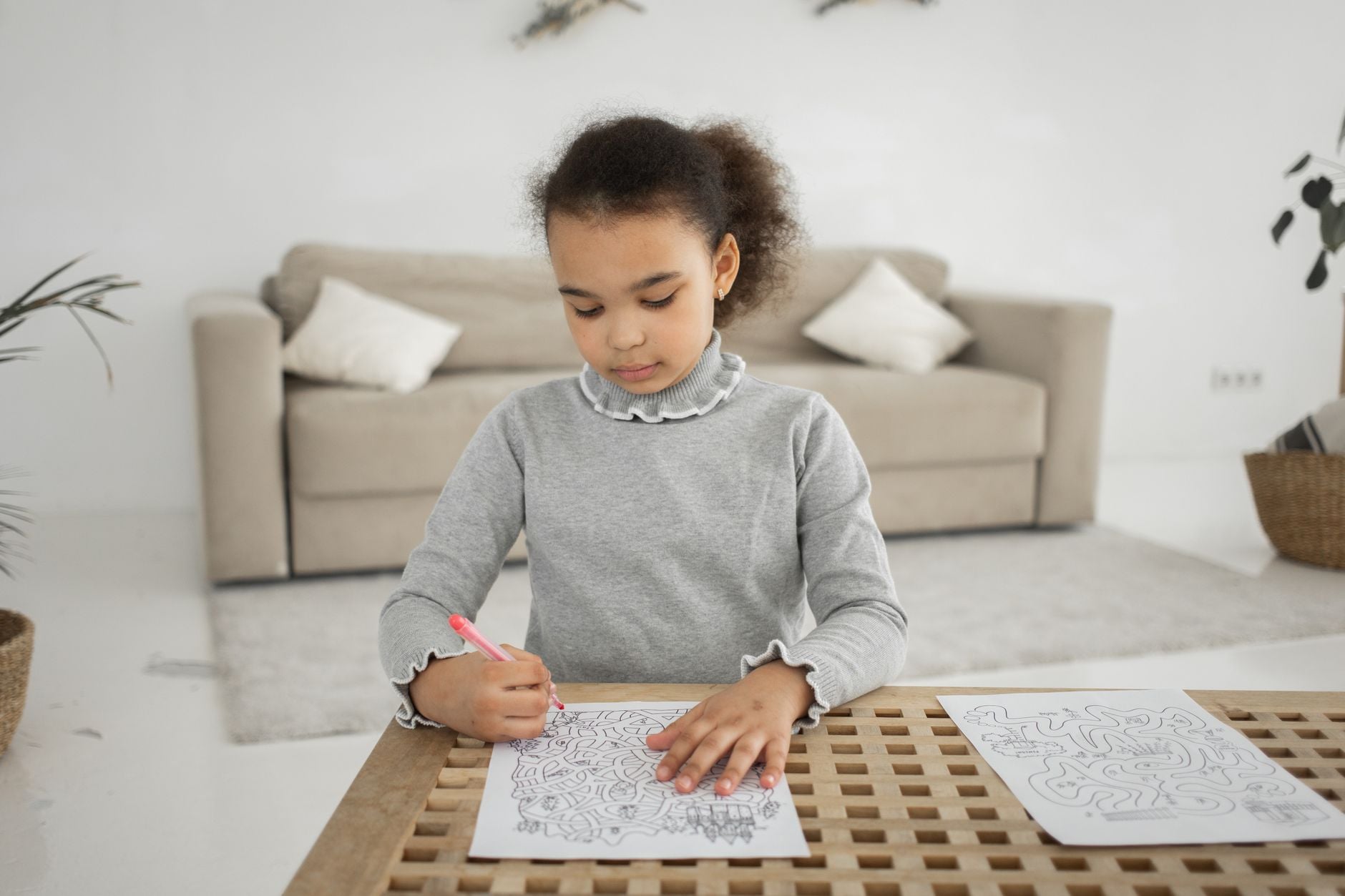
The idea that we should teach children to be kinder to themselves is everywhere now, and it is mostly taught as a script. Give the child a phrase. Have them say it in the mirror. Put a poster near the desk.
The research that gets cited in support of this is more interesting than the posters, and it points somewhere less convenient for the adult in the room.
What the praise study actually found
In 2014, Eddie Brummelman, Sander Thomaes, Bram Orobio de Castro, Geertjan Overbeek and Brad Bushman published a set of studies in Psychological Science on what they called inflated praise. Inflated praise is the ordinary kind with an intensifier bolted on. “You’re good at this” is plain praise. “You’re incredibly good at this” is inflated. “That’s not just beautiful, that’s incredibly beautiful” was the phrase that gave the paper its title.
The Artful Parent
Family-life ideas and sharp reads, in your inbox.
Two findings came out of it. Adults gave inflated praise to children with low self-esteem far more often than to children with high self-esteem, roughly 33 percent of the time against 18 percent. And for those same children, the ones receiving the most of it, inflated praise was associated with avoiding harder tasks afterward rather than taking them on.
The proposed explanation is straightforward enough. If a drawing is incredibly beautiful, the next one has to be too, and the safest way to protect that is to draw something you have already drawn a hundred times.
This is one line of research, not settled consensus. It is worth taking seriously and it is not the final word.
It is largely one research group
Something worth saying plainly, because it rarely gets said. Most of the work on this specific question comes from Brummelman and his collaborators, across several papers on person praise, inflated praise, and parental praise over time.
That is not a criticism of the work. It is how a research question usually develops, with one group pushing at it for years. But a body of evidence built mainly by one team is a different thing from a finding replicated by people with no stake in it, and the honest reading holds those two apart.
What we would take from it is a direction to be careful in, not a rule.
Self-compassion is an idea about adults, mostly
The term itself comes largely from Kristin Neff, in the Department of Educational Psychology at the University of Texas at Austin, who has spent two decades on it. Her 2023 review in the Annual Review of Psychology sets out the model.
She describes three components. Self-kindness, meaning treating yourself with understanding when something goes wrong instead of turning on yourself. Common humanity, meaning recognizing that failing at things is a general condition rather than a personal defect. And mindfulness, meaning holding the uncomfortable feeling without either suppressing it or being swallowed by it.
Here is the part usually left out of the parenting version: the great majority of that research was conducted with adults. Measures adapted for children and teenagers exist, and the work is growing, but it is a thinner evidence base than the confident advice suggests. Anyone telling you exactly how to install self-compassion in a six-year-old is going beyond what the research currently supports.
What it looks like at the table, which is less tidy
The moment this actually comes up is not during a conversation about feelings. It is the moment the paper gets crumpled.
A child draws a horse, the horse comes out wrong, and something happens fast: the paper is scrunched, or turned over, or the child announces they are bad at drawing and would like to stop. Most of the useful material is in the ninety seconds after that.
The instinct is to contradict it. It’s not bad, it’s lovely, it’s really good actually. That instinct is kind, and going by the praise research it is also the move most likely to backfire with the child who needs it least contradicted.
A few things we have found are more useful, offered as things to try rather than a method:
- Describe instead of rate. “You changed the legs three times” gives the child something true to hold that carries no verdict.
- Name the difficulty as ordinary. “Horses are hard. The back legs go wrong for everybody.” This is Neff’s common humanity in kitchen language, and it is the component that seems most within reach for a young child.
- Let the crumpling happen. Rescuing the paper communicates that the feeling was an emergency. Most of the time it passes in two minutes.
- Say your own version out loud. Not performed, just accurate: “I’ve drawn this wrong twice and I’m going to leave it.” Children hear how the adults around them talk about their own work, and that is the version they are likely to try on.
- Wait longer than is comfortable before offering to help.
The last one is the hardest and probably the most important.
What to expect by age, roughly
Under about four, this mostly is not a thing yet. The frustration is real but it is about the hand not doing what the head wanted, and it usually resolves when the activity changes.
From five or six, comparison arrives, often via school, and with it the first properly harsh self-assessments. This is when “I’m rubbish at art” starts appearing, and it appears in a lot of children who are perfectly fine. It is a stage many children go through, not a sign that something is wrong.
Older children get more articulate about it and no less hard on themselves, and by then the adult modeling matters more than anything said directly to them.
Children vary enormously in this and the ages above are approximate.
What none of this proves
It does not prove that describing rather than praising produces a kinder adult twenty years later. Nobody has run that study, and the honest position is that we do not know.
It does not prove that inflated praise harms every child. The effect showed up in children with low self-esteem specifically, in these studies, under these conditions.
And it does not mean enthusiasm is dangerous. Being pleased about something your child made is not a technique to be optimized. If a drawing delights you, saying so is fine. The research is about a habit of reflexive superlatives, not about warmth.
What holds up, on the available evidence, is modest: children take in how the people around them handle their own mistakes, and a house where an adult can produce a bad drawing and shrug is teaching something a poster cannot.
The horse is still going to come out wrong. That was always going to happen.