

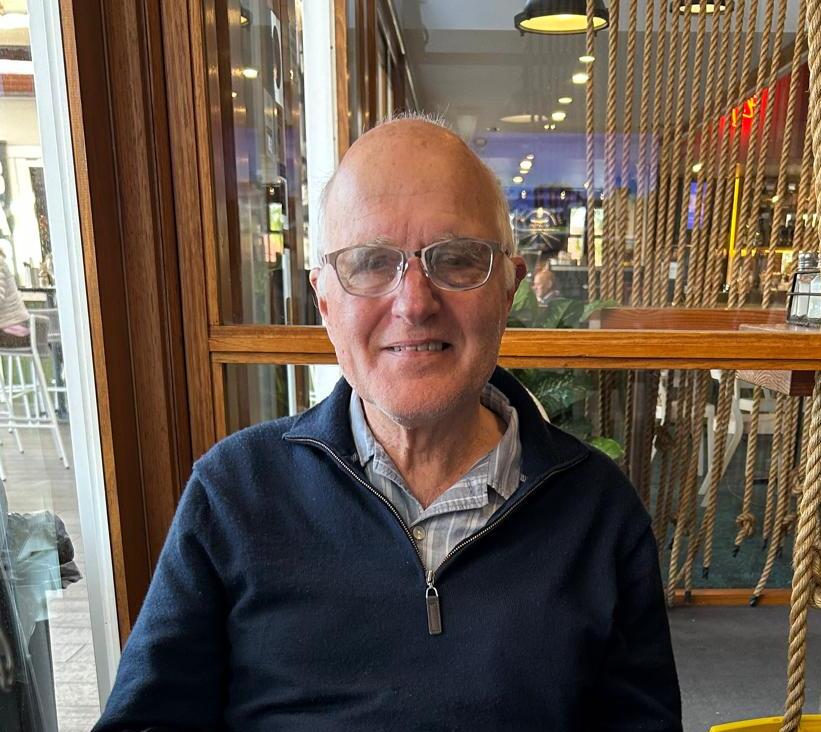
Ask an older person what they remember about growing up in their parents’ home and the answers tend to come quickly: the smell of the kitchen on a Sunday, a father’s chair that nobody else sat in, the sound of rain on a tin roof, the way a mother hummed while she worked. These memories feel solid and close. Memory research suggests they are something more interesting than a recording of the past. They are partly the moment itself and partly the many times the story has been told since.
The first memory that may never have happened
In 2018, researchers in the United Kingdom published one of the largest studies of first memories ever carried out. Writing in the journal Psychological Science, Shazia Akhtar, Martin Conway and colleagues asked 6,641 adults to describe their earliest memory and say how old they were when it happened.
Close to 4 in 10 respondents, 38.6%, placed their first memory at age 2 or younger, and 893 people said theirs came from age 1 or earlier. The researchers concluded that most of these very early memories were likely to be fictional. The brain systems that allow lasting personal memories are still developing in the first years of life, and research has consistently placed the average earliest memory at a little over age 3.
The Artful Parent
Family-life ideas and sharp reads, in your inbox.
The study also found that these improbably early memories were more common among middle-aged and older adults. That does not mean older people are careless with the truth. The memories felt real to the people who reported them. The researchers suggested they were likely assembled over time from fragments of knowledge about early childhood, such as a family photo, a remark from a parent, or a story told so often that it came to feel like a scene the person had lived through.
For anyone thinking about memories of a childhood home, this is the key point. Some of what a person “remembers” about their earliest years is real experience, and some of it is the family’s account of those years, absorbed so thoroughly that the two can no longer be pulled apart.
Why ages 10 to 30 dominate
The pattern changes as childhood goes on. Psychologist David Rubin of Duke University and his colleagues spent years mapping how people’s memories are spread across their lives. When adults over about 40 are asked to recall events, they produce an unusually large number from roughly ages 10 to 30. Researchers call this the reminiscence bump.
Rubin’s work found that older adults recall not only the most memories from this stretch of life but also many of their most vivid and most important ones. That fits what many families notice: grandparents often speak in rich detail about their teenage years at home, the jobs they had, the friends who came to the door and the arguments at the dinner table, while their memories of being very small are thinner and more like snapshots.
Early childhood, by contrast, sits under what psychologists call childhood amnesia, a period from birth to around age 5 from which adults recall relatively little. What survives from those years tends to be scattered and is especially open to being filled in by later information.
Senses and stories as doorways
Some cues reach further back than others. A 2006 study by Johan Willander and Maria Larsson in Sweden asked 93 adults aged 65 to 80 to recall memories prompted by words, pictures or smells. Memories triggered by smells came mostly from the first decade of life, earlier than those prompted by words or pictures, and people described a stronger feeling of being taken back to the moment. Artful Parent has looked at that research in more depth before, but it helps explain why the smell of baking or floor polish can bring a childhood kitchen back in an instant.
Stories work in a different way. Each time an older person tells the tale of the winter the pipes froze or the day the new car arrived, they are not simply replaying a stored file. Memory researchers have long described remembering as a process of rebuilding. The details that get retold are strengthened, the ones that are never mentioned fade, and the version that survives is shaped by who is listening and why the story is being told.
Why the retelling matters
This might sound like a reason to doubt older people’s memories. The research points in a more useful direction. The stories families tell about the past appear to do real good for the younger people who hear them.
At Emory University, psychologists Marshall Duke and Robyn Fivush developed a 20-question “Do You Know?” scale that asks children about family history, such as where their grandparents grew up, how their parents met and what happened in the family before they were born. In their studies, children and teenagers who knew more of these stories had higher self-esteem, a stronger sense of control over their lives, better family functioning and lower levels of anxiety and behavior problems.
The researchers have suggested that knowing these stories gives young people a sense of belonging to something larger than themselves, which Fivush has described as an intergenerational self. Family meals were one of the most common settings where the stories were shared.
In other words, the very thing that makes older people’s memories of home less than perfectly accurate, the fact that they have been told and retold, is also what makes them valuable to pass on.
Bringing the memories into the family
For families, the findings suggest a few practical steps. Asking grandparents open questions about their parents’ home, such as what a typical evening looked like or what they did when they got in trouble, invites detail that a simple “what was it like?” often misses. Old photographs, recipes and familiar smells can help prompt memories from earlier years.
It also helps to hold the stories lightly. If two siblings remember the same house differently, or a grandparent’s account shifts a little each time, that is normal memory at work rather than a sign that something is wrong. The emotional truth of a story, what it felt like to grow up in that home and what the family valued, is often what children carry forward.
The memories older people keep of their parents’ home are built from real moments and from decades of retelling. Research suggests both parts matter, and that when those stories are shared across the generations, the people who benefit most may be the youngest ones listening.
Photo by Mikhail Nilov on Pexels