
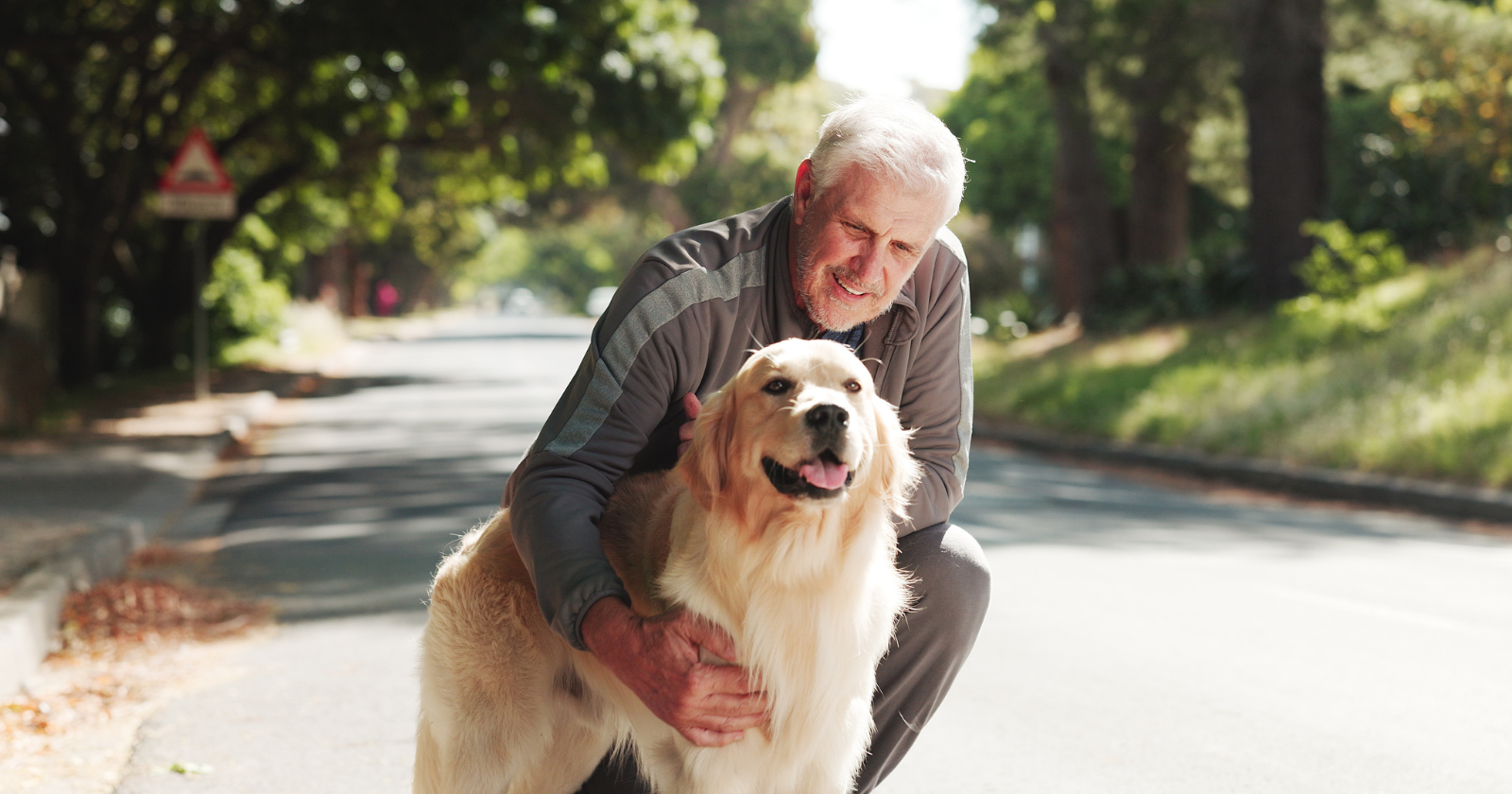

Somewhere in the UK, right now, a woman in her seventies is getting out of bed at 6:47 in the morning. It’s dark. Her joints are stiff. She hasn’t slept properly in about eight years. Her husband died in 2019 and she still isn’t quite used to the quiet. She doesn’t particularly want to be awake yet. But she is. Because on the other side of the bedroom door is a small dog who has been waiting for her since 5:30, and if she doesn’t get up and let him out into the garden, he’ll start whining, then barking, then knocking his water bowl over in protest.
She gets up. Puts on her dressing gown. Lets the dog out. Fills his food bowl. Fills the kettle for herself. By the time the kettle boils, she’s already been up for eleven minutes, and there’s a small, specific reason she got out of bed.
If you asked her about it, she’d probably tell you the dog keeps her company. That’s what everybody says about pets in later life. And it isn’t wrong. But researchers who have looked at this carefully have started to notice something more specific about what the pet is actually doing for her, and it isn’t the same thing as company. It’s something rarer. It’s something that gets much harder to come by after seventy. And on the current research, it may be one of the more important reasons her mood and her health are as steady as they are.
What the research actually finds
The most useful piece of research on this comes from a 2019 study of community-dwelling older adults in the journal Aging & Mental Health. Researchers ran in-depth interviews with pet owners over 65 and asked them to describe, in their own words, what the pet actually did for them. When the researchers analysed the interviews, four main themes emerged. Yes, one of them was about companionship and reduced loneliness. But two of the four themes were about something else entirely. One theme was “purposeful routine and structure.” The other was “a meaningful role.”
Which is a slightly clinical way of saying: the pet was giving them a reason to get up in the morning, and a reason to feel needed by something living.
On the surface, this can sound like a semantic distinction. Company keeps you from being lonely, being needed keeps you from being aimless, they’re both good, what’s the difference. In late life, though, the difference turns out to matter enormously. And here’s why.
Why being needed is different from having company
For most of a working adult life, being needed is the default state. Your job needs you. Your children need you. Your partner needs you. Your parents, in later life, might need you. You spend forty or fifty years operating in a world where multiple people, every day, are relying on you for something specific. And you get used to that. It becomes, without you quite noticing, one of the main ways you understand your own value.
Then the working life ends. The children grow up and stop needing you the same way. The partner, if you’re lucky enough to still have one, is doing much of their own thing. Your parents, if they’re still with you, are being cared for by professionals or are in a different phase of their own lives. And, quite quickly, you realise that nobody is waking up in the morning and specifically needing you to be there.
Loneliness, at this stage of life, gets a lot of the airtime. But underneath it, and often much more painful, is the specific ache of not being needed. Of realising that if you didn’t get out of bed until noon, the world would keep spinning entirely without you. Of realising that you have, without quite noticing when it happened, become optional.
A quick note before we go further
Before I go further, let me say what this piece isn’t. It’s not an argument that everyone in their seventies should go out and get a puppy tomorrow. Pets are a genuine responsibility. They cost money. They need vet care. They need daily walking, or feeding, or attention that not every older adult is physically able to give. And the grief that follows the pet’s death, particularly for someone who is themselves in poor health, can be substantial. What follows is about the specific role the pet plays, when the situation works out well, not a suggestion that pet ownership is the answer for every older adult in every set of circumstances.
What the pet is actually doing
The pet, unlike a friend or a family member, needs something specific from you every day, on a fixed schedule, that no one else in your life is set up to provide. It needs feeding. It needs walking. It needs its water bowl filled. It needs to be let out. It needs its ears checked. It needs its medication given at the right time. These aren’t heroic tasks. But they’re needed tasks. And the pet, in the small daily way it makes clear it’s waiting for them, gives the older adult a specific role.
In a 2022 systematic review of pet ownership studies in older adults, researchers looked across fifteen qualitative studies and pulled out seven main themes describing what pets do for older owners. One of them, distinct from companionship, was “aspects of caregiving.” The act of caring for the pet was consistently identified by older adults as one of the most meaningful things the animal did for them. Not the affection. Not the company. The caregiving itself.
Which is a specific reversal of how the wider culture tends to think about pets and older people. We tend to imagine the pet as the thing that provides for the older adult. Company. Warmth. Affection. Something soft to stroke while watching television. The research keeps pointing at something more specific, which is that the direction of care runs the other way. The older adult is providing for the pet. And that specific act, day after day, is doing psychological work that has surprisingly little to do with the pet’s presence itself.
In a 2025 umbrella review of human-animal interaction research, published in a peer-reviewed nursing journal, researchers pulled together findings across many independent studies. The same pattern appeared. Older adults consistently attributed the benefits of pet ownership to things like emotional support, sensory engagement, and reciprocal interactions. The reciprocal piece matters. The relationship wasn’t described as the pet giving to the older adult. It was described as the pet and the older adult giving to each other.
The morning piece specifically
I want to focus on the specific part of the title, because I think it’s worth pulling out. First thing every single morning.
The morning is different from the rest of the day in older adult life. In the interview literature, it’s the time when isolation tends to be sharpest. You wake up alone. You don’t have to be anywhere. There’s no work waiting for you. There’s no one calling. If you didn’t get up at all, most days, nobody would immediately notice. The morning, for a lot of older adults, is the specific time when the “am I needed” question quietly reasserts itself.
The pet completely reorganises this. The dog wants breakfast. The cat is meowing outside the door. The fish need feeding. Something small and living has been waiting for you specifically, and cannot start its day until you start yours. The waking up becomes purposeful in a way it hasn’t been for potentially years. And that specific morning reason to be up, the research suggests, does something to overall mood and daily functioning that’s actually quite hard to replace with other interventions.
What this doesn’t mean
Let me be careful. I’m not saying pet ownership solves late-life loneliness. It doesn’t. Some people are lonely and have pets. Some people are perfectly well-connected and don’t have pets. What the research is describing is something more specific. The pet, for the older adults for whom it works, is meeting a specific need that companionship alone doesn’t meet. The need to be needed. First thing every morning. By something that will let you know clearly, and without any ambiguity, if you fail to show up.
The wider cultural conversation about pets and older people still tends to focus on the affection and the company. Both of those things are real. Both matter. But the research keeps pointing at something quieter and possibly more important, which is that the pet gives the older adult a specific, small, daily reason to keep being the person who does things.
The woman getting up at 6:47 didn’t get out of bed because she felt like it. She got out of bed because the dog needed her to. And on the current research, that specific dynamic might be doing more for her than any of us had properly noticed.
It’s not just company.
It’s a role. It’s a reason. It’s a small living thing waiting for her, every single morning, and making it entirely clear that today, at least, she is needed.