
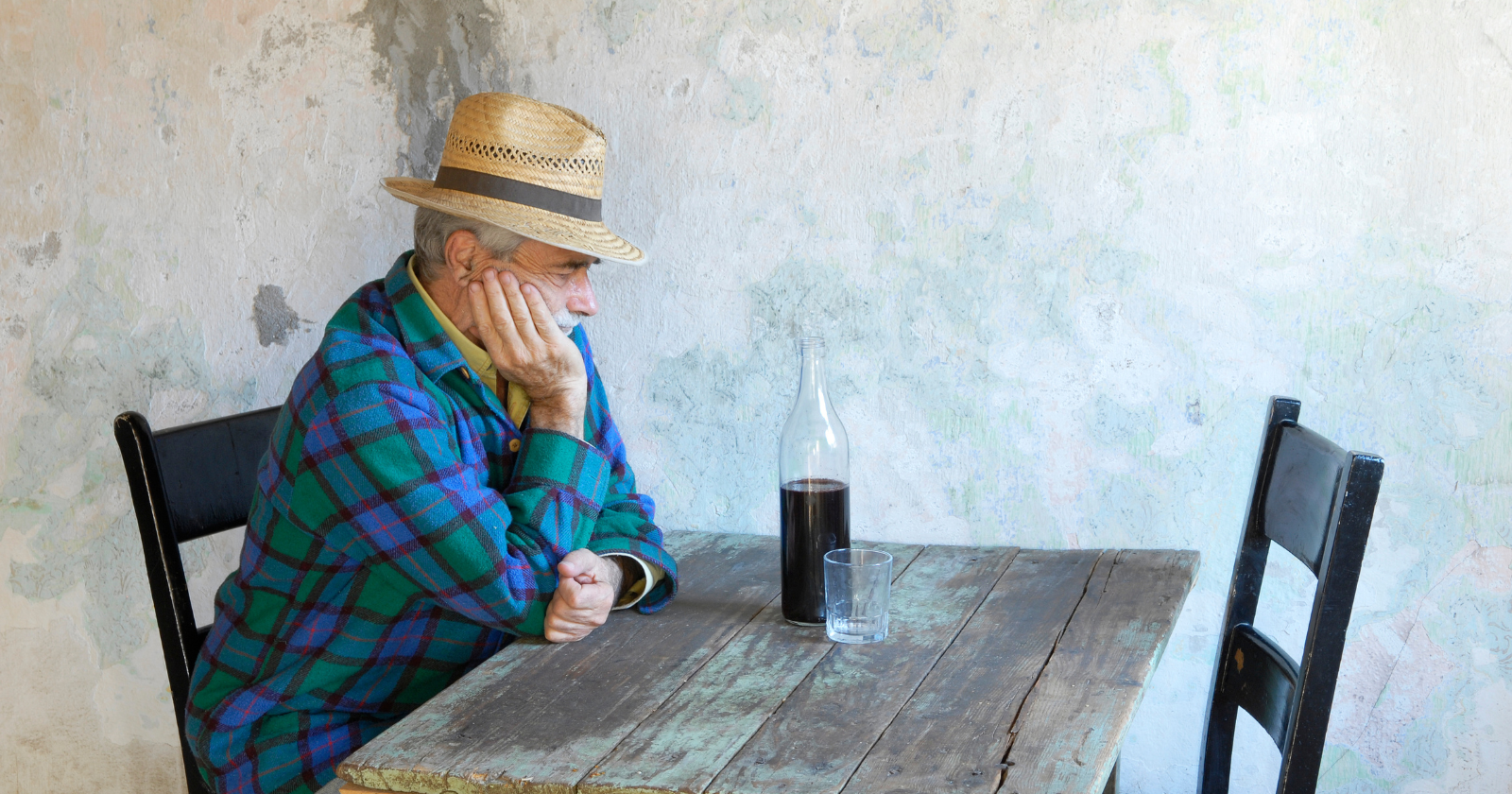

There is a default picture of late-life loneliness that most people carry around. The empty house. The silent phone. The Sunday afternoon with nobody to call. The picture is accurate for some older adults. For many others, the loneliness arrives at a full table, in the middle of a story, in the moment the seventy-eight-year-old telling it realizes that nobody else in the room would have known why the punchline was funny. Her husband would have. Her sister would have. Both of them are dead. The room she is sitting in is full. She is, in the moment of telling, the only person in it who knew her at thirty.
The empirical work on loneliness has been getting more precise about this. In a widely cited 2015 meta-analysis in Perspectives on Psychological Science, the BYU psychologist Julianne Holt-Lunstad and colleagues integrated 70 studies covering more than three million participants. They found that both objective social isolation and subjective loneliness were independently associated with increased mortality risk, with effect sizes comparable to smoking. The two variables, in other words, each carried their own weight. Whether a person feels lonely turns out not to be a reliable function of how many people they see.
What specifically is missing
The framework most relevant to the late-life pattern was developed by the American sociologist Robert Weiss in his 1973 book Loneliness: The Experience of Emotional and Social Isolation. Weiss distinguished between two kinds. Social loneliness was the absence of a wider network of peers. Emotional loneliness was the absence of close attachment figures, such as a spouse or close family member. Both could occur with or without the other. Both had measurable effects on wellbeing.
The kind of loneliness the title is pointing at is a third thing, harder to fit cleanly into either of Weiss’s categories. It is the loneliness of having lost the witnesses. The friends from school. The colleagues from the first job. The siblings. The cousins. The early partners. The neighbors from the first apartment. The people who, between them, had carried the older person’s earlier life in distributed form across other minds. As the witnesses disappear one by one, the older person becomes the only person who still
We write about research here; we are not clinicians or social-isolation researchers, and what follows is not a substitute for a conversation with somebody who knows the older person in your life. What population-level research can offer is recognition, a way of naming a pattern that is common enough to deserve language and specific enough to be missed by the standard responses.
Why the standard responses don’t quite reach it
The standard responses to loneliness in older adults are calibrated to social isolation. Join a club. Attend a community group. Volunteer. Take a class. Meet new people. These are useful for some kinds of loneliness. They are not, in most accounts, useful for the kind the title describes. A new acquaintance, however warm, cannot serve as a witness to a forty-year-old memory. The widow who joins the bridge club does not, in most cases, end the evening feeling that the deeper loneliness has been touched.
The 2023 Surgeon General’s advisory on loneliness and social connection acknowledged this distinction implicitly. The framing of the 82-page document was about social connection, not just contact. It emphasized that the quality and continuity of connections, not just their frequency, was what the public-health research was pointing at. Increasing contact, in the absence of continuity, was not, on the evidence, the solution to the deeper problem.
What helps, and what doesn’t
There is no clean fix in the empirical literature for the loss of long-term witnesses. Once the people are gone, they are gone. The research is modest about what can be done. What seems to help, in the qualitative accounts, is the deliberate cultivation of depth in the connections that remain. Adult children who are willing to ask about their parent’s earlier life, in detail, can serve as partial witnesses to the years they did not see. Long marriages, where they have continued, often carry some of the same function. Younger friends willing to be inducted into the older person’s history can, over time, take on a version of the role. None of these is a full substitute. All of them help in different degrees.
What helps less is the multiplication of casual contacts. The person who joins three new clubs without anyone in any of them knowing who they were before is often, by self-report, lonelier than the person with one quiet friend who has known them for thirty years. This is correlational work on self-reported loneliness across populations, so it points at a pattern rather than proving causation. The pattern itself is, by now, well documented.
Persistent loneliness in older adults is associated with measurable health risks, and the Surgeon General’s advisory flagged it as substantially under-recognized and under-treated. Older readers, or the families around them, who recognize what this article is describing might find it useful to speak with a primary care doctor or a community organization that focuses on social connection for older adults.
Most of the cultural conversation about late-life loneliness still defaults to the picture of the empty house and the silent phone. The research suggests something different for many older adults. The house is full. The phone rings. The loneliness sits in the gap between the people in the room and the people who would have known why a particular story was funny. Whether that gap can be narrowed rarely shows from outside it. It usually only begins to show when somebody in the room starts asking the older person about the years before anybody else was there to see them.