
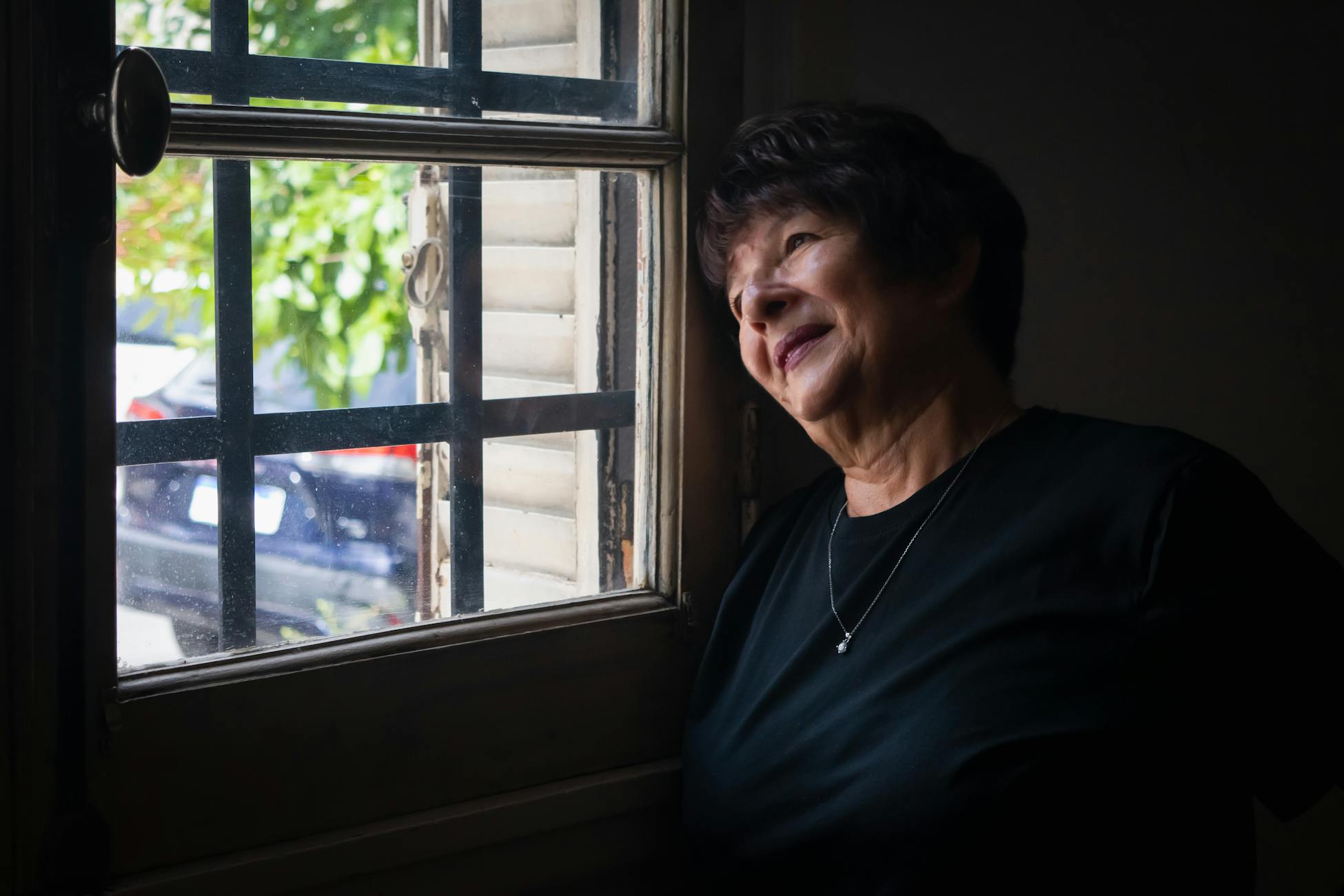

A particular kind of surprise shows up on the faces of certain people in their mid-sixties — people who, somewhere in the background of their thinking, had not fully expected to feel the way they do. This isn’t naivety or unusual optimism.
But because the cultural story about what ageing feels like from the inside — the steady accumulation of difficulty, the gradual narrowing of what is possible — had settled into their expectations somewhere along the way, and now the experience they are actually having doesn’t quite match it.
They are not young again. Nothing has been reversed. Things have happened to their bodies over decades that are real, and they know it. But they feel, on balance, well — in a way that is less like recovery and more like a kind of quiet arrival.
And they are, in a specific and interesting way, surprised about it.
This surprise is worth examining. Not because ageing is secretly easy or because the difficulties it brings are overstated — they are not — but because the people who experience it seem to share something that is harder to attribute to luck, genetics, or particular lifestyle choices than it is to something that happened in how they understood themselves. Somewhere along the way, something shifted. The question is what.
Things happened to them
The first thing that stands out when you talk to people in this position is that they are not people to whom nothing happened. This is important, because the cultural imagination of people who age well tends to populate itself with individuals who were spared: people who had supportive families, stable finances, manageable health, and a run of decades that, if not easy, was at least not particularly punishing. The implicit message is that ageing well is something that happens to the lucky.
The people who arrive at 65 surprised to feel well are often not the ones who had an easy road. Many of them had health scares in their forties or fifties that restructured how they thought about their bodies. Some lost parents in difficult ways, or went through relationship breakdowns, or navigated years that were financially or professionally frightening. The difficulty was real. What is interesting is what they did with it — or rather, what they seem to have stopped doing with it.
The psychologist George Bonanno, whose research at Columbia University has shaped much of the contemporary scientific understanding of resilience, has argued that the most common outcome following significant adversity is not lasting damage but something more like return — a trajectory that dips and then recovers, sometimes to a point above the baselin. The people who age well tend to be people in whom this return happened, and happened more than once. Not because they processed each difficulty perfectly, but because they stayed in motion. They didn’t stop.
The story that said they wouldn’t be fine
Every person navigating midlife in a contemporary Western culture has absorbed a particular set of expectations about what the second half of adult life looks like. These expectations come from many places: the complaints and warnings of parents and grandparents, medical language that frames ageing primarily as a process of accumulating problems, a media landscape in which older adults appear largely as burdens, cautionary figures, or as inspiring exceptions who “don’t look their age.” The message, in aggregate, is consistent: things get harder, and the trajectory is mostly downward from some point in early or middle adulthood.
This is not entirely false. Things do change. Bodies accumulate history. But the story as commonly told is substantially grimmer than the data on subjective wellbeing in later life actually supports.
Large cross-national studies — including work by economists David Blanchflower and Andrew Oswald analyzing life-satisfaction data from more than 130 countries — have found a “U-curve” in reported wellbeing: a dip through the forties, followed by a rise through the fifties, sixties, and into the seventies. The pattern isn’t universal or uncontested — some recent analyses argue it weakens or disappears once certain survey biases are corrected — but across many large samples, the cultural assumption of straightforward decline has not held up as cleanly as the conventional story suggests.
The people who feel genuinely surprised to feel well at 65 are, in part, feeling the gap between what they were told to expect and what they are actually experiencing. The expectation, absorbed early and never quite examined, shaped what they prepared for — and now the preparation is meeting a reality that doesn’t confirm it.
When the story loosened its grip
When people in this position reflect on what happened — what, if anything, shifted — a common thread emerges. Not a dramatic intervention or conversion moment — something quieter: the story about what their life was going to be became less fixed. Sometimes this happened through a health scare that forced a genuine confrontation with what mattered. Sometimes it was a therapeutic relationship that helped them see, concretely, how much of their anticipatory dread about ageing was inherited rather than earned. Sometimes it was simply the accumulation of evidence: having dreaded things that then went differently, enough times, that the dread began to seem like a less reliable guide.
What changed was less the facts of their situation than their relationship to the story they had been carrying about it. They did not, for the most part, adopt a cheerful alternative narrative. They did something more modest and more durable: they stopped treating the pessimistic story as definitively true. They held it more lightly. They let it be one possibility rather than the conclusion.
This is not the same as denial. The people who age well are, on most measures, quite clear-eyed about what they face. Studies of what psychologists call “successful ageing” — building on frameworks like Paul Baltes’ selective optimization with compensation model — have found that realistic appraisal of limitations, combined with flexible adjustment of goals and expectations, tends to predict wellbeing better than either persistent optimism or avoidance.
What this means for parents in the middle
For parents in their thirties, forties, and fifties — navigating children who are growing and changing, careers that are demanding, and bodies that are quietly beginning to remind them they have one — the question of what ageing will feel like is rarely front of mind. There is too much else to attend to. But the story about ageing is being formed anyway, in the background, from inputs that are mostly inadvertent: what we overhear, what we inherit from the way our own parents spoke about their bodies, what the media we consume implies.
There is another dimension too, and it is the one most specific to parents. Children are extraordinarily attentive to the way adults around them talk about time, about bodies, about what lies ahead. The casual commentary — everything starts to go at fifty, enjoy it while you can, it only gets harder from here — is absorbed and stored, not as adult communication, but as data about what adult life is going to be like. Children do not filter for irony or self-deprecation. They receive, and file away.
None of this means parents need to perform enthusiasm about ageing they don’t feel, or to avoid honest conversation about difficulty. Children are best served by adults who are truthful, not artificially upbeat. But there is a difference between honest communication about challenge — my back is sore today and I’m going to rest it — and the habitual transmission of a narrative that frames difficulty as destiny. The first models realistic self-care. The second models a particular expectation about what adult life becomes, and children will carry it further than we think.
The arrival
The surprise of feeling well at 65 is, when you look at it closely, less of a surprise than an adjustment — an experience of finding that the story and the reality diverged, and that the reality was better. The people who feel it most acutely are often those for whom the story was most vivid, who spent the most years bracing for something that, in the end, did not arrive in the form they had been told to expect.
What they seem to have in common is not luck, or exceptional genetics, or a life free of hardship. It is something more like a gradually acquired willingness to let the future remain unwritten — to carry experience without letting it become prophecy. That sounds abstract, but it has real texture in practice: in how a person talks about their body, in whether they treat past patterns as permanent verdicts, in how much space they allow for things to go differently than they have before.
The story that says we won’t be fine is everywhere, and it is not without evidence. But it is not the whole evidence. And the people who arrive at 65 with that quiet look of surprised wellbeing are, more than anything, the people who at some point noticed that, and chose to keep going without being entirely sure of the ending.