
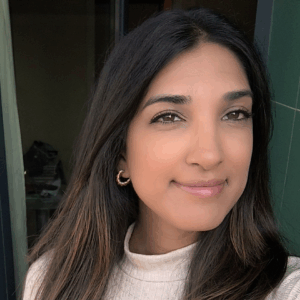
Gemma lives in the UK with her three boys – six-year-old twins and a four-year-old – and when I asked her what parenting is really like right now, she didn’t hold back.
“I won’t sugar coat it – life with kids isn’t for the faint-hearted. We thought we were stressed before, with work deadlines or family politics, but nothing compares to having one child being sick while another finds a way to injure himself. Or when the whole house goes down with a virus they’ve picked up at school, and the work and the chores are still piling up.”
Across the Atlantic, the US government has put numbers on that feeling. In 2024, then US Surgeon General Vivek Murthy issued an official advisory called Parents Under Pressure, warning that parental stress had become a public health issue. In it, 48% of American parents said that most days their stress is completely overwhelming, compared with 26% of other adults. And 41% said that most days they’re so stressed they can’t function – compared with 20% of other adults.
The Artful Parent
Family-life ideas and sharp reads, in your inbox.
Why those numbers still matter
This week, the American Psychological Association published its 2026 Stress in America survey, and it doesn’t paint a calmer picture. Of the 3,132 US adults surveyed this summer, 77% named the cost of living as a significant source of stress, 59% felt they were doing everything right but still falling behind, and 72% agreed that stress is simply something they have to live with. Nearly half had pulled back from friends or social plans because of it.
“Becoming accustomed to chronic stress is not the same as adapting to it in a healthy way,” APA chief executive Arthur C. Evans Jr. warned.
What the new survey doesn’t do is break parents out from everyone else. I went through the 2024, 2025, and 2026 reports looking for an update on the Surgeon General’s figures, and none of them repeat the parent comparison. So as things stand, the 2023 numbers behind the advisory are still the most recent snapshot we have of how American parents compare – and with stress about money and the future now this widespread, there’s little reason to think parents have caught a break since.
Where the numbers come from
The advisory didn’t run its own survey. Its stress figures come from the APA’s 2023 Stress in America survey, which The Harris Poll carried out online between 4 and 26 August 2023, with 3,185 adults across the US.
One thing that confused me when I dug into the raw data is that the topline figures look different. There, 33% of everyone surveyed said their stress is completely overwhelming most days, and 26% said they’re so stressed they can’t function. So is that 26% the same 26% the Surgeon General compared parents to?
It isn’t. I asked the APA, and Katherine Novak, Senior Manager of Strategic Communications, explained that the topline covers all respondents, while “parents” and “other adults” are two separate subgroups, published in a separate APA breakdown. She also told me how the APA decided who counts as a parent:
“In the survey, parents were defined as adults with children under the age of 18 living with them at least 50% of the time – that is, people who are spending the majority of their time actively caring for a minor.”
That came to roughly 960 people. Everyone else falls into “other adults” – which, she pointed out, isn’t the same as “non-parents”, because it includes people whose kids are over 18 or don’t live with them most of the time. So these figures are about people in the thick of it, raising children day to day. Because that group is a smaller slice of the sample, its margin of error is also wider than the survey’s overall ±2.5 points.
Why parents are so stretched
The APA breakdown shows how wide the gap runs. Parents were far more likely than other adults to say they feel consumed by worries about money (66% vs 39%), that money causes fights or tension at home (58% vs 30%), that no one understands how stressed they are (62% vs 42%), and that when they’re stressed, they can’t bring themselves to do anything (50% vs 28%).
The advisory also says nearly 70% of parents find parenting harder than it was 20 years ago. The source it cites is a 2020 Pew Research Center survey, where the exact figure is 66%, with digital technology and the rise of social media the top two reasons given.
For Gemma, the hardest part is doing it without back-up:
“We don’t live near family, so we haven’t got ‘the village’, so to speak, to keep us afloat. Most parents don’t want to admit that they’re drowning because we feel like people will think badly of us. Social media doesn’t help either – it doesn’t show the reality that parenting isn’t always pretty.”
She’s not imagining that. In a study across 42 countries, UCLouvain researchers Isabelle Roskam and Moïra Mikolajczak found that parental burnout is highest in wealthy, individualistic Western countries – the kind of places Gemma, Mila, and Jack call home – and that culture matters more than income or family size. “Our individualistic countries cultivate a cult of performance and perfectionism,” Roskam said. “Parenthood in these countries is a very solitary activity.”
Having a partner to share the load helps, but it doesn’t make the stress disappear. Mila and Jack, who live in the US with their eight-year-old daughter and four-year-old son, told me they’re finally coming out of the trenches.
“Parenting is probably the most stressful thing either of us has ever done,” Mila said. “Even dividing the workload between the two of us, we’re still knackered at the end of every day. The hardest part is the balance – keeping some kind of personal life, seeing friends, and making time for each other as a couple, all while trying to be the best parents we can be.”
Jack raised something the statistics don’t show:
“As a father, I feel that we don’t talk in the same way women often do. I know Mila can call up her sister or her best friend and have a vent when things get too much, but sometimes, as men, we try to stay strong and silent. I’ve realised how harmful that is, but until we men make safe spaces to share our stresses, nothing will change. We just keep going until we reach burnout.”
What he describes isn’t just a dad thing, either. The APA found that 66% of parents don’t talk about their stress because they don’t want to burden others.
The UK picture
Gemma’s experience isn’t a US problem exported. In a YouGov survey for Deloitte UK of 2,066 working parents, carried out this spring, 57% said they felt mentally exhausted or burnt out, and 53% reported increased stress or anxiety.
The gap between mothers and fathers was striking: 64% of working mothers said they felt overwhelmed by their responsibilities, compared with 38% of working fathers, and two-thirds of mothers felt burnt out. That doesn’t line up exactly with the US figures – it only covers working parents, and the questions are different – but the direction is the same: a lot of parents, on both sides of the Atlantic, are running on empty.
Jack’s point is worth holding on to here, though. A lower number for fathers might partly reflect how willing men are to say it out loud.
The job that comes on top of the job
When the advisory came out, Fast Company argued it had largely missed one of the biggest pressures of all: paid work. In about 67% of two-parent families in the US, both parents are employed, and Maryland-based family therapist Nathalie Savell told the magazine that for working-class parents especially, it can feel “impossible to get ahead”.
To be fair to the advisory, it doesn’t ignore work completely. It notes that parents now spend an average of 33.5 hours a week on paid work or work-related activities, and that mothers’ working hours have risen from 20.9 to 26.7 a week since 1985. It also calls on employers to do more to support parents.
But I can see Fast Company’s point. Most of the advisory’s focus is on the caring side of parenting, while the juggle Gemma described – a sick child, a house full of germs, and a work inbox that doesn’t stop – is where a lot of parents seem to hit breaking point. When she said the work and chores “are still piling up”, she wasn’t describing one stress or the other. She was describing both at once.
What “can’t function” really means
That 41% figure is easy to read more into than the survey shows.
Parents weren’t assessed by a doctor or tested on what they could or couldn’t do. They were shown the statement “Most days I am so stressed I can’t function” and asked whether they agreed. So 41% of parents agreeing with it doesn’t mean 41% are clinically unable to cope. It means four in ten parents feel that way about most of their days – which is worrying enough on its own.
Each number also needs to stay with its own comparison. Parents’ 48% sits against 26% of other adults for overwhelming stress, while their 41% sits against 20% for not being able to function. Mixing them up makes the gap look different from what it is.
This is also one survey, from one year. It shows a big gap between parents and other adults in 2023, but it can’t tell us on its own whether things are getting worse, or that parenting itself is the cause rather than everything else going on in parents’ lives.
Not a personal failing
What I find most useful about the advisory is that it doesn’t treat any of this as parents’ fault. It’s one of a series of public health warnings Murthy issued, alongside ones on loneliness, social media, and youth mental health, and it frames parental stress as something society has to fix, not something parents should simply cope with better.
Its asks are concrete. It calls for a national paid family and medical leave programme, paid sick time for all workers, more financial help with childcare through subsidies and tax credits, and for employers to do more to support parents in the workplace.
Murthy wrote it as a parent himself. “Being a dad is the toughest and most rewarding job I’ve ever had,” he says in the foreword – a feeling, from everything I heard, that plenty of parents share.
For all the exhaustion, nobody I spoke to wished they’d done things differently. Mila and Jack were tired, not regretful. Gemma put it better than any statistic could:
“There are lots of down days, but it doesn’t mean we regret our decision. It just means that life has changed in a way no one could prepare us for, and we have to take each day as it comes.”
So if you’re a parent who recognises yourself in that 48%, you’re in very good company – on either side of the Atlantic. And the researchers who study parental burnout are pointing in the same direction as the Surgeon General: the answer lies in more support and less isolation, not in you trying harder.
*All names of the parents interviewed for this article have been changed to maintain privacy**