
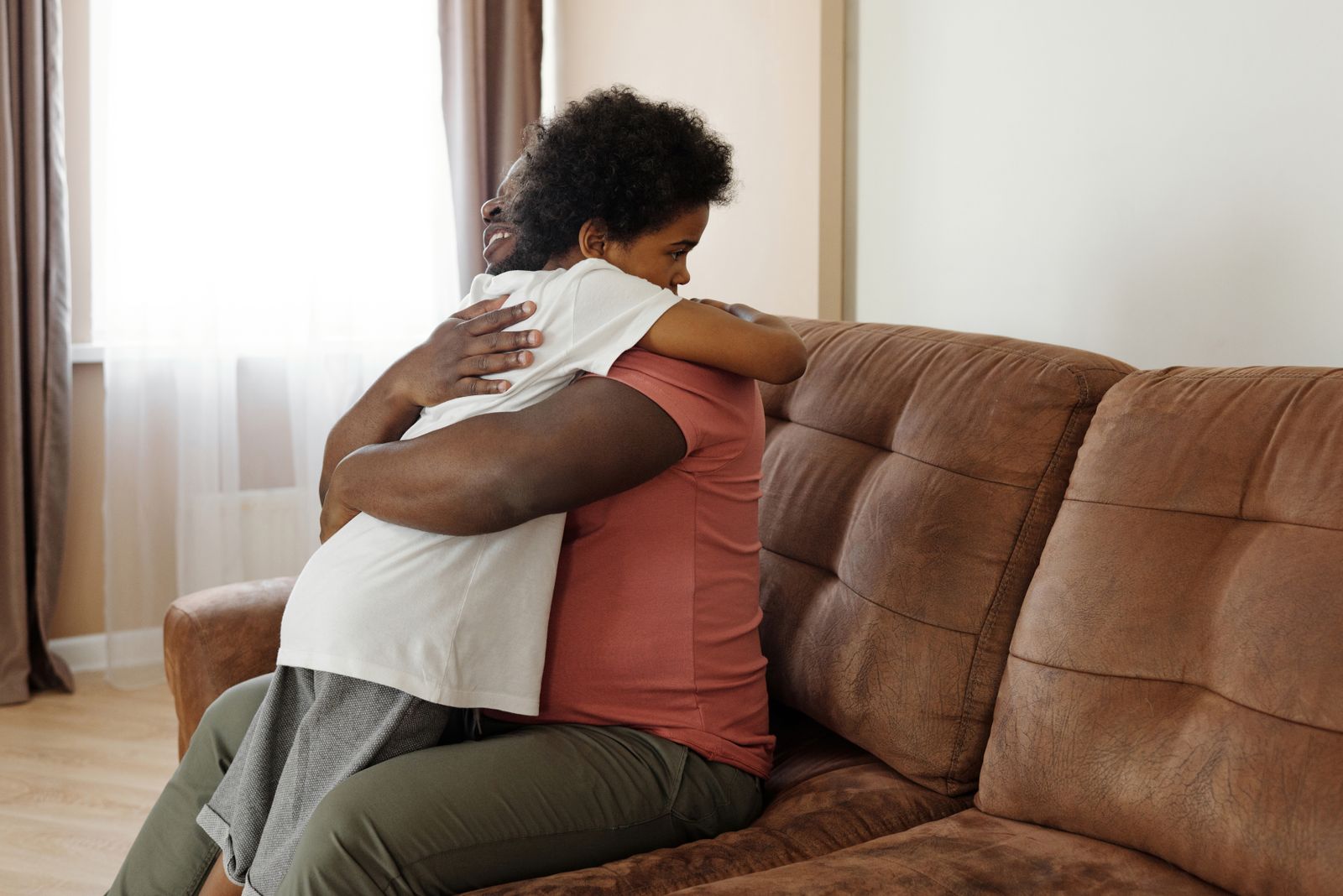

When a parent is largely absent from a child’s life, whether through separation, long work rosters, military service or prison, the worry for many families is simple: how much will it hurt the child? Decades of research give a more detailed answer than most people expect. Absence does carry real risks, but what happens in the relationship that remains, and in the home the child lives in every day, often matters more than how many days the absent parent is physically there.
Contact counts less than closeness
One of the most cited studies on the question is a 1999 meta-analysis by sociologists Paul Amato and Joan Gilbreth, published in the Journal of Marriage and the Family. They pooled results from 63 studies of children whose fathers lived in a different household.
The headline finding surprised many readers at the time. How often children saw their nonresident fathers was not related to how well they were doing in general. What did matter were two features of the relationship itself: how close children felt to their fathers, and whether fathers practiced what psychologists call authoritative parenting. That style combines warmth and support with reasonable, noncoercive expectations, such as listening, giving advice, praising good behavior and explaining rules.
The Artful Parent
Family-life ideas and sharp reads, in your inbox.
Children whose absent fathers were close to them and parented in this way did better at school and showed fewer behavior and emotional problems. Fathers’ payment of child support was also linked to better outcomes. Earlier research had made a similar point: support such as trust, encouragement and talking through problems was linked to teenagers’ life satisfaction, while treats such as dinners out and movies were not.
The review also pointed to the role of conflict between the parents. Several of the studies found that contact with a nonresident father was linked to better outcomes when parents cooperated, but to worse outcomes when the parents’ relationship was hostile. For children, a visit that becomes a battleground can do more harm than good.
Absence does carry real risks
None of this means absence is harmless. In 2013, Princeton sociologist Sara McLanahan and colleagues reviewed 47 studies that used stronger methods to separate the effect of a father’s absence from other disadvantages that often come with it, such as lower income. Writing in the Annual Review of Sociology, they concluded that the negative effects remained in these more rigorous studies, though they were smaller than older research had suggested.
The evidence was strongest for high school graduation, children’s social and emotional adjustment, and mental health in adulthood. Effects on children’s cognitive test scores were less consistent. In other words, absence seems to show up more in how children feel and behave, and whether they finish school, than in raw ability.
Why the parent at home matters so much
Research on families where a parent is away for work points to a common thread: the wellbeing of the parent who stays.
A 2010 study in Pediatrics led by Anita Chandra of the RAND Corporation surveyed 1,507 American military children aged 11 to 17, along with the parent or caregiver at home. Children in these families reported more emotional difficulties than national samples, and older teens and girls reported more problems at school, with peers and in the family during a parent’s deployment. Two factors stood out. The more total months a parent had been deployed, the more difficulties children faced. And children whose at-home caregiver had poorer mental health struggled more, both during the deployment and when the parent came home.
Australian research on fly-in fly-out, or FIFO, work tells a similar story. A 2014 review by the Australian Institute of Family Studies found that most FIFO families cope well and function about as well as families of workers who commute daily, although the lifestyle does not suit everyone. The hardest part for many families was the constant switch between running a one-parent household and a two-parent household. A University of Queensland study published in 2016 found that partners of FIFO workers reported more depression, stress and anxiety than other parents, and were more likely to use harsh discipline, which in turn was linked to more emotional and behavior problems in children.
Research on children of incarcerated parents adds another layer. A 2012 meta-analysis in Psychological Bulletin by Joseph Murray, David Farrington and Ivana Sekol pooled 40 studies including more than 7,000 children with a parent in prison. The most rigorous studies found a higher risk of antisocial behavior, but not of mental health problems, drug use or poor school performance. The authors noted that many of these children faced multiple hardships before the parent was imprisoned, including unstable care, money problems and frequent moves, which makes the absence itself only part of the picture.
What helps children cope
Taken together, the research suggests several practical steps for families living with a largely absent parent.
Focus on the quality of contact. A short phone call that asks about a child’s day, follows up on a school project or offers encouragement may matter more than an occasional expensive outing. Absent parents can still provide warmth, interest and consistent expectations from a distance.
Keep conflict away from the children. Where parents are separated, cooperation about handovers, rules and arrangements appears to be one of the strongest protections. Children do better when they are not asked to carry messages or take sides.
Support the parent at home. Because the at-home parent’s mental health is so closely tied to how children cope, practical help from grandparents, friends, employers and community services can benefit the whole family. Military research found families living on base, closer to support networks, reported fewer problems.
Plan for transitions. Departures and returns are often the hardest times. Predictable routines, honest age-appropriate explanations and time for children to readjust can ease the change.
Watch older children and teenagers. Adolescents and girls in the military study reported more difficulties, a reminder that older children may need just as much attention as younger ones, even when they seem independent.
A parent’s absence is a real challenge for a child, and the research does not suggest otherwise. But it also shows that the outcome is not fixed. A warm, steady bond with the absent parent, low conflict between the adults and a supported parent at home can go a long way toward helping children thrive.
Photo by August de Richelieu on Pexels