
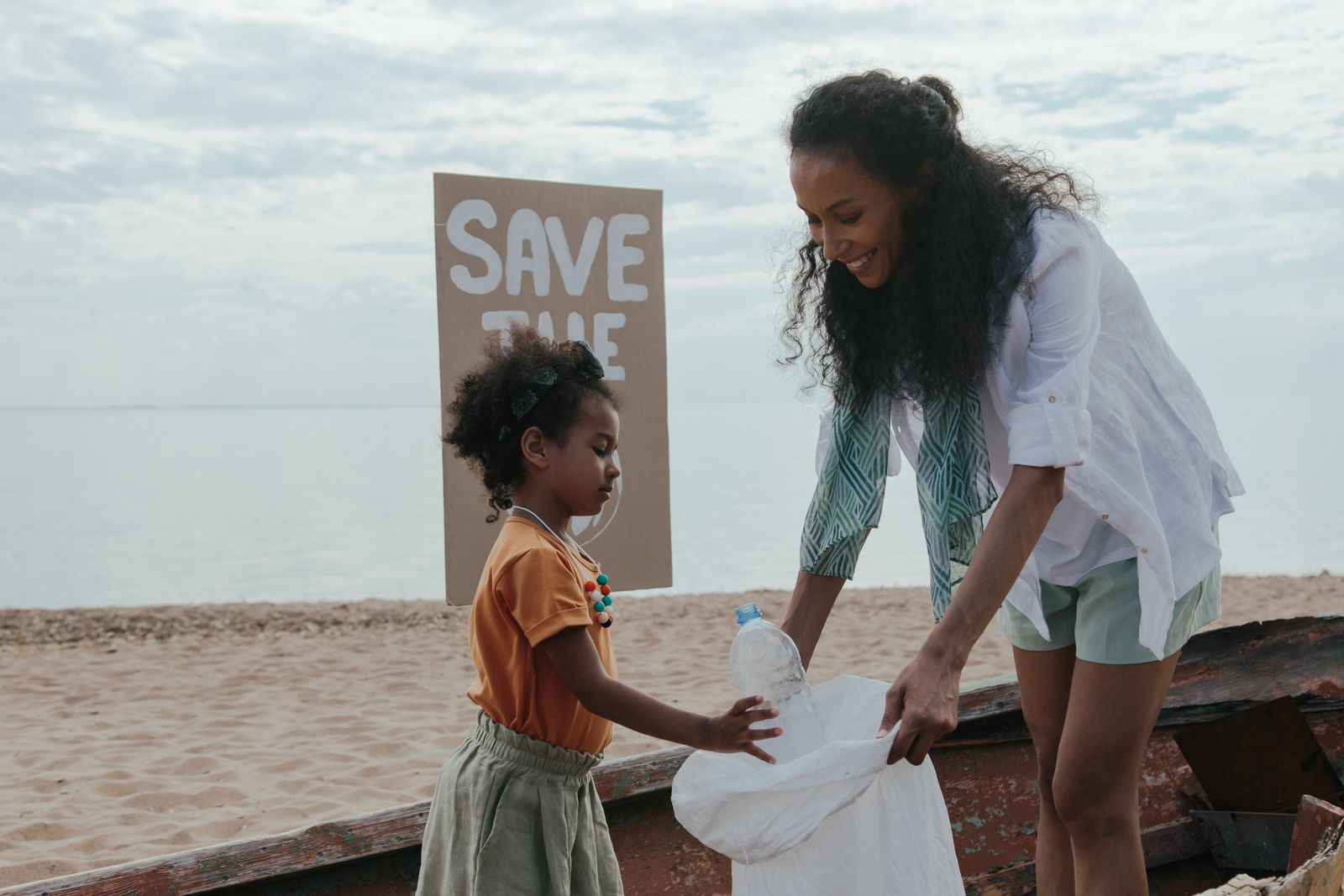

Children notice what their parents do with their spare hours, and a US study suggests some of them grow up to do the same. Young adults whose parents volunteered while they were growing up went on to volunteer in nearly three times as many years as young adults whose parents did not, according to an analysis of a national survey that has followed American families for decades.
This is one study, not settled consensus. Its authors describe it as exploratory and say plainly that it shows a link, not proof of cause. The families who volunteered were also better off, and that shapes how the result should be read.
What the study measured
Sharon Kukla-Acevedo and Emma Powell, both at Central Michigan University, published the analysis in the Journal of Public and Nonprofit Affairs. Their data came from the Panel Study of Income Dynamics, a survey that has tracked a representative sample of American families since 1968, along with several of its add-on modules.
The Artful Parent
Family-life ideas and sharp reads, in your inbox.
Joining those modules let the researchers follow one set of families across three stages. Parents reported their volunteering in 2003 and 2005, while their children were under 18. Children who were 10 or older in 2002 or 2003 were asked about their own volunteering. Then, from 18 into their late twenties, the same young people were asked again in up to six survey waves.
Complete information was available for 3,894 young adults. The plainest comparison is this: those whose parents had volunteered reported volunteering in an average of 1.84 survey years, while those whose parents had not averaged 0.64.
That is a wide gap. It is also not the whole story.
The families differed in more than volunteering
Households where parents volunteered had an average income of about $86,000, compared with about $44,000 for the others. Those parents had roughly two more years of schooling, and their children were more likely to have grown up with two parents at home. Volunteering takes time, transport, and often a job with some give in the schedule, so money could explain a good deal of the difference.
The researchers adjusted for family income across childhood, parents’ education, whether the parents were married, the young adult’s own earnings, race and ethnicity, sex, and whether the young adult had children of their own. After those adjustments, the link remained. Each extra year a parent volunteered was associated with about a fifth more years of volunteering by their child as a young adult. Higher family income and more parental education were each tied to more volunteering as well.
The authors write that the study “does not provide conclusive evidence” that a parent’s example causes a child’s later volunteering. They did not have measures of family wealth or debt, or of the neighborhoods and schools children grew up in, and any of those could influence both generations at once. They also note that the young people with complete records were slightly more advantaged than the full group, which could make the parental link look stronger than it is.
An earlier study points to the same tension. Writing in the Journal of Marriage and Family in 2004, Sarah Mustillo and colleagues followed two generations of American women, 1,848 in all. Daughters whose mothers volunteered gave more hours early on. Over the longer run, though, family socioeconomic status was what predicted rising volunteering, and the authors concluded their evidence favored the passing on of resources over the passing on of an example.
A child’s own early volunteering mattered too
One of the more practical findings in the new study concerns children’s own experience. Young people who had volunteered when they were 10 or older were more likely to volunteer in their twenties, and this held alongside their parents’ example. In the statistical model, the two were separate influences.
The authors point out that the line between them is blurry. A child’s early volunteering may itself be a form of parental influence, since a parent who helps at a school event or food drive may well bring a child along.
Where parents volunteered made a difference
The type of organization mattered. Of the kinds the researchers could compare, parents’ volunteering at youth-serving groups, such as schools and community youth programs, was the only kind linked to their grown children volunteering at the same kind of place. Parents’ volunteering at religious organizations was tied to their children volunteering somewhere as young adults, but not specifically at religious organizations. The authors found this surprising and note that younger Americans hold fewer religious affiliations than earlier generations.
Money shows a related family pattern. A 2008 study in the Journal of Public Economics by Mark Ottoni-Wilhelm and colleagues, using the same national survey, found that parents’ and adult children’s religious giving was strongly correlated, about as strongly as income and wealth are passed between generations. Giving to secular causes was less closely linked.
Why the example may matter
Volunteering is only one narrow, measurable piece of how parents shape the adults their children become, and it is easier to count than most. Survey researchers can ask how many hours someone spent at a shelter. It is much harder to measure whether a child learned to listen, to question, or to help a friend.
For my part, I don’t think the value of good role modeling can be overvalued. Kids need to learn to ask questions, to weigh up different ways of approaching a problem, and to be supportive of others.
That is a view, not a finding. The study speaks only to formal volunteering, reported in a survey.
What this does not prove
The research does not show that volunteering as a parent will make a child a volunteer, or that children of non-volunteers will not become generous adults. It does not measure kindness or helpfulness in everyday life. Some volunteering likely went unreported, which the authors say would make their estimate cautious rather than inflated.
What it does offer is a clear pattern in one large, well-documented group of American families: the children of volunteers were volunteering far more in their twenties, the link held once income and education were counted, and helping at schools and youth programs seemed to carry over most directly. Whether that comes from example, opportunity, money, or some mix of the three is the question the authors say a future study will need to be designed to answer.