
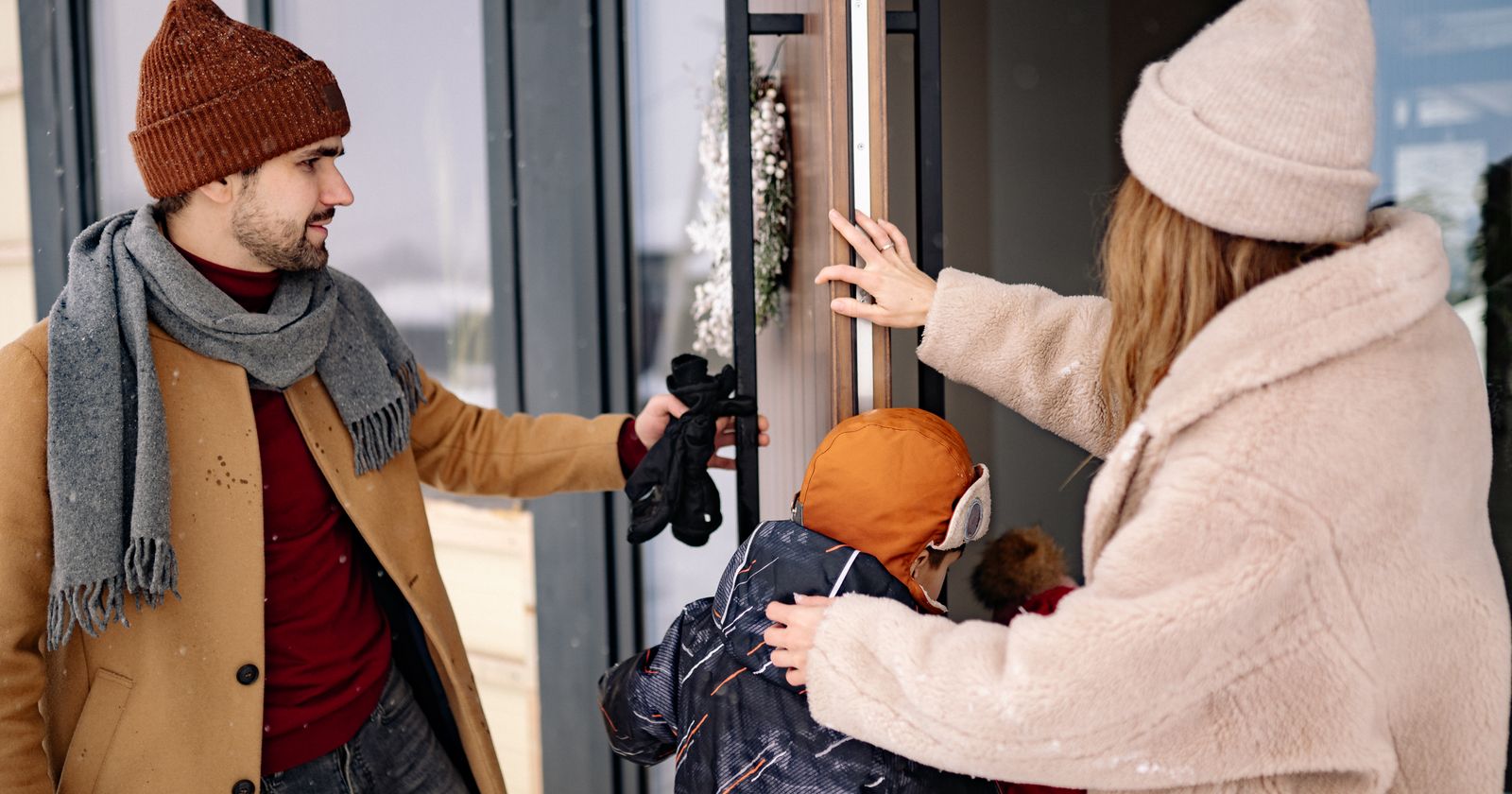
By the time the turkey or the ham reaches the table, the mood of a holiday visit has often been set already. It tends to happen in the first hour: the driveway, the hallway, the kitchen, the first few things anyone says.
That first hour brings together people with different needs. Someone has been driving for six hours. Someone else has been cooking since breakfast. A child needs a snack, and a grandparent has been watching for headlights. A little flexibility helps everyone settle before the celebrations begin.
Here are eight things parents do that can help it start gently.
The Artful Parent
Family-life ideas and sharp reads, in your inbox.
1. They stop getting ready when the car pulls in
There is always one more thing: the guest towels, the pie crust, the vacuum still out in the hall. It’s natural to want the house finished before anyone sees it.
But it’s hard to greet someone and finish a list at the same time. Putting the cloth down and turning toward them, even with the list half done, tells them the visit has started.
If something really can’t wait, you can say so and include them: “I’m behind on the pies. Come and keep me company while I finish?”
2. They keep the first words simple
“You made it.” “Come in, come in.” “It’s so good to see you.”
The first minute is when a lot of well-meant commentary slips out: you look tired, you’ve lost weight, we thought you’d be here by three, it’s been so long. Most of it is love or worry. To someone who has just spent six hours getting there, it can sound like an inspection.
The observations can wait until everyone has had something to drink. Some of them may not need saying at all.
3. “Do you want to eat, shower, or just sit for a while?”
People come off a long trip in different states. One wants food straight away. Another wants ten minutes alone in a quiet room. The toddler wants to run in circles.
Offering a choice lets them tell you which it is, so they don’t have to act fresher than they feel. It also takes the guesswork off you.
If they pick the quiet room, that isn’t a comment on the welcome. A short rest often makes the evening easier for everyone.
4. Food that doesn’t mind waiting
Holiday travel rarely runs on time. A meal timed to the minute turns every delay into a problem, and whoever walks in late walks into an apology.
Keep an easy meal ready to serve in portions: soup that can be reheated, bread ready to slice, and sandwich fillings in the fridge. Someone arriving late can eat without the whole household having to wait.
It’s easier on the cook, too.
5. They lay out the plan, and say which parts are optional
A holiday visit usually has more moving parts than an ordinary weekend. Other relatives, a service, a meal at someone else’s house, the one outing that happens every year.
Hearing the outline early helps people settle: “Dinner’s here tonight, just us. Your aunt and the cousins come tomorrow around noon. Friday is open.” So does hearing what they can skip: “We’re going to the service at ten. Come if you’d like, sleep in if you’d rather.”
You’re allowed to say what matters to you as well. “I’d really love everyone at the table tomorrow at two” is clearer and kinder than hoping they’ll guess.
6. They make introductions easy
A new partner shouldn’t have to work out who everyone is while balancing a suitcase. “This is my sister, Jo. She’s the one who recommended that walking trail” gives people a starting point. Then let the conversation develop without asking the newcomer to tell the whole room about their job or relationship.
7. They ask what their kids need from the week
Grown children often arrive carrying things you can’t see. A work call on Wednesday morning. An old friend they hope to catch up with. A baby’s nap schedule. They may be unsure how to raise any of it without seeming to pull away from the family.
Asking first makes it easy: “Is there anything you need while you’re here? A quiet spot for calls, the car for an afternoon?”
“You mentioned a work call tomorrow. Would the back room work?” Remembering something discussed before the trip saves them from having to ask again.
Not everything will be possible in a full house, and it’s fine to say so. The question still tells them that the rest of their life is welcome along with them.
8. They let a tradition bend
Every family has its fixed points. The tree gets decorated the first night. Everyone watches the same movie. The same person carves.
Traditions are part of what people come home for. They can also be a lot to walk into after a day of travel, or with a new partner who has never seen any of it, or with small children who are past their bedtime.
An invitation keeps the tradition and loosens it a little: “We usually do the tree tonight. Are you up for it, or would tomorrow morning be better?” The answer may well be yes, tonight. It’s still nice to be asked.
Before they arrive
None of this needs to be done perfectly, and you don’t need all eight. Hosts get tired too, and a holiday has enough pressure in it already.
If one idea seems useful, try this. On the morning they’re due, look at your list and choose one job that can stay unfinished. Then, when you hear the car, leave it. Put the kettle on, or pour something cold, and ask about the trip. The pie crust will keep.