
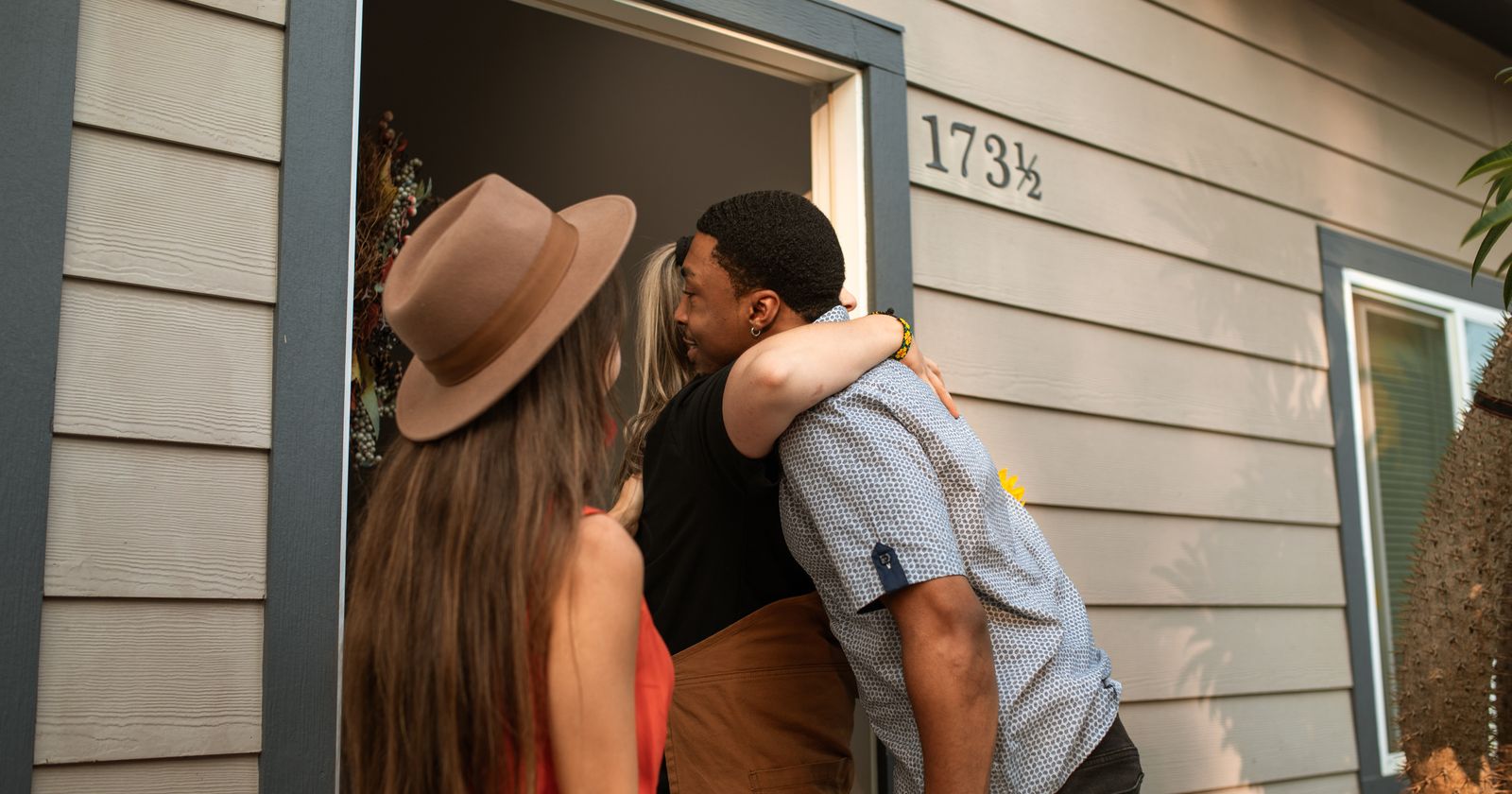
There’s a difference between being invited home and feeling welcome there. Most grown kids can tell which one it is within a few minutes of walking through the door, usually before anyone has said anything important.
A welcome often takes shape before the visit begins: a cleared place to sleep, something familiar in the fridge, a little thought about what would make the journey easier. Once everyone arrives, it continues in how people are greeted, included and listened to.
1. They come to the door
It sounds almost too small to mention. But there’s a real difference between a parent who calls out “It’s open!” from the back of the house and one who puts down what they’re doing and walks to the door.
The Artful Parent
Family-life ideas and sharp reads, in your inbox.
The first says you’ve arrived. The second says someone was waiting for you. It takes about ten seconds, and it sets the tone for everything after it.
Not every arrival lines up neatly. Sometimes the dog is barking and something is burning on the stove. A shouted “Give me one minute, I’m so glad you’re here” does the same job.
2. There’s something in the fridge that says “we knew you were coming”
Not a feast. One thing. The oat milk they switched to two years ago, the hot sauce, the particular tea.
It might be the cereal they loved at fourteen. An old favorite can be lovely. Remembering what they enjoy now adds another kind of thoughtfulness.
If you’re not sure what that is, a text the day before (“Anything you want me to pick up?”) is not cheating. It’s part of the welcome.
3. A place to put their bag
Plenty of parents have turned the old bedroom into an office or a sewing room, and fair enough. Nobody needs to keep a shrine.
What helps is a clear spot that is theirs for the visit: a made-up bed or sofa, a towel folded on top, an empty chair or a bit of closet for the bag. In a small apartment that might be one cleared corner. The size isn’t the point. Even in a crowded home, showing them where their things can go saves them from having to ask.
4. “You don’t have to ask”
Guests ask if they can have a glass of water. Family opens the cupboard.
Some adult children slip back into the house easily. Others hover, especially if they’ve been away a long time or the house has changed. Parents who say it out loud (“The kitchen’s yours, help yourself to anything, the wifi password is on the fridge”) take away a lot of awkwardness.
It works the other way too. If something is off limits now, like the home office during work hours, saying so plainly is kinder than sighing about it later.
5. They get curious about who actually walked in
It’s easy to greet a grown child with an old picture of them in mind: the picky eater, the shy one, the teenager who spent every penny. But those descriptions may no longer fit.
Parents who make home feel welcoming tend to ask questions they don’t already know the answer to. What are you reading? What’s the best part of the new job? What’s it like where you live now? It lets the adult who showed up be the one in the room, and not the teenager who left.
6. They make room for whoever came along
A partner, a couple of kids, a dog with opinions. How those extra arrivals are treated is, for many grown children, the real test of the visit.
The small things do the work here. Learning how the partner takes their coffee. Asking “what are the rules on screens and candy?” before the grandkids get handed either. Going along with the answer even if you’d do it differently.
It won’t always be comfortable. You may think the bedtime is too late or the diet is a fad. But a home where their choices get quietly overruled is a hard place to relax.
7. They hand over a dish towel
It’s tempting to treat a visiting son or daughter like royalty: sit down, don’t touch anything, I’ll do it. It comes from love. It can also leave them feeling like a visitor in the house they grew up in.
Being given a small job does the opposite. Chop these. Can you reach that? Come and stir this while I find the lid. Standing side by side at the counter is also where a lot of the easy conversation happens, the kind that doesn’t arrive when you’re sitting across a table being asked how things are going.
“Want to help me chop, or would you rather sit and talk while I cook?” gives them a way to join in that suits how they’re feeling.
The balance matters. A dish towel is a welcome. A list of chores taped to the door is something else.
8. They leave the big questions for another day
When you only see someone a few times a year, it’s natural to want to cover everything while you have them: the job, the relationship, the plan, the savings.
From the other side of the dinner table, that can feel less like interest and more like a review. Parents who are easy to come home to often let the first night be about nothing much. The roast, the neighbors, the terrible show everyone’s watching.
The serious conversations still matter, and sometimes they can’t wait. If something needs discussing, find a private moment and ask: “Would you be comfortable talking about this while you’re here?” Give them room to answer.
One thing to try before the next visit
You don’t have to do all eight, and no visit goes perfectly. Somebody will be tired. Something will get said the wrong way.
If you want one place to start, send a short message a day or two beforehand: “What can I have in the fridge for you?” It’s a small question. It also tells them, before they’ve even packed, that someone at the other end is getting ready for them.