My younger son said it the way he always says the hard things — quietly, without drama, like he was just filling in a fact I’d missed.
We were going through a box of old prints together, the kind of box I’ve kept meaning to organise for years and never quite get around to.
He picked up a photo from his seventh birthday — cake, candles, paper hats — and looked at it for a moment.
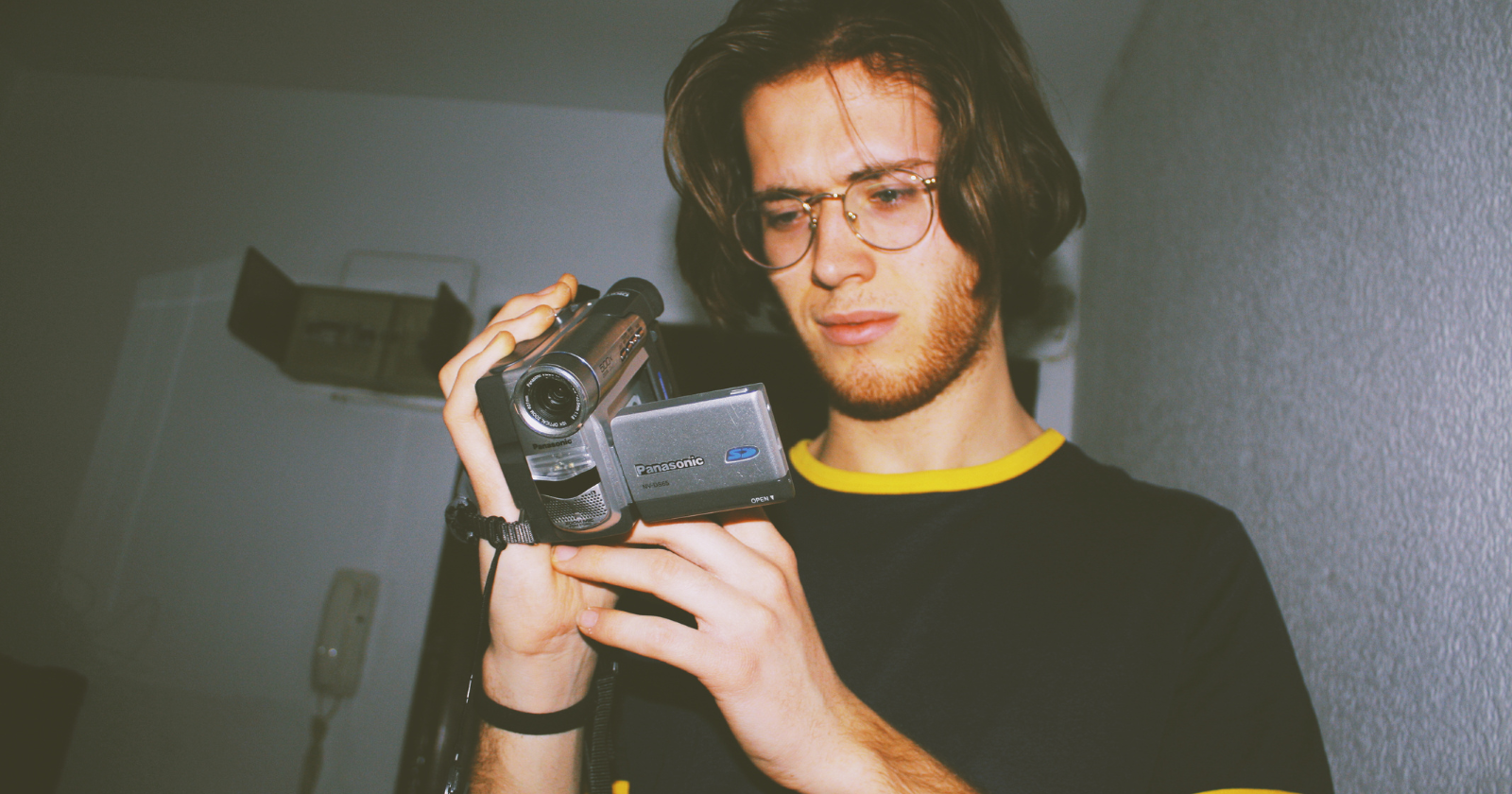
“I don’t really remember this,” he said. “I just remember you being on the other side of the camera.”
He wasn’t angry about it.
That’s what stayed with me.
It wasn’t an accusation.
It was just a thing he’d noticed about his own childhood, offered plainly, the way you might mention that a room used to be painted a different colour.
But I felt it somewhere quiet and specific, the way you feel things when you know they’re true.
I photographed everything.
Every birthday from the first to the eighteenth.
Related Stories from The Artful Parent
- I’m 63 and my son told me last week that his favorite childhood memory wasn’t the new bike I worked overtime to buy him — it was the Saturday morning I called in sick just to build a fort with him in the living room, and I realized I’d been measuring my love in all the wrong currency
- I told my son I was doing it all for him, and at 63 he told me he would have traded every dollar for one conversation where I wasn’t half-asleep — a child will always choose connection over provision, but I built my entire identity on the opposite
- Psychologists say a child will always crave the thing they didn’t get — which is why people who grew up with critical parents spend their entire lives chasing validation, and people who grew up with absent parents can’t stop trying to earn love through service
Every first day of school, every Christmas morning, every loose tooth held up proudly for the record.
I have boxes and boxes of prints and folders of digital files I’ve never properly sorted.
I thought I was preserving the family.
I thought I was doing something good.
And I was.
But I was also somewhere else for most of it.
- Research suggests the reason some people can live the same day on repeat for years without distress while others feel like they’re suffocating isn’t personality. It’s whether the routine was chosen deliberately or inherited by default, because the brain processes voluntary repetition as ritual and involuntary repetition as captivity. - Global English Editing
- Life isn’t a series of random events but a chess game where every move matters - Global English Editing
- Nobody tells you that the real threat to a long relationship isn’t the dramatic betrayal. It’s the Wednesday afternoon coffee where someone at work asks how you’re really doing and you actually answer honestly for the first time in months. - Global English Editing
The logic that seemed reasonable at the time
I want to be fair to my younger self, because the intention was genuine.
I photographed everything because I loved my boys and I wanted to hold onto it.
Time moves differently when you’re in the middle of raising children — there’s so much of it and then suddenly there isn’t, and the fear of forgetting something precious is real.
There was also, if I’m honest, something else in it.
Something that took me longer to name.
In thirty years of HR work I saw plenty of people who documented things as a way of managing their anxiety about them.
Minutes of meetings nobody read.
Paper trails that were really just a way of feeling in control of something uncertain.
I think I did a version of that with my family.
The camera gave me something to do with the love, something to hold.
It turned the feeling into a task I could complete.
But a child doesn’t experience a birthday through a lens.
He experiences it through the faces of the people who are actually in the room with him, paying attention without anything between them.
What I was actually there for
Here’s the thing about photographs.
They capture the moment but they also replace it, in a way.
Once you’ve got the shot, you’ve already half left the room in your head — checking the frame, wondering if the light was right, moving on to the next one.
The event becomes a production.
Something to be documented rather than felt.
My son doesn’t remember his seventh birthday because he was seven, and seven-year-olds don’t file memories the way adults think they do.
He remembers the shape of it.
The emotional texture.
And the shape of it, apparently, was his dad behind a camera.
I’ve thought about this a lot in the years since retirement, when I’ve had time to actually think.
With my grandchildren — four of them now, three to eleven — I take photographs sometimes.
But I put the phone away.
I’ve had to make a deliberate rule about it because the old habit is still there, that pull toward capturing instead of being.
Some of the best mornings we’ve had in the park, I have no record of whatsoever.
They live only in my memory and, I hope, in theirs.
And those are the ones I find I return to.
The distance a lens creates
What I didn’t understand when my boys were young is that the camera, however well-intentioned, is a barrier.
A small one, but a consistent one.
A child who looks up and finds a parent’s face finds something different to a child who looks up and finds a lens.
One reflects them back.
The other records them.
Over a childhood, that small distance adds up.
Not to trauma.
Not to anything dramatic.
Just to a quiet sense, carried into adulthood, that the important moments were something to be documented rather than shared.
That dad was present in the room but not quite in the moment with you.
I learned in my HR years that most of what goes wrong between people is subtler than anyone admits.
It’s not the big failures.
It’s the accumulation of small signals that say: you matter, but not quite enough for my full attention right now.
Children read those signals earlier than we think and carry them longer than we know.
What I try to do differently now
I can’t go back and put the camera down.
That’s the plain arithmetic of it, and I’ve had to accept it the same way I’ve accepted a few other things I got wrong.
What I can do is understand it clearly enough to behave differently with the time I still have.
When I’m with my grandchildren now, I try to keep my hands free.
Not because I’m performing presence — I’m too old for that kind of performance — but because I’ve learned that the thing they want from me is actually my face.
My reaction.
The look on it when they do something funny or brave or silly.
You can’t give someone that from behind a lens.
My son kept the photo from his seventh birthday, by the way.
He put it back in the box carefully.
Whatever complicated thing he felt about it, he wasn’t throwing it away.
That meant something to me.
We hold onto things even when they come with a question attached.
That’s true of photographs and probably true of a few other things in family life.
The record exists.
The boxes of prints are real.
I’m glad the boys have them.
But if I could go back and do the ratio differently — more Saturdays with my hands free, fewer evenings sorting through memory cards — I would.
The photograph proves the moment happened.
It doesn’t prove you were in it.