

The generation everyone credits with being unbreakable is breaking in ways nobody talks about, because the breaking looks exactly like the strength everyone praised them for. That’s the trap. When endurance becomes your identity, deterioration just looks like more of the same — showing up, pushing through, saying nothing. My parents are in their sixties now, and I watch them do this thing where they’ll mention a health issue so casually it almost sounds like they’re talking about the weather. My dad will mention casually that his knee has been bothering him, then immediately pivot to what he got done in the yard. My mom will wave off a headache that’s lasted three days. And I’ll sit there on the other end of the phone, gripping it a little too hard, understanding exactly where I learned to do the same thing.
The conventional wisdom says this generation’s toughness is a virtue. That their refusal to complain is discipline. That their reluctance to seek help is proof of a work ethic younger generations have lost. I bought that story for a long time. I think most of us did. But the older I get — and the more I watch my own parents navigate aging with the same emotional armor they wore through their entire working lives — the more I see that what we’ve been calling resilience has a shadow side nobody wants to name.
The Contract That Rewarded Silence
There’s a framework that helps explain this, and it comes from a really sharp breakdown by the YouTube channel Psychology Says. They lay out something I’ve been circling around in my own writing for months: boomers entered the workforce with an unspoken contract. Show up. Work hard. Stay loyal. And the system will take care of you. For many of them, that deal held. Pensions existed. A single income could buy a house. Loyalty was met with job security. And suffering — the long hours, the difficult bosses, the absence of anything resembling a mental health day — was the price of admission.
The video describes a psychological mechanism called effort justification, where the brain increases the value it assigns to something in proportion to how much you sacrificed for it. My dad worked brutal hours for decades. If he were to turn around now and admit that maybe all that sacrifice cost him something real — cost him presence with his kids, cost him his knees, cost him the ability to sit still without anxiety — the whole narrative he built his life on starts to wobble. So he doesn’t admit it. He talks about the yard.
Psychology Says digs into this with a precision that made something click for me, particularly the idea that when boomers tell younger people to push through difficult situations, they’re offering the only coping strategy they were ever given — and calling it wisdom when it’s actually survival.
That distinction — between wisdom and survival — has been sitting heavy with me since I watched it.
When Your Job Title Is Your Whole Self
The video introduces a concept describing work centrality: the degree to which work occupies a central role in a person’s identity. For boomers, your profession wasn’t just what you did. It was who you were. Your social standing, your worth in the community, your sense of self — all of it filtered through what you did for a living and how hard you did it.
I’ve written before about coming to terms with the fact that my parents were young and overwhelmed, and how much of their identity was built on performing competence rather than feeling it. This maps directly onto what Psychology Says describes: when your identity is fused with labor, taking a sick day feels like a moral failure. Asking for help feels like weakness. And admitting that the independence everyone admires is actually grinding you down? That would mean admitting the foundation is cracked.
My mom ran our household with military precision when I was growing up. Made everything from scratch — bread, soap, you name it. Not because she was pursuing some artisanal lifestyle, but because we couldn’t afford not to. And she never complained. I was praised for being the same way. Mature. Responsible. Helpful. The kid who read the room and managed everyone else’s emotions before she could name her own.
I carried that into adulthood like a badge. Matt has told me, gently, more than once, that I have a habit of not mentioning when something hurts until it’s been hurting for days. I’ll power through a migraine, minimize a pulled muscle, brush off emotional overwhelm by saying I’m just tired. And every time, I hear my mother’s voice. Not saying anything specific. Just the absence of complaint that I absorbed as the correct way to exist.
The Body Keeps the Invoice
There’s real psychological weight behind the pattern of independence that crosses into isolation. Developmental patterns suggest that when connection was never modeled as safe — when a child learns that longing for closeness gets met with distance — they may build an internal architecture around self-sufficiency. It looks like strength. It earns admiration. And it makes it nearly impossible to tell your partner when something hurts, because vulnerability was never part of the blueprint.
The video describes how many in the boomer generation may have been raised in a psychological culture that valued emotional suppression as strength. Vulnerability equaled weakness. Therapy was for people who were seen as unable to cope. And that long-term emotional suppression doesn’t eliminate stress — it redirects it into health problems, relationship strain, and quiet resentment.
I see this in my parents’ generation everywhere I look. The men who won’t go to the doctor until something is seriously wrong. The women who manage everyone else’s emotional needs and never mention their own. There’s a kind of pride that belongs to people who were told to figure it out, and from the inside, it functions less like confidence and more like a locked door they built so well they lost the key.
And the cost isn’t abstract. The modern resurgence of stoicism — particularly in male-dominated online spaces — appears to mirror something the boomer generation has practiced for decades without a philosophical label. Pain concealment. Emotional containment presented as discipline. Research suggests a correlation between this pattern and deteriorating physical health, strained relationships, and declining mental health — a predictable outcome of decades spent treating emotional needs as optional.
The Fear Underneath the Lectures
The part of the Psychology Says video that stopped me cold was the final point: boomers fear irrelevance more than they’ll ever admit. When your entire identity is built around work — when your worth is measured by what you produce and how much you endure — retirement isn’t just a life transition. It’s an identity crisis.
The video names what psychologists describe as identity threat: the anxiety that arises when the framework you built your life around starts to crumble. Technology changes everything. The skills they spent decades building get automated or restructured. The rules they followed no longer guarantee outcomes. And so the lectures about work ethic — the ones that sound like judgment — are partly genuine belief in their values, and partly a defense mechanism against the terrifying possibility that the world has moved past them.
I think about this when my dad talks about kids these days and their phone habits. I think about it when my mom questions my parenting choices — the co-sleeping, the gentle discipline — and calls it hippie parenting with a laugh that doesn’t quite land as a joke. They’re not just critiquing me. They’re defending the choices they made, because questioning those choices means questioning the sacrifices, and questioning the sacrifices means the whole structure shakes.

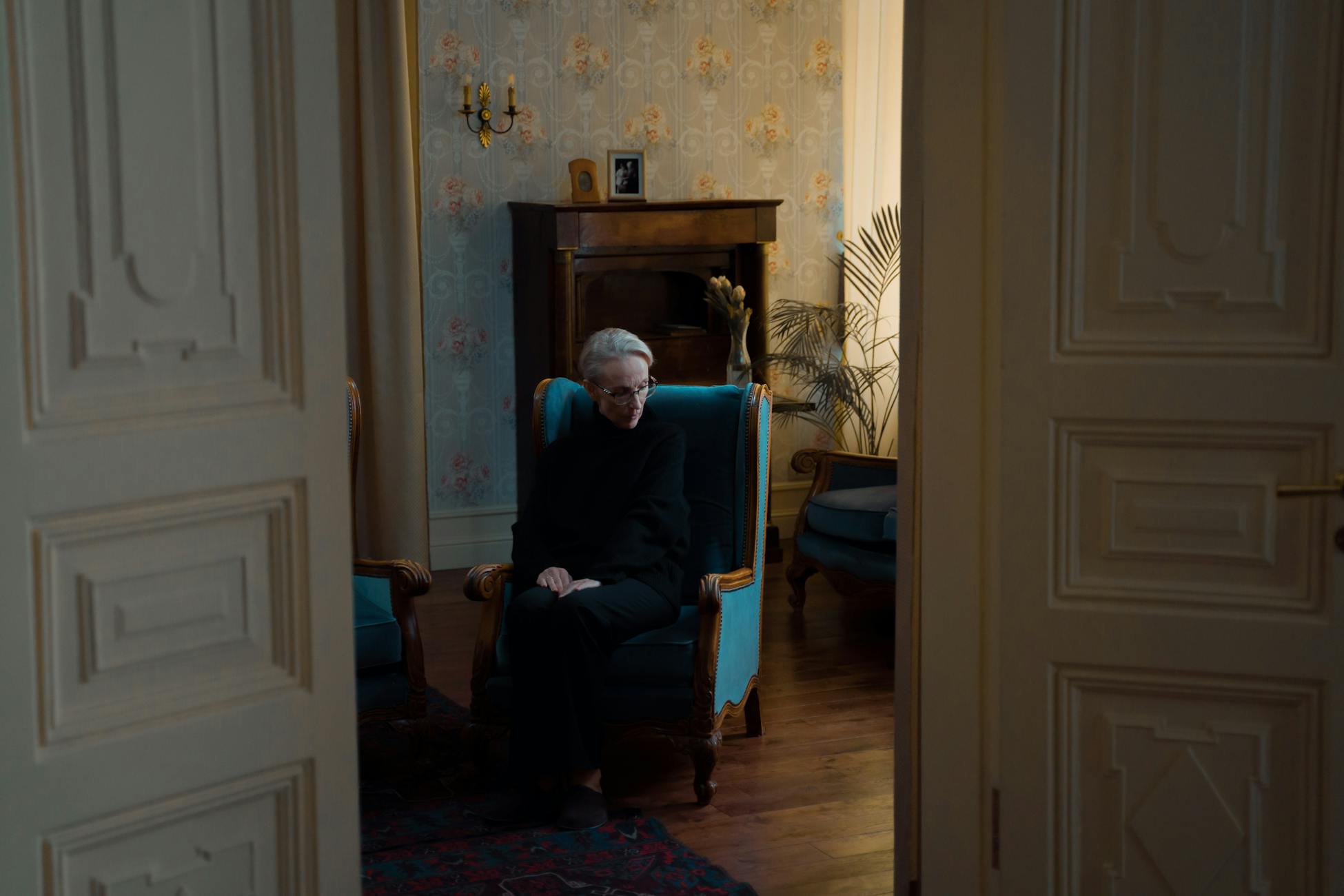
Writers on this site have explored how the generation that taught everyone to be strong and never complain is now sitting in quiet living rooms wondering why nobody asks how they’re actually doing. That image haunts me. Because I can see exactly how it happens. You spend forty years training everyone around you not to worry about you, and then one day you look up and realize the training worked.
What Gets Inherited Without Permission
The research on parental pressure and its hidden costs points to something I feel in my bones: admired traits — self-reliance, independence, toughness — carry negative psychological consequences when they calcify into the only acceptable way of being. Burnout and isolation aren’t failures of character. They’re the long-term bill for a value system that never built in a line item for rest.
I catch myself doing this with Ellie. She’s five, and she’s already watching me. When I push through exhaustion without saying I’m tired. When I handle everything myself instead of asking Matt for help. When I make the bone broth, tend the garden, run the house, manage the emotional temperature of every room I enter — and never once acknowledge that this is a lot to handle. She’s absorbing the same blueprint I absorbed. The one that says capable people don’t need help, and needing help means you aren’t capable.
My therapist often reminds me that you can’t outperform a pattern you haven’t named. I think about that when I watch my parents. They never named it. They never had the language or cultural permission to acknowledge that the thing everyone admired about them was also wearing them down. They just kept going. That was the contract.
And here I am, 35 years old, financially comfortable in a way my childhood self couldn’t have imagined, sitting on the kitchen floor with cracker crumbs under my knees, trying to break a cycle I can feel in my nervous system before I can articulate it in words.
Two Blueprints, Same Language, Different Meanings
The Psychology Says video ends with something that reframed the generational argument for me: boomers and younger generations are using the same words but meaning entirely different things. “Hard work.” “Respect.” “Toughness.” These words carried one meaning in a world where the social contract held, and they carry a different meaning now that it doesn’t. The friction between generations isn’t laziness on one side and cruelty on the other. It’s two groups of people shaped by completely different psychological environments trying to have the same conversation.
I don’t think my parents were wrong for valuing hard work. They built a life from almost nothing. They fed three kids on one income in a small Midwest town and kept the lights on — mostly. The electricity did go out sometimes. But they showed up. Every single day, they showed up.
What I’m trying to do — imperfectly, with a lot of therapy and a lot of failed attempts — is keep the showing up while releasing the silence. Keep the work ethic without inheriting the belief that my worth is measured by how much discomfort I can absorb without flinching. Teach Ellie and Milo that strength and asking for help can live in the same body.
I don’t know if my parents will ever see it that way. Our phone calls are still cordial and careful. The hour-long drive to visit them still carries that specific tension of wanting to be known and knowing it probably won’t happen the way I need it to. They love me in the language they have. And I’m learning, slowly, to stop translating it into the language I wish they spoke.
The most self-reliant generation in history built something real. They also built a silence so thorough that their own children had to spend decades in therapy learning how to hear what was never said. Both of those things are true. And I’m done pretending only one of them counts.