
Falling in love the second time around — or the first real time, after years of learning how to stand alone — looks nothing like what the movies promised. There’s no thunderclap. No breathless certainty. The whole thing unfolds more like a series of negotiations with yourself, tiny internal votes about whether to allow one more inch of closeness. You let someone pick the movie. You stop checking that the front door is locked after they’ve already checked it. You hear yourself say “we” in a sentence about weekend plans and your own voice sounds like it belongs to a stranger.
The cultural mythology insists that love is supposed to overwhelm us. That resistance melts. That the right person arrives and our walls come tumbling down in some glorious cinematic collapse. But for parents who’ve spent years building a life alone — managing the bedtimes, the grocery lists, the emotional weather of a household by themselves — the walls didn’t go up to keep love out. They went up because the walls worked. And dismantling something that works requires a different kind of courage than most love stories bother to describe.
When Protection Becomes Architecture
I think every long-single parent will recognize this pattern in their gut. A choice to protect yourself — the choice to be single and to stop seeking validation from relationships — starts out as genuinely healing. It makes your life better. You tell people about it. You build your routines around it. And then, slowly, without anyone noticing, the choice hardens into an identity. The identity that saved you becomes the wall. Not against the original threat. Against everything new that’s trying to get in.
I think about this in the context of parenting alone. When you’re the one who handles everything — the night wakings, the permission slips, the fever math at 2 a.m. — being capable becomes your whole architecture. You are the person who manages. Writers on this site have explored how being consistently available and reliably capable can cause the people around you to stop seeing the person and start relying on the function. When you’ve been that function for your children for years, letting someone else into the system feels less like romance and more like a threat to your operating structure.
And the thing is, you were right to build it. The independence was necessary. The emotional self-sufficiency was real and earned. That’s what makes it so hard to loosen. You’re not letting go of a bad habit. You’re loosening a survival skill that kept you and your children safe.
The Vocabulary of Small Permissions
For those who’ve been single for extended periods, the transition to partnership can be startlingly undramatic. Meeting someone, beginning to see each other regularly — not in a frantic way, just agreeing to see each other again. The thing worth noticing is that, early on, there often isn’t any impingement on freedom. The new person doesn’t arrive like an invasion. They arrive like a gradual adjustment to the thermostat.
This is the part that I think gets missed in every conversation about single parents dating again. The fear isn’t that you’ll meet the wrong person. The fear is that any person will disturb the ecosystem you’ve built. Because the ecosystem works. The kids know where the cereal is. You know the rhythm of the mornings. Nobody expects you to explain your choices about screen time or sugar or why you let them sleep in your bed on Thursdays when they have bad dreams. Every new person is a potential disruption to a system that your family’s stability depends on.
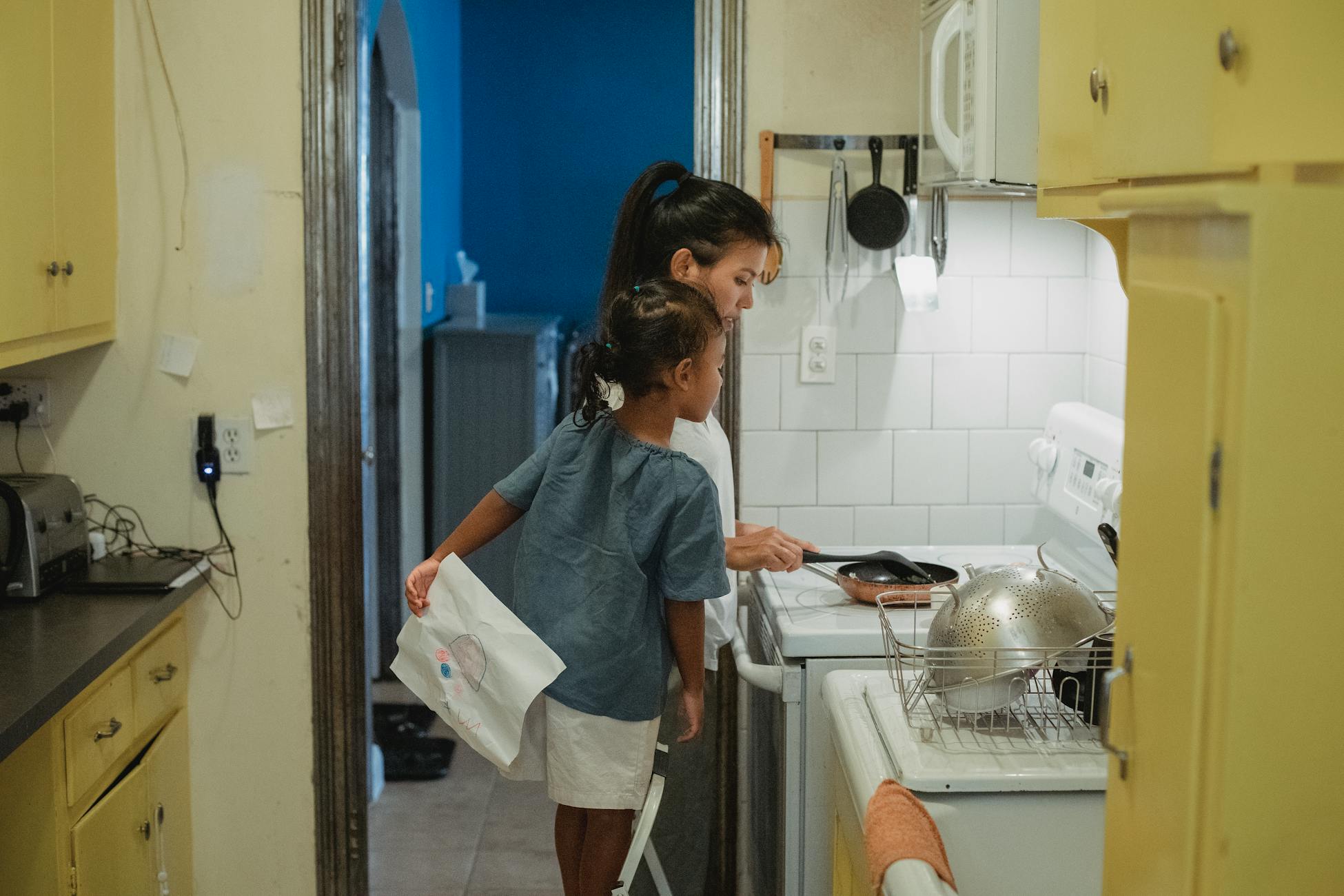
So the love, when it happens, happens in what I’d call small permissions. You let them see the pile of laundry you haven’t folded. You stop performing the version of your home that looks like you have it all together. You let someone else pour the milk, even though they pour it wrong, because your child asked them to. These aren’t grand gestures. They’re moments where you decide, consciously, to tolerate the discomfort of shared space.
The psychology here runs deeper than comfort zones. Research on romantic trust identifies multiple distinct types that need to develop for a relationship to hold — not just emotional trust, but trust around reliability, trust around physical safety, trust around intentions. For someone who has been single for years, these layers don’t build simultaneously. They build one excruciating inch at a time. You trust them with your Saturday before you trust them with your Tuesday. You trust them with your laughter before you trust them with your tears. You trust them with your body before you trust them with your children, and you trust them with your children long before you trust them with the parts of your parenting you’re unsure about.
The Grief of Outgrowing Your Own Fortress
For parents, the stakes of opening up are compounded. You’re not just risking your own heart. You’re risking the stability of a small person who trusts you completely. I think this is why so many of us — and I include myself in the “us” of people who’ve built entire identities around capability — hold both the freedom and the loneliness simultaneously, for years, without admitting we’re doing it.
I’ve written before about grief that exists without cultural language — and this is another form. The grief of outgrowing your own protective structure. The sadness of realizing the fortress you built, the one that kept you upright through the hardest years of solo parenting, now has to get a door. Not because the fortress failed. Because you survived long enough to need something the fortress can’t provide.
The things we actually need — freedom, independence, self-generated happiness — can exist inside a relationship too. But sometimes we need the years of singleness first to build that internal foundation. The relationship doesn’t replace the self-sufficiency. It exists alongside it, once we’re ready. And the readiness itself is just another small permission — the permission to admit that being okay alone and wanting someone beside you are not contradictions.

What “We” Sounds Like for the First Time
The first time you say we in reference to your new partner and it includes your child, something physically shifts. I remember hearing it come out of my mouth — we’re going to the park this weekend — and feeling like I’d accidentally spoken in a foreign language. Who is we? When did we happen? Did anyone approve this?
That’s what cautious love sounds like. It announces itself in conditional tenses and soft commitments — phrases like we might or we could try or we’ll see how this goes. Not we fell in love but something more like: we realized this was a really good beginning to something.
For parents, the we is even more loaded. Because we used to mean you and your children. It was a closed unit. A sovereign state. And now there’s an amendment being proposed, and every member of the household — including the three-year-old who doesn’t understand what’s happening but absolutely senses something has changed — gets a vote, whether you planned it that way or not.
The patterns of attachment that shaped us in childhood don’t disappear just because we recognize them. They show up in how we respond to closeness, in whether we lean toward a new person or subtly create distance when things get too comfortable. Adults who have maintained independent lifestyles for years often develop what looks like secure attachment but is actually a well-managed avoidant pattern — functional, admirable, and quietly isolating.
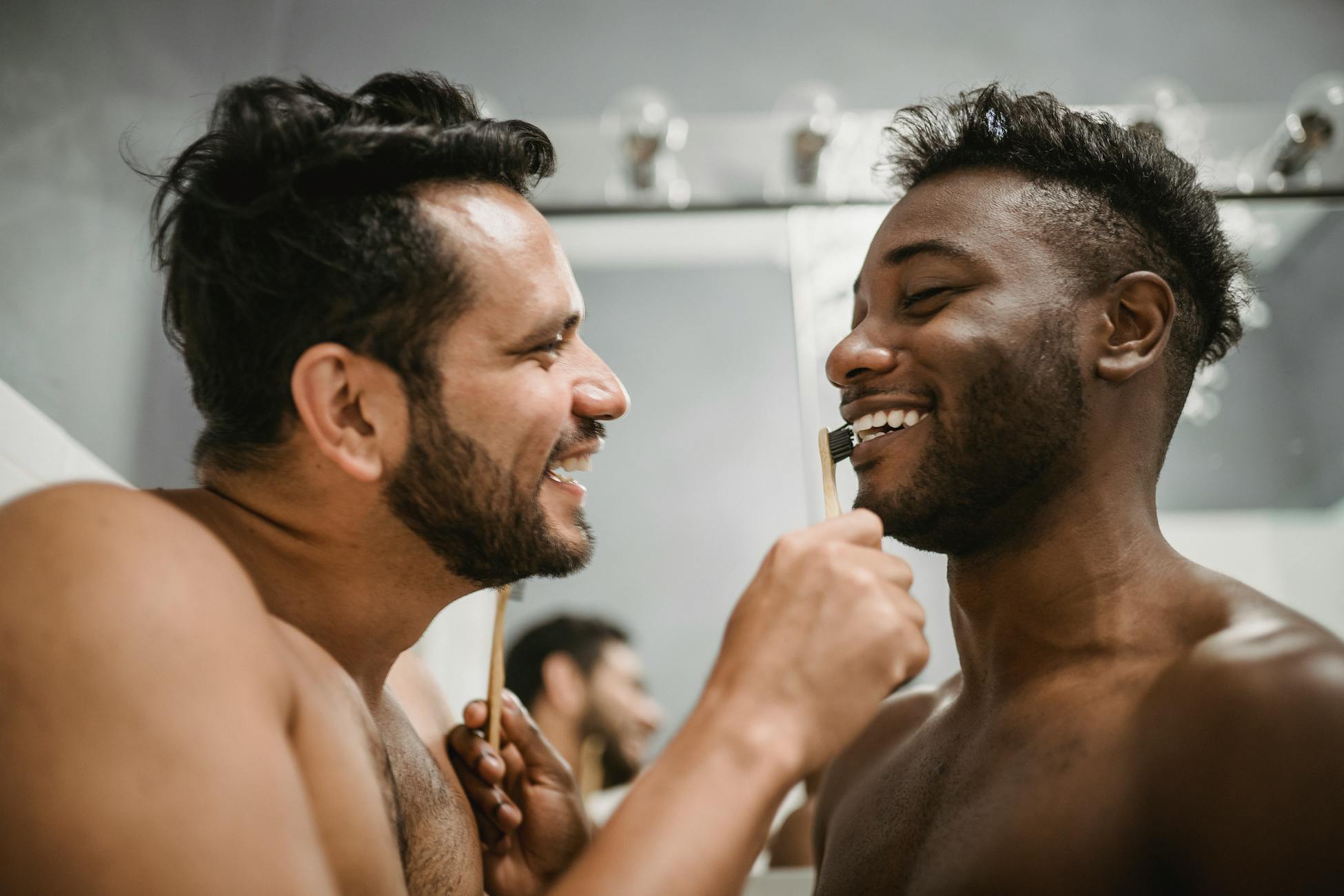
The toothbrush in the bathroom. That’s the real test. Not the first kiss. Not the first time someone says they love you. The toothbrush. Because a toothbrush implies tomorrow morning. It implies they’ll be here when the kids wake up. It implies witness — someone seeing you before you’ve assembled your face for the day.
The Difference Between Choosing and Allowing
This, I think, is where the real work happens for parents. We know how to choose. We’ve been choosing everything for years — the school, the doctor, the bedtime, the playlist for the car, the restaurant, the route, the whole plan. Choosing is our superpower. What we’re not practiced at is allowing. Allowing someone else to choose the restaurant. Allowing the evening routine to flex because another person has preferences too. Allowing someone to tell you that you don’t have to do something alone without immediately responding that you’ve got it.
I watch myself do this with Matt. He reaches for something I’m carrying — groceries, a stack of mail, a problem I’m chewing on — and my first instinct is still to pull it closer. I’ve got it. That sentence is tattooed somewhere inside me. It was true for so long that it became reflex, and now the reflex outlives the necessity.
Learning to say “okay” when someone offers to help. Learning to sit with the mild agitation of someone else loading the dishwasher differently. Learning that trust builds through small, consistent behaviors — not declarations — and that the discomfort you feel when someone else takes the wheel is not a warning sign. It’s the feeling of a muscle stretching that hasn’t been used in years.
Love as Negotiation, Not Surrender
The popular narrative frames love as surrender. You let your guard down. You give yourself to someone. You fall. But for parents who’ve been alone for years, love functions more like a negotiation. You negotiate with your own nervous system, which is sending alarm signals every time someone gets close to the inner workings of your life. You negotiate with your children, who are studying the new person with the forensic attention of tiny anthropologists. You negotiate with time itself — because the years alone weren’t wasted, they were formative, and the new chapter doesn’t erase the old one.
New relationships can begin as smooth transitions. Not leaps. Transitions. And transitions, by definition, happen in stages. You don’t go from alone to partnered. You go from alone to occasionally accompanied. From occasionally accompanied to reliably present. From reliably present to assumed. And that last one — when someone’s presence is assumed, when your child sets an extra place at the table without being asked — that’s the moment you realize the negotiation is over and something else has begun.
I grew up watching my father provide everything except emotional presence, and it shaped my understanding of what partnership meant. Our attachment patterns begin in childhood and follow us, quietly, into every relationship we attempt as adults. The way I was loved — reliably but distantly — became the template I unconsciously accepted. So when I found myself alone and parenting, part of me whispered: of course. This is how it goes. You do it yourself. You need no one. You stay quiet and stay competent and call it strength.
Letting someone into that architecture — really in, past the logistical layer, past the I’ve got it reflex, into the tender terrified middle of it — required something I didn’t expect. It required me to grieve the version of myself who didn’t need anyone. To acknowledge that she served me well. And to let her rest.
The toothbrush is still in the bathroom. Some mornings I look at it and feel a quick pulse of something — not quite fear, not quite joy. More like the sensation of a door that used to be locked standing open, and the air that comes through it is unfamiliar but warm. Other mornings I barely notice it at all, and that’s its own quiet milestone — the moment an act of permission becomes simply the way things are.
That’s what cautious love feels like. Not a thunderclap. Not a surrender. A series of small permissions that accumulate so slowly you almost miss the moment they become a life. Someone else choosing the restaurant. A toothbrush you didn’t buy sitting next to the ones you did. The word “we” in your mouth, no longer foreign, just — yours.
