
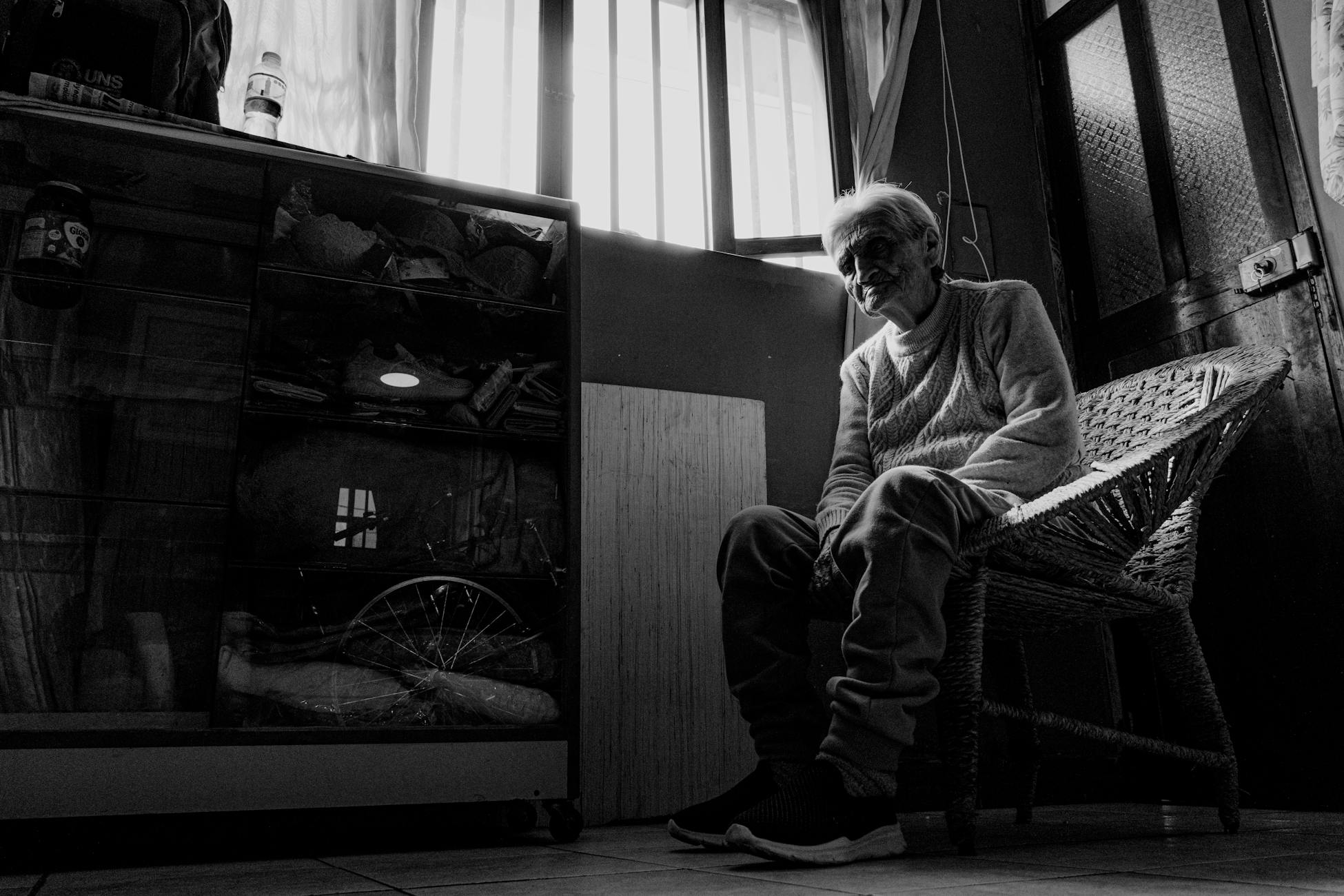
My father is in his sixties, sitting in the house where he raised us, and the phone almost never rings. He built things his whole life, not just professionally, but architecturally inside our family. He maintained the yard. He fixed the fence when the neighbor’s dog knocked a board loose. He drove us to every practice, every recital, every obligation that required someone behind the wheel at an inconvenient hour. He did this without ceremony, without asking for recognition, and largely without speaking much at all. He communicated through the sound of his truck pulling into the driveway. And now the driveway is quiet, and so is the house, and so is he. Survey data collected from nearly 50,000 people in the United States found that four in five report some degree of loneliness, with levels strongly correlated with poor mental and physical health days. That finding alone should stop you. But what stopped me was something quieter, something I’ve been circling for a long time: the realization that the people in my own life who are most devastated by loneliness are the same people who spent decades making sure nobody around them ever felt alone.
Most people assume Gen Z owns the loneliness crisis. The data even supports it on the surface. Younger people report higher loneliness rates than baby boomers. But that comparison obscures something critical. Younger people experience loneliness as a feature of their developmental stage. They’re still building social networks, still learning intimacy, still tethered to institutions like schools and workplaces that generate connection by proximity. Boomers are experiencing loneliness as a structural collapse. Their networks aren’t forming. They’re dissolving. And the infrastructure they relied on, the neighborhoods, the church groups, the coaching rotations, the holiday traditions, has either disappeared or moved on without them.
The Architecture of Usefulness
My mother’s generation, and my father’s, built their social identities around function. You were the coach. The host. The one who organized the block party, who brought the casserole when someone’s husband had surgery, who knew every kid on the street by name. This wasn’t incidental to their sense of self. It was their sense of self. When you asked my father who he was, he wouldn’t have said lonely or happy or struggling. He would have said he was a provider. A fixer. A man who showed up.
Researchers studying identity disruption in older adults have found that when people whose sense of self has been constructed around professional competence and measurable achievement lose their active roles, the result is something far deeper than boredom. Studies suggest this triggers a psychological crisis. The self they built over fifty years doesn’t have a place to stand anymore. The coaching ended. The kids graduated. The holidays migrated to someone else’s house. And what’s left is a person in a building that used to mean something, surrounded by evidence of a life that required them.
I’ve written before about the loneliest people in families being the ones who show up to every gathering, help clean up, and leave without anyone asking them a question that isn’t about logistics. That observation keeps getting more true the older my parents get. My mother was the center of every holiday for thirty years. She made everything from scratch. Her garden fed us through months when money was thin. Now she sits in the same kitchen where she used to feed twelve people, and the phone rings maybe once a week. Maybe.
The House as Monument
There’s a particular cruelty in aging inside the home where you raised your family. Every room is a museum of a life that needed you. The doorframe where you penciled heights. The kitchen table that seated everyone. The backyard where you taught someone to throw. These spaces don’t comfort. They testify. They say: this was full, and now it isn’t, and you’re still here.
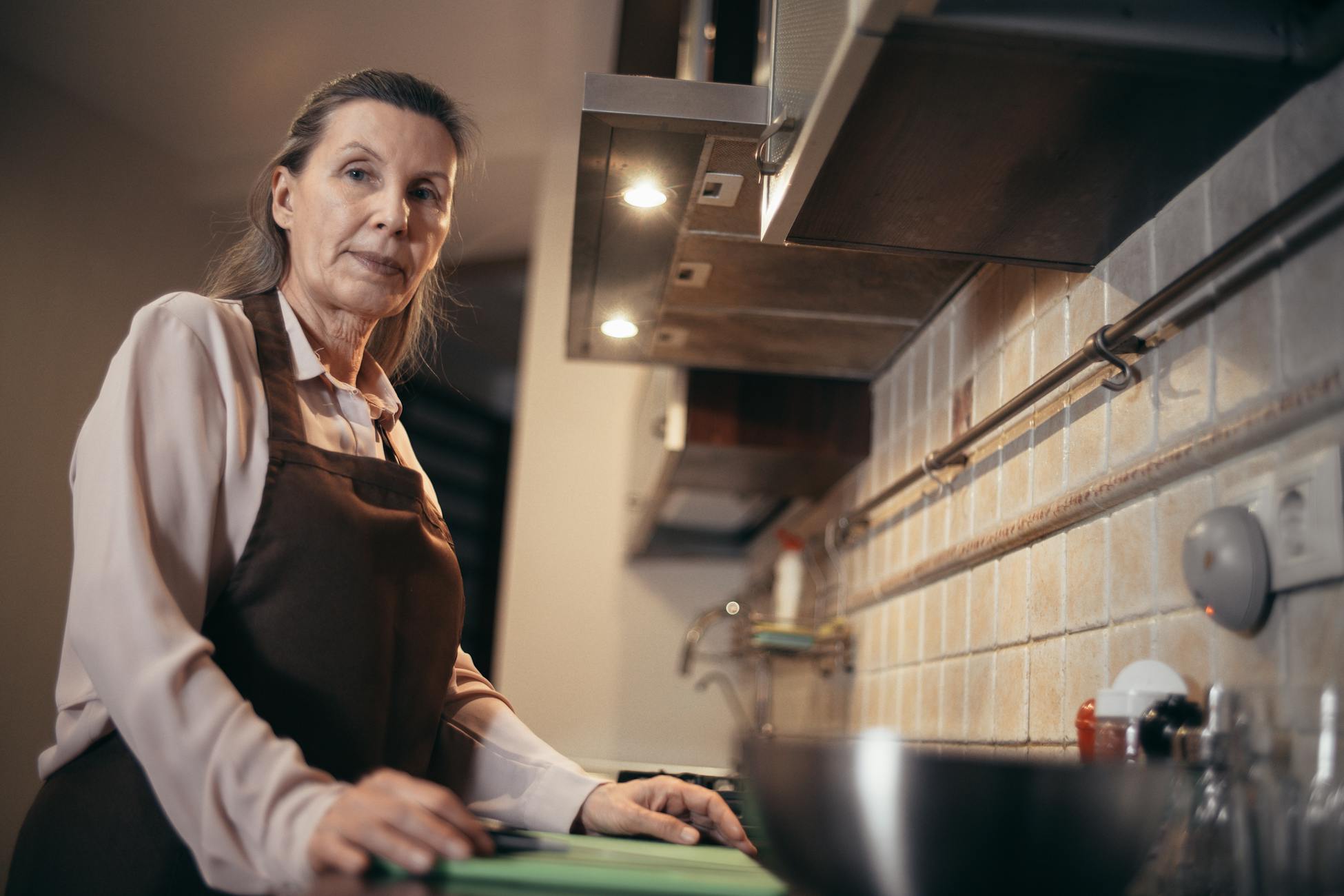
The National Academies of Sciences published a comprehensive report on social isolation and loneliness in older adults, documenting how physical environment, including home ownership and neighborhood stability, can paradoxically increase isolation risk. Staying in the family home feels like continuity. It feels like holding onto something. But it also means living inside a space designed for a family of five when you’re now a household of one or two. The rooms don’t shrink. The silence just gets louder.
My mother still lives in our childhood home. Her cognitive decline means she no longer cooks the way she once did, and the garden that sustained us has gone patchy and overgrown. When I visit, I bring soup in jars, and we sit in a kitchen that used to smell like bread. She still reaches for the lavender lotion she’s used for thirty years. The rituals persist even as the context that gave them meaning dissolves.
I grew up in a small Midwest town where neighbors knew each other, where you could walk to three different houses and find someone willing to watch your kids for an hour. That web of mutual reliance wasn’t just convenient. It was the entire social operating system for a generation that didn’t have text threads or group chats. When the web frays, when the neighbors move or die or stop driving, there’s no digital equivalent that fills the gap. Not really.
Why the Phone Doesn’t Ring
The easy explanation is that adult children are busy and distracted. The harder truth is that the dynamics set in place decades ago, the ones that made the boomer parent the provider, the organizer, the one who called everyone else, created a one-directional current that nobody learned to reverse. My father worked long hours my entire childhood. He was emotionally distant in the way that many men of his generation were trained to be. Not cold exactly, but enclosed. He provided everything except the kind of emotional fluency that would have taught us how to reach back toward him now. I spent my twenties in therapy learning to identify emotions that were never named in our house, where dinner conversations stayed on the surface and vulnerability was treated as something you managed privately, if at all. That absence of emotional language has consequences that compound over decades. We didn’t learn to call our parents just to ask how they were feeling because nobody in our house modeled that exchange. We learned to call about logistics. About holidays. About who’s driving whom. And when the logistics dry up, when the holiday migrates and the grandkids are old enough to drive themselves, the calls simply stop. Not from malice. From a pattern nobody knew how to interrupt.
I’ve been thinking about this for months, maybe years. The way my father’s silence in our childhood has boomeranged into a silence around him now. The way my mother’s anxious caretaking, the lock-checking three times before bed, the constant motion of feeding and cleaning and managing, left her with no template for asking someone to care for her. She gave and gave and gave, and the giving was the relationship. Without it, she doesn’t know what to say when I sit across from her. And I don’t always know either.
The Myth of the Connected Retiree
There’s a popular cultural image of retirement that involves travel, hobbies, social clubs, maybe a pickleball league. And for some boomers, that’s accurate. But for many, particularly those in working-class communities, particularly those whose social lives were embedded in their roles as parents and workers rather than in independent friendships, retirement is a cliff edge. The structure vanishes. The purpose evaporates. And the health consequences of that isolation are measurable and severe, affecting cardiovascular health, cognitive function, and mortality risk.
Phone calls and video chats help, but studies suggest that remote connection for older adults is a poor substitute for physical presence. A weekly FaceTime with a grandchild is better than nothing. But it’s not the same as someone sitting in your kitchen, eating your food, needing you for something. The need was the connection. The being-needed was the identity. Strip that away and what’s left feels, to many boomers, like a kind of death that nobody acknowledges because the person is still technically alive.
I’ve written about friendships that end without a fight, where two people who genuinely liked each other let three weeks become three months become a year. The same dynamic happens between parents and adult children, except it’s worse, because the love never actually faded. The structure just couldn’t hold it anymore.
What My Daughter Is Teaching Me About What My Parents Lost
Ellie is five. She draws pictures constantly. Last month she drew a cat on a piece of paper and insisted we tape it to my mother’s refrigerator the next time we visited. She doesn’t understand why grandma sometimes calls her by the wrong name or why the garden looks different than in the photos. She just knows that grandma’s fridge should have her art on it. That’s the whole logic. Presence. Evidence. I was here and you matter to me.
I came across a video recently from The Artful Parent that examines this same dynamic through the lens of Brooklyn Beckham’s public outburst—how even the most picture-perfect parenting can leave kids feeling emotionally stranded, just in a different tax bracket.
Watching Ellie interact with my mother has clarified something I couldn’t see when I was just a daughter trying to manage my own grief about my mother’s decline. Children don’t perform connection. They just do it. They sit on your lap. They hand you a crayon. They call just to talk, which Ellie once did from Matt’s phone, four minutes of mostly silence and one story about a worm. That call probably meant more to my mother than any of the dutiful check-ins I’ve made in the last six months.
The collage table I keep set up in our kitchen exists partly because of my mother. She didn’t have a collage table. She had a garden and a bread bowl and the unspoken belief that love was expressed through labor. I’m trying to keep the labor but add the language. To make sure Ellie and Milo grow up knowing they can call me about a worm, about nothing, about the specific texture of their day, and that I will always want to hear it. Not because I need to be needed but because I want them to practice reaching toward someone without a reason. That’s the skill my parents’ generation never quite developed, and it’s the skill that might have saved them from the silence they’re living inside now.
The Quiet Emergency
The National Academies has classified social isolation and loneliness in older adults as a public health risk on par with major chronic diseases. That framing matters because it moves the conversation from sentiment to medicine, from treating it as a personal failing requiring individual action to recognizing it as a systemic public health failure with serious health consequences. But I also think the clinical framing misses something. The loneliness my parents are experiencing isn’t just a health risk. It’s a betrayal of a social contract they believed in completely.
They did what they were supposed to do. They built the house. They raised the children. They coached the teams and hosted the holidays and maintained the yard and showed up to every school event and gave decades of their lives to a community that has since reorganized itself around different principles, different geographies, different definitions of connection. They held up their end. And now they’re sitting in the evidence of that effort, waiting for a reciprocity that the culture they built never actually guaranteed.
I drove home from my mother’s house last weekend and sat in the driveway for ten minutes before going inside. Matt was putting the kids to bed. The house was lit up, warm, full of noise. And I thought about my mother in her house, in the dark, in the quiet, with the lavender lotion and the empty kitchen and Ellie’s cat drawing on the fridge. The distance between those two scenes is maybe forty miles. It feels like a generation. It feels like everything we failed to say out loud when there was still time to learn a different language for love.
I don’t have a solution. I have a Sunday phone call that I sometimes forget to make and a jar of soup that I bring when I remember. I have a daughter who draws cats and a mother who doesn’t always know my name. And I have the creeping, persistent understanding that the loneliness epidemic everyone keeps attributing to screens and social media is also, maybe primarily, happening in houses with landlines that ring once a week, in kitchens that used to feed twelve, in driveways where no one’s truck pulls in anymore. That silence isn’t new. We just weren’t listening for it.
