


About a month ago I wrote that birth order barely shapes personality, and I ended on a line I was quite pleased with: that you become who you are through “something far more specific than your place in line.” Then it hit me that I never said what that something was. A little awkward for someone who studies this.
In my family, my older sister was always “the responsible one.” Then she moved abroad, and the job automatically passed to me (she’ll deny she ever had it. Sorry, if you’re reading this.)
Same family, same birth order, a different responsible one.
The Artful Parent
Family-life ideas and sharp reads, in your inbox.
So I went looking for research on the role itself. The best place to start was a 2023 review that pulled together 95 studies on children who take care of their families. It asks the question I’d been circling: why do some of these kids struggle while others grow stronger?
What does being “the responsible one” actually look like?
Psychologists have a clunky name for it: parentification. It means a child ends up doing jobs that usually belong to an adult. The review splits it two ways. There’s the practical kind, like cooking, cleaning or getting younger siblings out the door. And there’s the emotional kind: keeping the peace, listening to a parent’s worries, being the one everyone leans on.
The care can go to different people, too. Some children look after a parent, some look after their brothers and sisters, and plenty do both.
A lot has been written about oldest children who grow up as a second parent. I wanted something more useful to a parent reading this today: when does the role do damage, and when does it build something?
Does carrying the family hurt a child?
Sometimes, yes. Across the studies that looked at it, taking on this role went with more anxiety and low mood (most of those studies measured the two together) and with more distress. The link was clearest for the emotional kind: the child who manages everyone’s feelings. These are links, though, not proof that the role itself caused the problems.
That part didn’t surprise me much. The interview studies in the review add a sadder detail: some girls who grew up this way avoided close relationships later and found it hard to accept support from others. Most of the people in these studies were girls and women, so we know less about how boys fare.
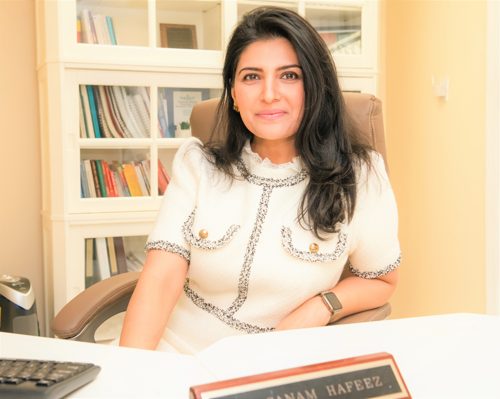
I asked Dr. Sanam Hafeez, a New York City neuropsychologist and founder of Comprehend the Mind, how this shows up in the adults she sees. She described them as “like little warriors who tried to please everyone, say the right thing and keep the peace, often at the cost of neglecting their own needs.” Many grow into strong people, she said. But when their own mental health suffers, “they might find it hard to express the need for assistance or see themselves as being weak for having a problem.”
Learning to let others help takes time. “They might need to start small, like letting a family member set the table when they are too tired,” she said. “Baby steps are needed to overcome the superhero type of mindset.”
So why do some kids come out stronger?
Here’s the part I didn’t expect. Only a handful of studies looked at good outcomes at all. Self-esteem came up in five, confidence in one’s own abilities in three, and many found nothing either way. But when a direction did show up, it leaned positive.
One finding held steady. In the studies that measured it, children who saw some benefit in their role had fewer depressive symptoms.
The interview studies fill in the rest. Kids who grew close to the siblings they looked after picked up empathy and social skills along the way. The authors sum up what decided which way a child went in one line:
“Perception, Acknowledgement, Initial Competencies, and Supports Make the Difference between Floundering, Resilience, and Thriving.” (Dariotis and colleagues, 2023)
In plainer words: whether the job felt fair, whether anyone thanked the child for it, what the child could already handle, how they got on with their parents, and whether there was help from outside the family.
If not birth order, what hands a child this job?
When the review lists what pushes children into the role, it names circumstances: a parent who is ill, a parent lost through death, divorce or prison, a family that migrated, money trouble. Birth order isn’t on the list. The review didn’t test it either, so I won’t claim it plays no part.
It does fit what I found last time. In a study of 20,186 people in the US, Britain and Germany, birth order made no difference to the big personality traits. The one exception was a small dip in how bright later-born people rated themselves.
And it fits my family. My sister didn’t pass me the role because I was born second. Life moved her to another country, and the job was still there.
What does this mean at home?
I’m not a family therapist, so I’ll stick to what the studies point to. Children did better when the job felt fair, when someone thanked them for it, when they got on well with their parents and when there was help from outside. Being able to talk about their worries protected them too. I’ve seen something similar in my own research with adolescents in Georgia whose parents work abroad: support from their parents seemed to act as a buffer.
So if you have a child who quietly takes care of everyone, it might be worth noticing it out loud. Saying thank you. Checking the load is shared. And asking how they’re doing, not only how everyone else is.
Where that leaves my sister and me
In my last piece on Ideapod, I said you become who you are through something far more specific than your place in line. This research gives that something a bit more shape: the jobs life hands you at home, and how much support you have while you do them.
In my family, being the responsible one never came down to who was born first. It came down to who was still at home when the job needed doing.
This article explains research and isn’t a substitute for advice from a doctor or therapist. If a child seems weighed down by responsibilities at home, a family doctor or counsellor is a good place to start.