
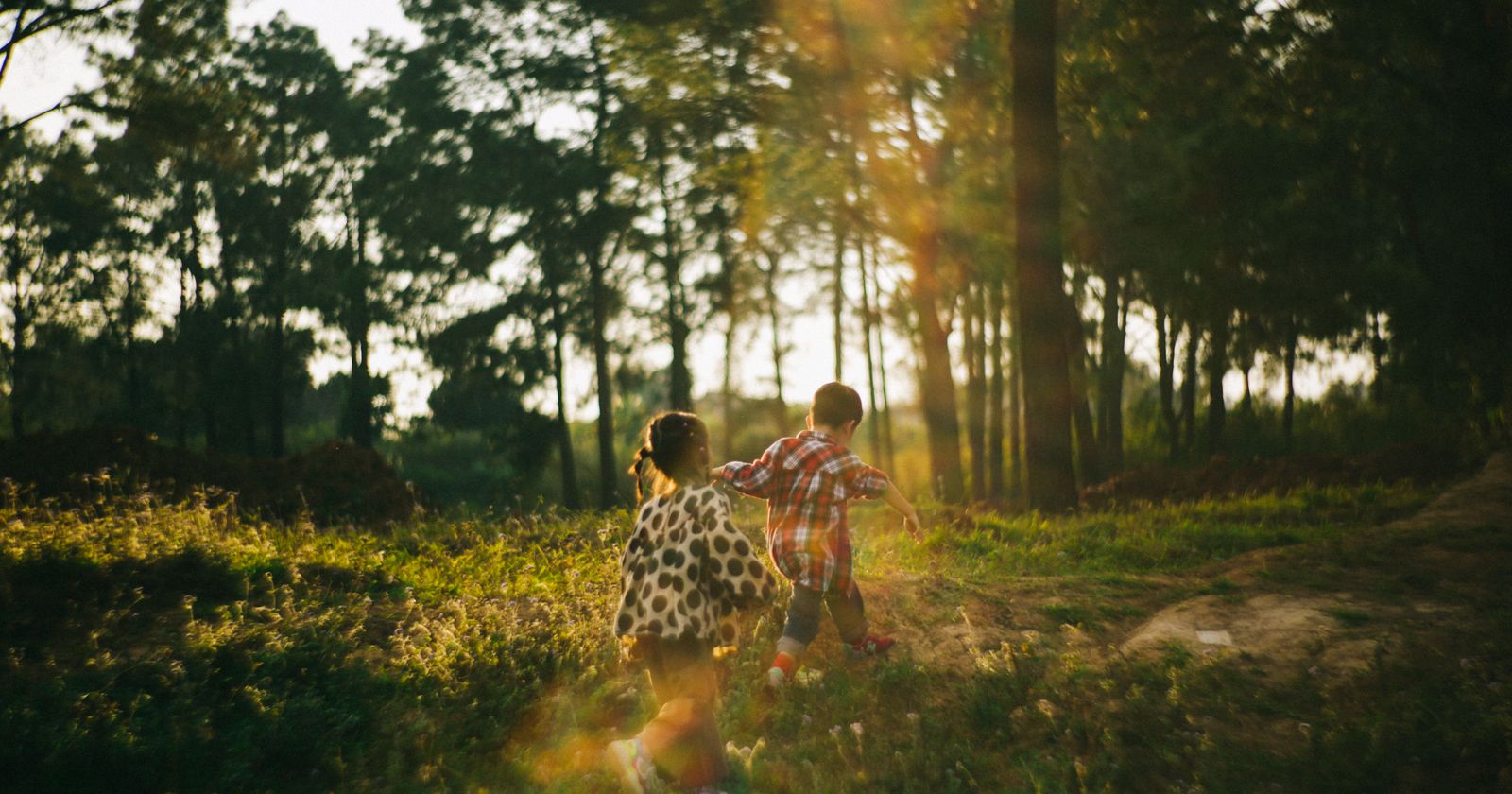
Summer, 1972. The screen door bangs shut at eight in the morning. You’re back for a sandwich at noon, gone again by 12:15, and the only rule is to be home when the streetlights come on.
If you grew up in the 1960s or 70s, there’s a good chance some version of that sounds familiar. Looking back, “tough” may not be quite the word. It was more that nobody was watching very closely.
School travel offers one measure of how childhood routines changed. In 1969, 47.7% of U.S. kindergarten through eighth-grade students usually walked or biked to school, whether on their own or with an adult. By 2009, it was 12.7%. Some of that shift has practical causes, like schools being farther from home, and some of what changed since then was for good reason: car seats, bike helmets, safer playgrounds.
The Artful Parent
Family-life ideas and sharp reads, in your inbox.
Not every childhood of that era was carefree, either. Some kids were lonely, some had to grow up too fast, and some got hurt. Nostalgia smooths the edges. But all that free time was a chance to practice a handful of everyday skills. Here are seven, and how to pass a little of each on.
1. Making your own fun
A long August afternoon, nothing on TV but a soap opera, and a friend who says, “I’m bored.” Twenty minutes later, you’ve invented a game involving a tennis ball, the garage door, and a set of rules nobody else would understand.
Boredom was common, and there was rarely an adult to fix it. So kids learned to sit in it for a while until an idea showed up.
Passing it on: next time a child says, “I’m bored,” try not to solve it right away. “Hmm. I wonder what you’ll come up with” can feel uncomfortable for both of you at first. Leave out some cardboard, string, or art supplies, and see what happens.
2. Finding your way around
You knew which shortcut went behind the church, which yard had the dog that barked, and how far it was to the creek. Nobody gave you a map. You learned it by going.
Getting around without help builds a sense of direction and a kind of quiet confidence. You knew where you were, and how to get home.
Passing it on: on your next walk with a child, let them lead. “You get us to the library. I’ll follow.” Older kids can try a short, familiar route on their own when they’re ready and you’re comfortable with it.
3. Settling arguments without a referee
Was it out or not? Does the tree count as base? In a neighborhood kickball game, there was no coach to decide. The kids argued, made up a rule, and kept playing, because otherwise the game ended.
Working it out among themselves taught a lot of people how to negotiate, compromise, and occasionally lose gracefully.
Passing it on: when kids squabble over a game, try waiting a minute before stepping in, as long as nobody’s getting hurt, bullied, or left out. Negotiating works best when every child gets a say. “Can you two figure out a rule that works for both of you?” gives them a chance to try.
4. Building and fixing things
The fort made of scrap wood and an old shower curtain. The go-kart with lawnmower wheels. The bike chain that slipped off and had to be put back on, with greasy hands, by you.
When nobody was around to fix things, kids figured out how. Plenty of adults who grew up that way still reach for a screwdriver before they reach for the phone.
Passing it on: give children real materials and a bit of time. A box of scrap wood, a hammer, and a supervised afternoon, or simply blankets and chairs for a living room fort. Let a cardboard model lean or collapse, then ask what might make it stronger. That kind of trial and error is how they learn.
5. Learning your own limits
You knew which branch on the maple would hold you and which one wouldn’t. Some of that knowledge came from a scraped knee, or a fall you didn’t tell your mother about.
This one deserves honesty. Some injuries back then were serious, and many of today’s safety rules exist for good reasons. But small, manageable risks did teach many kids to judge what they could handle.
Passing it on: on suitable climbing equipment, with supervision that fits the child’s age, try saying “Be careful” a little less and asking questions a little more: “How will you get down?” or “Where will your foot go next?” It helps children think about the risk instead of just hearing a warning.
The hazard checks stay with the adults. As the Canadian Paediatric Society points out, a child can’t always spot dangers like a rotten branch or damaged equipment, so those should be dealt with before play starts.
6. Remembering when to come home
Not every kid had a watch, and plenty who did forgot to look at it. So you also read the light, the shadows, the dinner smells drifting from the neighbors’ kitchens. When the streetlights flickered on, you ran.
It sounds small, but it meant being responsible for getting yourself home, without anyone texting to check on you.
Passing it on: agree on a time to be back, an area to play in, and a way to ask for help if they need it, like a neighbor’s door they can knock on. Then let them manage it, with a watch or a simple timer. If they’re late, talk about what happened, and give them another go.
7. Getting along with kids of all ages
The neighborhood pack included a seven-year-old, two eleven-year-olds, and a teenager who was mostly in charge. The older kids taught the younger ones how to ride, how to throw, and how not to get caught in the neighbor’s apple tree.
Mixed-age play meant younger kids had role models, and older kids practiced patience and looking out for someone else.
Passing it on: when cousins or neighbors gather, try letting the ages mix instead of splitting the big kids from the little ones. Ask an older child to teach a younger one a card game or a jump rope rhyme.
Where to start
You don’t have to recreate 1972 to pass on what was good about it. A little unscheduled time, a few real materials, and a bit less hovering can go a long way, at whatever level suits a child’s age and your neighborhood.
This week, try giving a child or grandchild one free afternoon with nothing planned. And while you’re at it, tell them a story from your own summers: the fort, the creek, the streetlights. They may be surprised by how much you got up to.