
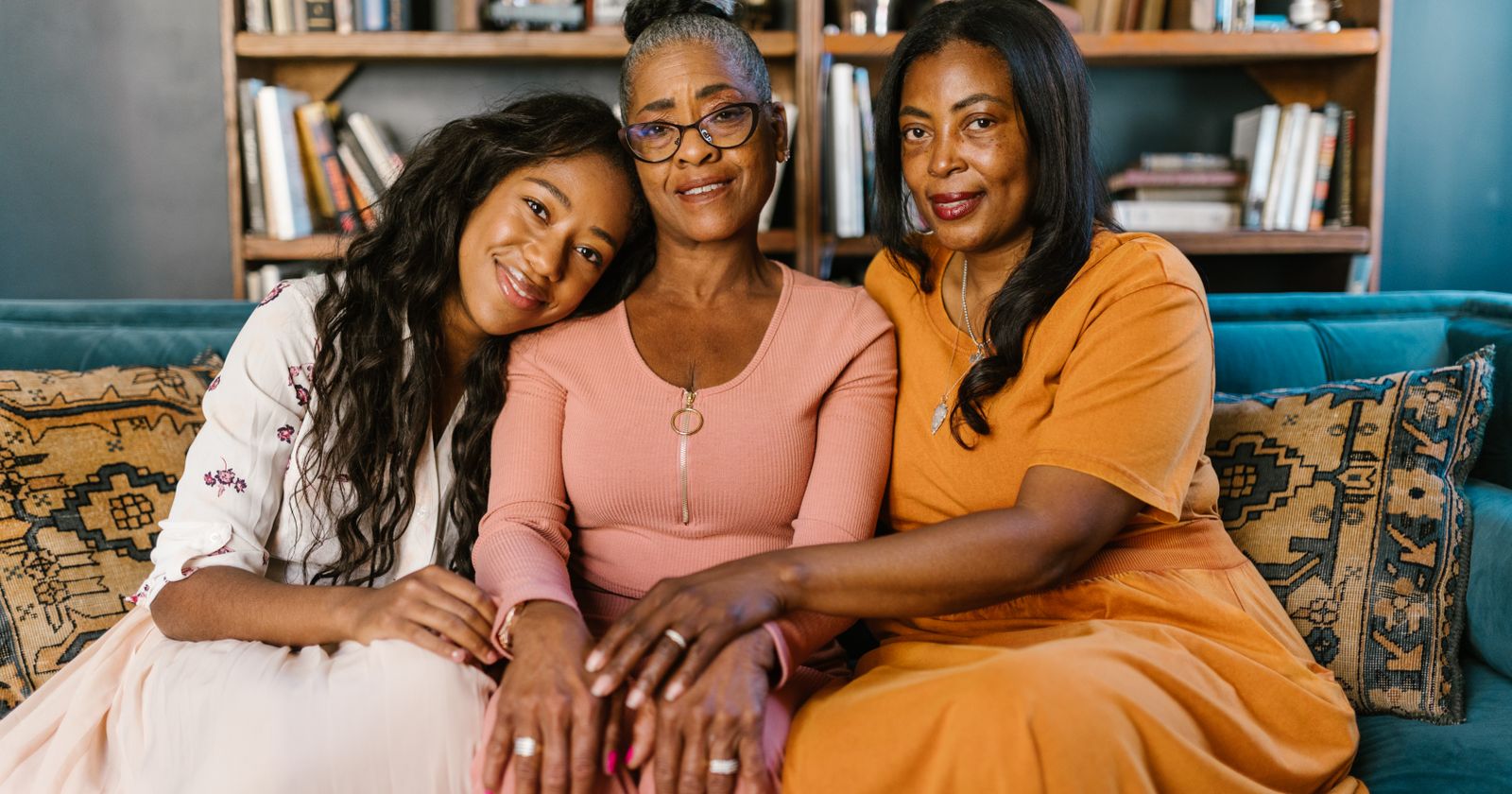
Imagine four generations around the Thanksgiving table. Somewhere between the turkey and the pie, your niece, who’s 24 and expecting her first baby, asks a simple question: “So what’s a mom’s job, really?”
Grandma answers first. Then your sister. Then you. Then your niece answers her own question. It’s easy to picture none of the answers quite matching.
Generations are rough labels. Pew Research Center uses birth years to define them: Boomers were born from 1946 to 1964, Gen X from 1965 to 1980, Millennials from 1981 to 1996, and Gen Z from 1997 onward. Plenty of people won’t fit their generation’s pattern, and culture, money, and family history often matter more than birth year. Pew itself has said it won’t always default to these labels, partly to avoid stereotypes, since differences between age groups often come from life stage or the times rather than birth year.
The Artful Parent
Family-life ideas and sharp reads, in your inbox.
So think of the four answers below as portraits, not findings: four ways of thinking about motherhood that can show up in any generation, and often overlap in the same family, or even the same person. Each one does connect to a real change in how families have lived.
And many mothers are rethinking the job right now, whatever their generation. In a 2023 Pew survey of U.S. parents with children under 18, 48% of mothers said they were trying to raise their children differently from how they were raised.
The Boomer answer: “Keep everything running”
Ask a Boomer mom, and you might hear about meals on the table, clean clothes, a home that worked, and children who were where they were supposed to be.
That makes sense for the world many of them grew up in. In 1965, according to Pew’s analysis of time-use data, mothers spent an average of 32 hours a week on housework and about 8 hours on paid work. Many Boomer women then raised their own children while moving into paid work in much larger numbers, often keeping most of the household load too.
What’s worth borrowing: steadiness. Children notice when dinner shows up, when the ride comes, when someone is reliably there.
The Gen X answer: “Raise kids who can manage without you”
Many Gen Xers grew up with a key on a string around their neck, letting themselves in after school while both parents worked. Ask a Gen X mom, and you might hear something like, “My job is to make sure they can take care of themselves.”
That answer often comes with pride. Plenty of Gen Xers learned to cook, solve problems, and get through boredom on their own, and want the same for their kids.
What’s worth borrowing: confidence in children. Letting a child try, struggle a bit, and figure it out can be a form of care, too.
The Millennial answer: “Be there for all of it”
Millennials are raising many of today’s young children, and you might hear a bigger answer from them: keep the kids safe and fed, yes, but also notice their feelings, explain things, and stay closely involved.
That fits a broader shift. Pew found that by 2011, mothers were spending more time with their children than mothers did in the 1960s, even while working more hours for pay.
What’s worth borrowing: attention to how a child feels. A parent who says, “That sounds really frustrating. Tell me what happened,” is teaching something that lasts.
The Gen Z answer: “It shouldn’t all be on her”
The oldest members of Gen Z are in their late twenties, and many are only starting to become parents. Ask them, and you might hear a question back: why is it only a mom’s job?
They’ve grown up watching parenting become more shared. Between 1965 and 2011, fathers nearly tripled their time with children, according to Pew, though mothers still did more on average. That’s a change in how families lived, not a measure of what Gen Z expects. But you might hear some younger parents say they want to split the work from the start, and protect some time for themselves along the way.
What’s worth borrowing: the idea that a mother’s own needs count. A parent who rests, asks for help, and has a life of her own is showing children something, too.
Where the answers overlap
Put the four answers side by side, and they’re less opposed than they first sound. Each one is trying to make sure children are safe, cared for, and ready for the world. The differences are mostly about what that took in each era, and who was expected to do it.
Each answer also has a blind spot. Keeping everything running can leave little room for feelings. Raising independent kids can leave some of them feeling on their own too early. Being there for everything can wear a parent out. And sharing the load works best when there’s someone to share it with.
Seen that way, the generations aren’t really competing. They’re each holding one piece of the picture.
Try asking it at your own table
Next time the family is together, ask the question out loud: “What do you think a mom’s job is?” Let each person answer without anyone correcting them.
Then ask one follow-up: “Who taught you that?” The stories that come back, about a mother who worked nights or a grandmother who never sat down, are often the best part of the conversation.
After that, try a second question: “What did you wish someone had helped you with?” The answers can turn into something concrete: cooking dinner one night, taking a school pickup, or giving a new mother an afternoon off once the baby arrives.