
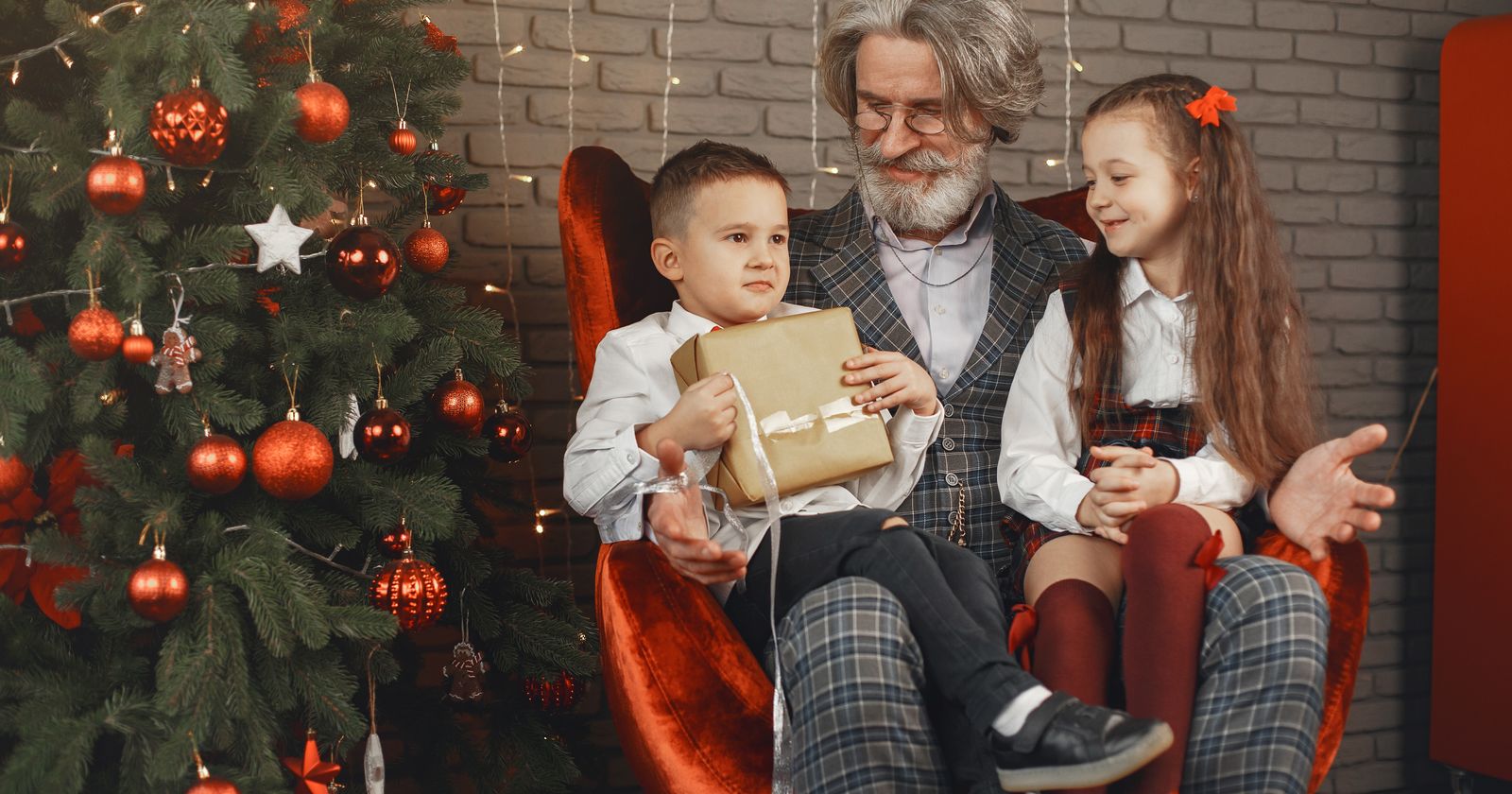
When grandparents arrive for the holidays, the house gets fuller in a good way and a slightly complicated one. The children are excited and short on sleep, their parents are hosting or packing or both, and everyone is working around a schedule that isn’t their usual one.
Some grandparents make that week easier just by how they move through it. It rarely comes down to the presents or how much they do in the kitchen. More often it’s a handful of small habits, most of them to do with timing and with noticing what the children and their parents need. Here are eight of them. Not every one will suit every family, and none of them requires endless energy or a perfect mood.
1. They let the children come to them
A four-year-old who talked about Grandma all week may still hide behind a parent’s leg when she actually walks in. A thirteen-year-old may offer a nod from the couch. Neither is a verdict on the relationship. An excited child can still feel shy or overwhelmed when everyone arrives.
The Artful Parent
Family-life ideas and sharp reads, in your inbox.
Grandparents who are easy to be around tend to skip the request for a hug. They greet the children warmly and give them time. A hug may happen, or a child may prefer to show off a new bike, sit nearby or simply wave. Whatever response the child is comfortable offering is welcome.
2. They ask about the house rules before they arrive
Every household runs the holidays a little differently. How many sweets before dinner, how much screen time on the long afternoons, whether bedtime still applies, what the children have been told about Santa. These are much easier to ask about in a text a week ahead than to discover in front of a six-year-old holding a candy cane.
“Anything I should know about bedtimes or treats this year?” takes one line and tells the parents their choices will be respected. It also spares the grandparent from guessing. Rules they’d have set differently are still the parents’ call, and the visit tends to go more smoothly when that’s settled early.
3. They take the early shift
Small children wake at the same time on a holiday as on any other day, often earlier. Some grandparents are up at that hour anyway, and a specific offer made ahead of time is easy for parents to answer: “Would it help if I did breakfast with the children on Saturday? Tell me what they’ll need.”
It doesn’t need to be elaborate. Cereal, a cartoon or a quiet game at the kitchen table while the house sleeps is plenty. Grandparents can offer only the time and care they feel comfortable managing. Doing it once is already enough, and it needn’t become their role for the whole visit.
4. They play the game the child has in mind
Children usually arrive at a holiday with a plan: the new building set, a shop that needs customers, a card game with rules that change every round. Joining on those terms, as a customer or a second pair of hands, tends to go further than introducing a better game.
This has physical limits, and it’s fine to name them. “My knees don’t do the floor anymore, so bring it up to the table and show me” keeps the game going. Twenty minutes of full attention is worth offering even when a whole afternoon isn’t possible.
5. They take honest reactions in stride
Children are not diplomats. A five-year-old may open a carefully chosen present and announce that she already has one, or set it down and go back to the box it came in. It can sting, particularly after weeks of thought.
A straightforward answer keeps the moment small: “Thanks for telling me. We can work out what to do with the extra one.” Prompting a thank-you is something the parents can handle if they choose to. A grandparent can feel disappointed without asking the child to perform excitement. The welcome continues even when the present misses the mark.
6. They leave plates and appearances alone
Holiday tables invite commentary. Who took seconds, who only ate the bread rolls, who has shot up, filled out or dyed their hair. Most of it is meant warmly, and children and teenagers often hear it differently from how it was intended.
The simpler habit is to say nothing about what’s on a child’s plate or how their body has changed, and to greet them with something else: “I’ve been looking forward to hearing about the school play.” A grandparent with a genuine concern can discuss it quietly with the parents rather than making the child’s eating a topic at the table.
7. They treat the older grandchildren as company
Teenagers and college students get asked the same three questions by every relative: grades, plans, and whether they’re seeing anyone. A grandparent who asks something else stands out. “What are you watching at the moment?” or “What’s the best thing you’ve eaten this term?” are easier to answer and more likely to lead somewhere.
Asking for their opinion or their help works in the same way. Which movie the family should watch, how to get photos off a phone, whether the gravy needs more salt. They may still disappear to their room for a few hours. That’s ordinary at that age and not a comment on the company.
8. They tell the parents one good thing they noticed
Hosting a holiday with children underfoot is tiring, and most parents spend part of it wondering how their family looks from the outside. A specific remark from a grandparent can mean a great deal: “I noticed how patient you were with him at bedtime,” or “She’s so kind to her little cousin.”
It works best in private, while drying dishes or on the way out to the car. It isn’t a review of their parenting. It’s just letting them know that someone saw the effort.
One text to send this week
None of this asks a grandparent to be tireless or to have no opinions. There will be a noisy afternoon, a rule that seems too strict or too loose, and a moment when a rest is needed more than another round of cards.
Before the visit, send the parents a short message: “What are the kids into right now, and is there anything I should know about bedtimes or treats?” The answer gives you a first question for each grandchild and a clear picture of the house rules before you walk through the door.