
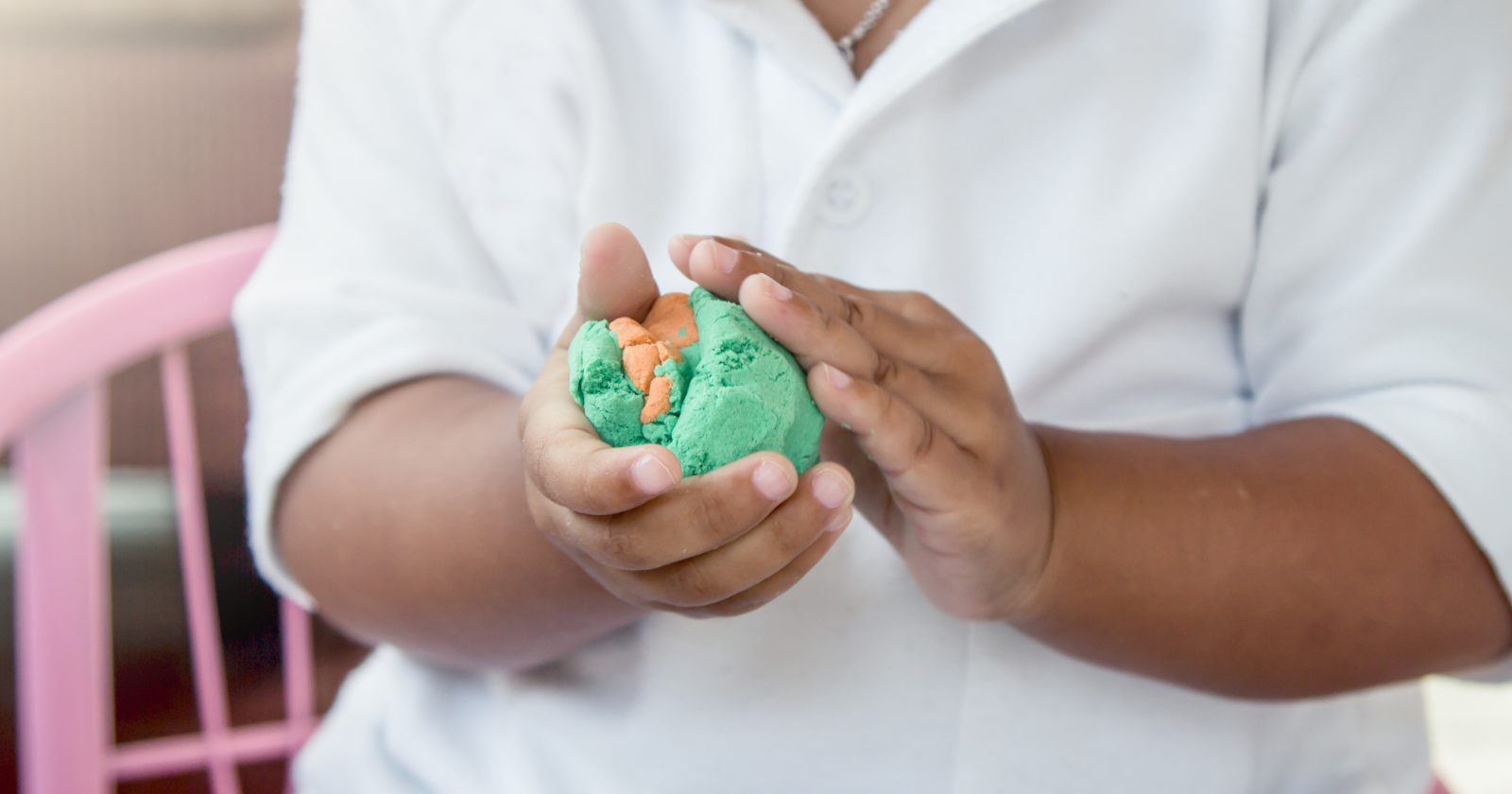
Silly Putty has one of those invention stories that became neater each time it was retold. The familiar version gives the entire discovery to General Electric chemist James Wright, who supposedly mixed boric acid with silicone oil in 1943 and accidentally produced the bouncing material still sold today. The fuller historical record is more complicated, and more interesting.
Wright was one of at least two chemists independently experimenting with silicone and boron compounds during the wartime search for synthetic rubber. Earl Warrick of Dow Corning was pursuing similar work, and his patent application reached the US Patent Office before Wright’s. Neither man produced the tire rubber the country needed, but together their work helped establish the strange family of materials that would eventually reach toy stores as Silly Putty.
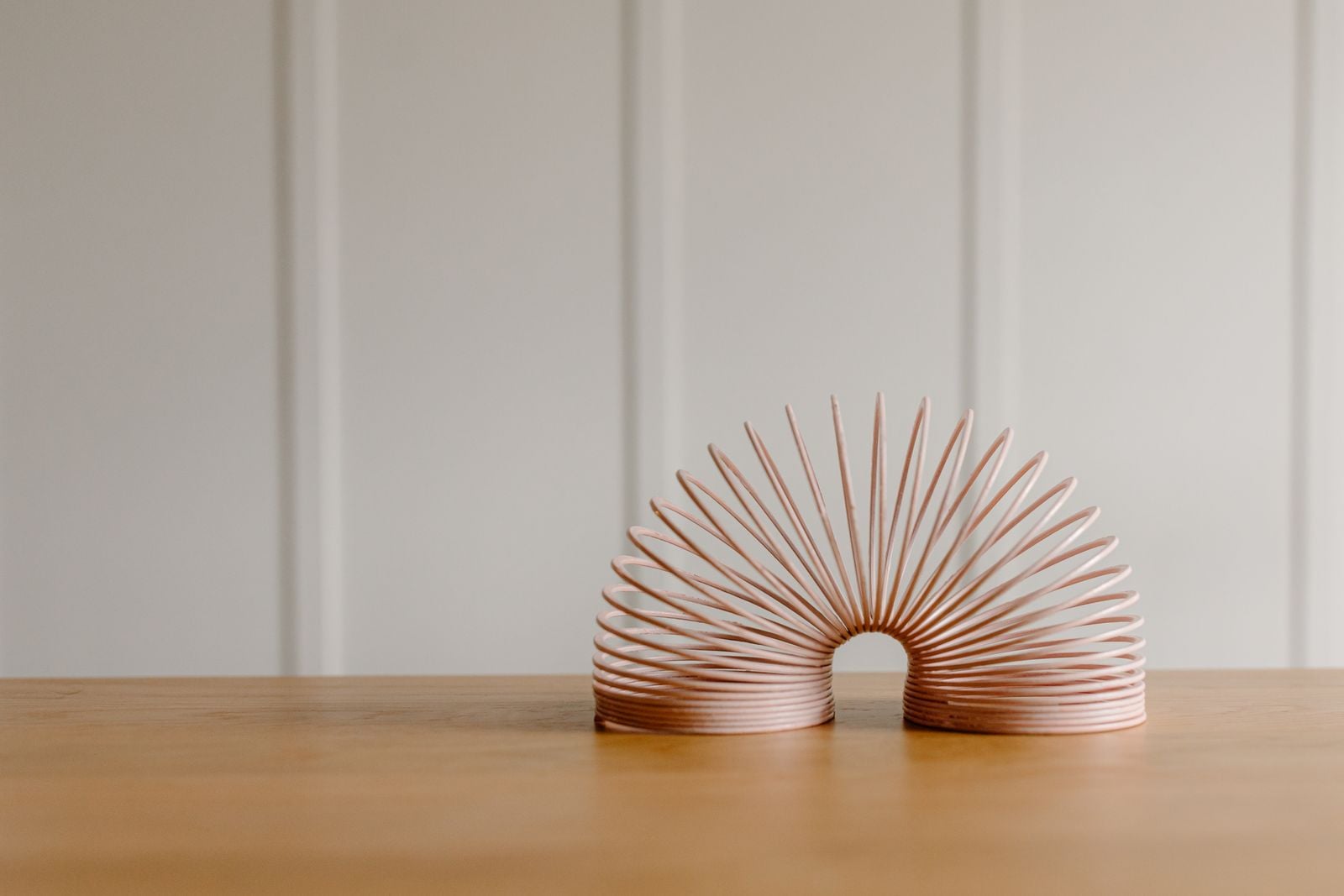
A rubber shortage and two parallel experiments
Natural rubber had become strategically vital by World War II. Tires, seals, aircraft parts, gas masks, boats and military vehicles all depended on it, while Japanese expansion through rubber-producing parts of Southeast Asia threatened Allied supplies. American households were asked to ration rubber goods and contribute old hoses, raincoats and other items to scrap drives.
The Artful Age
A weekly letter on aging well, family across generations, and the creative life after the kids leave home.
Scientists were also searching for substitutes. Dow Corning chemists Earl Warrick and Rob Roy McGregor filed a patent application involving dimethyl silicone and boric oxide on March 30, 1943. General Electric’s James G. E. Wright filed his bouncing-putty patent application on December 23, 1944.
The filing dates do not reveal the exact day each chemist first produced a putty-like sample. They do show why the story should not be framed as a settled, single-inventor moment. Warrick and Wright spent years disputing who arrived first, while later accounts often chose whichever version made the cleaner anecdote.
A material that worked on two clocks
The putty failed because it did not behave enough like ordinary rubber. It could bounce, stretch and resist decay, but it would also slump when left alone and break when struck sharply. Those qualities made it fascinating to handle but unsuitable for tires and other demanding wartime uses.
The apparent contradiction comes from viscoelasticity. Research on borosilicones describes them as dynamic polymer networks that appear elastic over short periods but flow over longer ones. Push or pull the material slowly and its network has time to rearrange. Apply force quickly and it responds more like an elastic solid.
A child can see both behaviours without knowing any polymer chemistry. A ball dropped onto a hard floor rebounds because the impact happens quickly. The same ball left on a table gradually flattens because gravity keeps applying a much slower force.
The first toy-store step came before the plastic egg
The unsuccessful rubber substitute survived as a curiosity after the war. Samples circulated socially, where people stretched, bounced and broke the material for amusement. One eventually reached Ruth Fallgatter, the owner of a toy store, who showed it to advertising consultant Peter Hodgson in 1949.
Fallgatter briefly carried the material as “bouncing putty,” but she did not continue with it. Hodgson saw a larger opportunity. He arranged for more putty to be produced, renamed it Silly Putty and divided it into one-ounce portions inside brightly coloured plastic eggs.
The timing mattered. Hodgson prepared the eggs for Easter in 1950, turning an otherwise shapeless lump into a toy with an instantly recognizable package. In a contemporary New Yorker account, Hodgson explained that Easter inspired the decision to combine the putty with an egg-shaped container.

Why the plastic egg worked
The egg did more than hold the product. It told shoppers that the strange material inside was meant to be playful rather than useful. A failed industrial compound suddenly had a shape, a name and a reason to be picked up.
Early sales were modest, but the New Yorker article changed its fortunes. The magazine described a pinkish material that bounced, stretched, broke under sudden force and picked up images from comic strips. Hodgson reported large outstanding orders, and Silly Putty quickly moved from novelty counters into national attention.
That sequence is an important part of the invention. Warrick and Wright helped create the material, but Hodgson created the product people recognized. The chemistry supplied the behaviour, while the name, price and plastic egg supplied the invitation to play.
Why “the same recipe” goes too far
The basic chemistry of Silly Putty still belongs to the same silicone-and-boron family developed during the 1940s. That does not mean every commercial egg contains Wright’s exact original recipe. Crayola says the precise formulas it uses are proprietary and describes the modern product only as being made primarily from silicone and colour pigments.
The early patents also show that “silicone oil plus boric acid” was never the whole manufacturing formula. Wright’s patent discusses boron compounds, heating, inorganic fillers and zinc hydroxide. Warrick and McGregor’s filing describes boric oxide, polymeric dimethyl silicone and controlled heating conditions.
Those details matter because Silly Putty is a formulated material, not one unchanging molecule. Its famous behaviour comes from a polymer network, but fillers, pigments and processing methods help determine the texture, colour, bounce and stability of the finished toy. The modern egg is a descendant of the wartime experiments, not a verified spoon-for-spoon copy of one laboratory beaker.
The chemistry children can see
The central polymer is a form of polydimethylsiloxane, commonly shortened to PDMS. Its long, flexible chains can be connected through temporary boron-mediated links. These links continually break and reform, which is why the material reacts differently depending on how quickly it is handled.
Stretch it gently and the links have time to rearrange, allowing the putty to lengthen. Pull it suddenly and the network cannot reorganize quickly enough, so the material may snap. Roll it into a ball and throw it against a hard surface, and the rapid impact produces its familiar bounce.
The old newsprint trick relied on the putty’s mild adhesive qualities. Pressed against printed comic panels, it could lift an image that was then stretched into distorted faces and lettering. The New Yorker was already describing that ability in 1950, making it part of the toy’s appeal from the beginning.
Another failed product found a second life
Silly Putty was not the only familiar children’s material rescued from an obsolete industrial purpose. Play-Doh began as a soft compound used by Cincinnati-based Kutol Products to remove soot from wallpaper. Demand declined as homes moved away from coal heating and washable wall coverings became more common.
Nursery school teacher Kay Zufall recognized that the pliable cleaner could work as a modelling material for children. The Smithsonian’s history of Play-Doh credits Zufall with testing it in her classroom and suggesting the name that replaced its industrial identity.
The two stories are not identical, but they share the same turning point. A material designed for one practical job became commercially valuable only after someone noticed how children interacted with it. Its failure in one category opened the door to an entirely different one.
From party trick to Apollo 8
Silly Putty eventually found a few practical uses after becoming famous as a toy. Its gentle tack made it useful for lifting lint, cleaning typewriter keys and holding lightweight objects temporarily. Related resistance putties also developed into separate products for hand exercises and rehabilitation.
Its most memorable journey came in 1968. According to The Strong National Museum of Play, the Apollo 8 astronauts carried Silly Putty and used it to hold tools in place in zero gravity. A material rejected as a wartime rubber substitute had reached lunar orbit twenty-five years later.
That does not make the original experiment secretly successful. It means usefulness can depend on context. The qualities that made the putty unsuitable for tires, including its slow flow and light adhesion, became entertaining or convenient once the problem changed.
What the kitchen-table story really shows
Silly Putty was not born in one perfectly documented accident and carried unchanged into the present. It emerged from parallel wartime experiments, competing patent claims, years of social circulation, a toy-store owner’s curiosity and a marketer’s decision to place the material inside a plastic egg.
That less tidy version gives more people their proper place in the story. Warrick and McGregor appear in the patent record. Wright remains central to the General Electric branch of the material’s history. Fallgatter recognized it as something a toy customer might enjoy, and Hodgson transformed it into a product that could sit on a shelf.
The result still feels like a small scientific performance on a kitchen table. It stretches when handled patiently, breaks when pulled sharply, bounces when dropped and slowly forgets the shape a child gave it. The failed rubber never became a tire, but it became something children could use to watch time, force and chemistry working between their fingers.