

Few worries land as heavily as watching your child play alone and wondering whether they have any friends at all. It is one of those parenting fears that can sit in your chest all day, and I do not think anyone talks about it enough.
I am a parent and a writer, not a child psychologist. What follows is a careful reading of the research and some honest observation, not professional advice. But the reassuring news is that “no friends” means very different things at different ages, and a lot of what looks worrying is ordinary.
The first thing that helped me was learning that friendship, for young children, is something they grow into in stages, not a switch that either turns on or stays off.
The Artful Parent
Family-life ideas and sharp reads, in your inbox.
For young children, playing near is playing together
In the 1930s the researcher Mildred Parten described a sequence of play that early-childhood educators still use. Very young children start with solitary play, then onlooker play, then what she called parallel play, where two children sit side by side doing the same thing without really interacting.
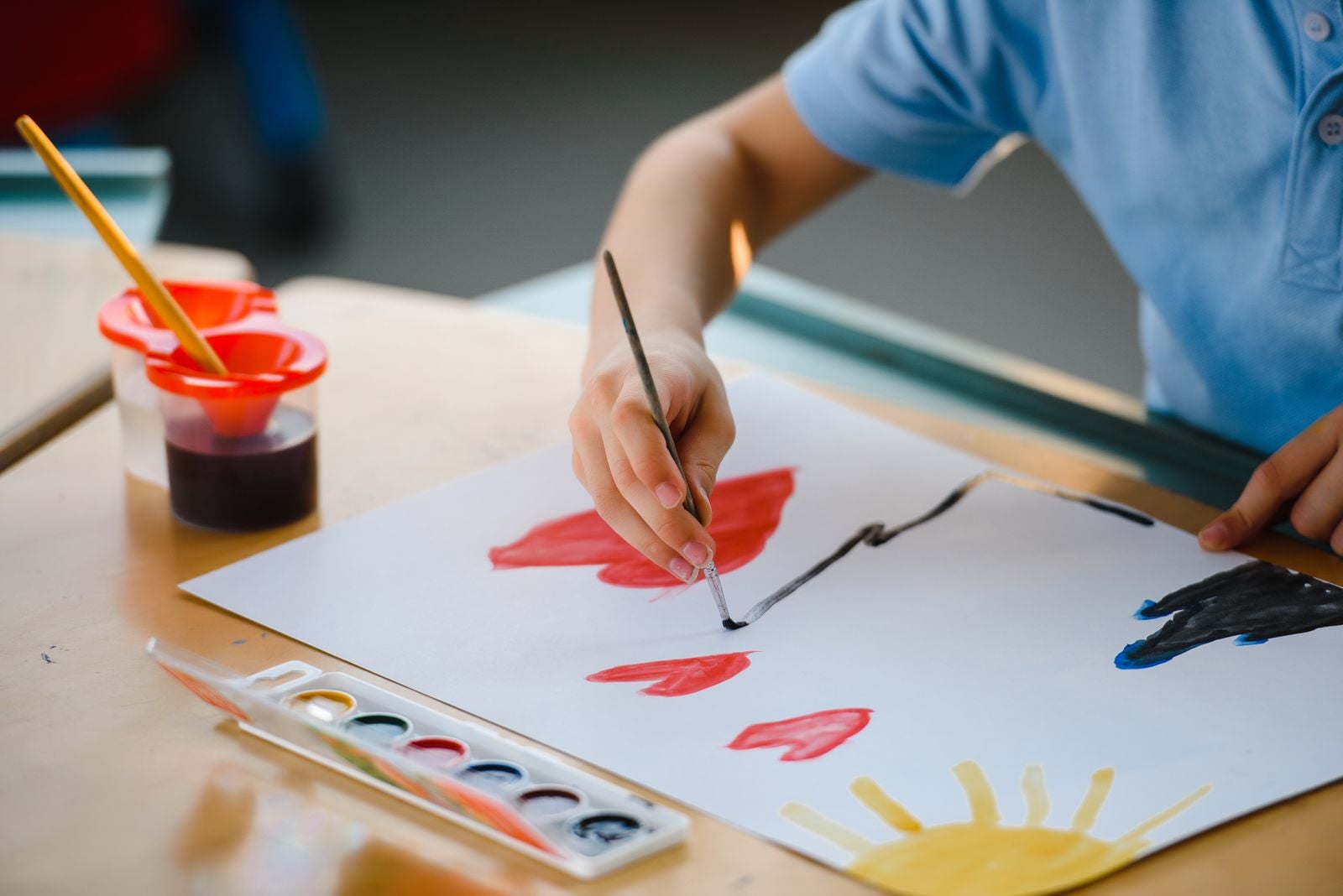
Parallel play is not a failure to make friends. It is the normal shape of toddler and early-preschool sociability. Two three-year-olds at the same table, each absorbed in their own painting, are being social in the only way that age reliably manages.
The more interactive stages, associative and then cooperative play, where children actually share a game and assign roles, tend to arrive later, often around four and a half or five. So a two or three-year-old who plays happily alongside other children, rather than with them, is usually right on schedule. Children also vary widely and normally in when they get there.
It also helps to remember how loosely young children use the word friend. A preschooler’s best friend can be whoever is standing next to them at that moment, forgotten by pickup and replaced by someone else the next day. That fluidity is not fickleness. Stable, chosen friendships that last are a later development, and their absence in a four-year-old is not a gap so much as a stage they have not reached yet.
Alone is not the same as lonely
The bigger reframe, and the one I keep coming back to, is that a child playing alone is not automatically a child in distress.
The psychologist Robert Coplan, who has spent years studying solitude in children, draws a useful distinction. Some children play alone because they are anxious, they want to join in but feel unable to. Others play alone simply because they like it, with no fear attached. Coplan describes this second group, sometimes called unsociable, as a relatively benign case in early childhood. The child is content. The solitude is a preference, not a wound.
What his work suggests matters is less the aloneness itself and more the reason behind it, and whether the child is accepted when they do want company. A child happily building alone is in a very different situation from one who hovers at the edge of a group, wanting in and not managing it.
This is not unique to children. I have written before about how, in adults, a preference for solitude is not the same as avoiding people, and something similar is true from a young age. The quiet child at the edge of the party may be perfectly happy there.
One good friend counts for more than a crowd
It is easy to measure our children against the ones who seem to have a packed social calendar, but the number of friends turns out to be a poor thing to count.
What the research on childhood friendship tends to emphasize is quality over quantity. A single steady friendship, one child your kid genuinely likes and returns to, does more good than being generally popular. Being accepted rather than rejected by the wider group matters too, but that is a lower bar than being the center of it.
So a child with exactly one friend does not have a friendship problem. They may simply have found their person.
Where making can quietly help
This is where I think a house full of making earns its keep, and I want to be careful not to oversell it.
Friendship at close range can feel like a lot of pressure for a child, all that eye contact and turn-taking and finding something to say. A shared activity takes the pressure off. Two children at a table with playdough, or paint, or a big sheet of paper on the floor, have something to do with their hands and their attention, and connection often sneaks in sideways while they are busy.
It is essentially parallel play with a longer runway. You do not need to engineer a friendship. You can just put out enough materials for two, invite one other child over, and let the shared work do what conversation cannot yet.
I am not suggesting art fixes anything, and it is not a cure for a child who is genuinely struggling. It is just that side by side, over a shared task, is often the easiest way for young children to be near each other without the strain of being face to face.
If your child does seem genuinely unhappy about being left out, if the solitude looks like distress rather than preference, or if it is a sudden change from how they used to be, the people who can actually help are your child’s teacher, who sees them among peers all day, and your pediatrician. That is not an alarming step. It is just asking the people with the fuller picture.
For most children, though, what looks like having no friends is a stage, or a temperament, or a small number that happens to be enough. The child painting quietly on their own is usually not waiting to be rescued. They are just painting.