
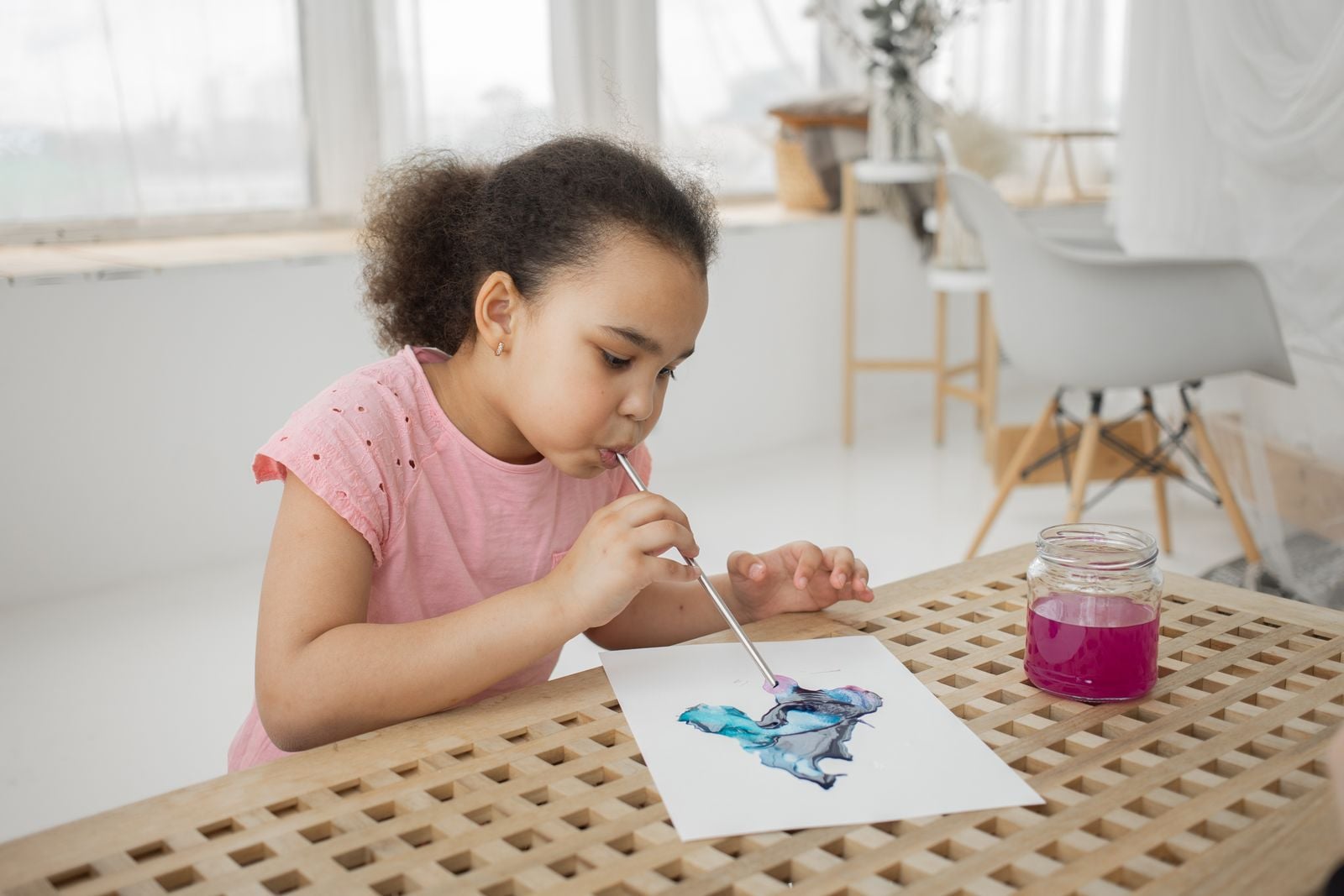

Drop a few grains of ordinary table salt onto a damp watercolour wash and something small and cosmic begins appearing on the paper. Pale spots open around the crystals, darker rims gather at some of their edges, and branching marks spread through the colour like frost or tiny stars.
Children notice the change immediately because it happens without another brushstroke. The salt lands, the painting sits still, and a pattern slowly emerges as the page dries.
The effect is real, but it is more complicated than saying the salt simply sucks water out of the paper. The crystal begins dissolving where it touches the wet paint, creating a concentrated salty pocket while water continues moving through the paper and evaporating from the surface.
What the salt changes in a wet wash
Watercolour paint contains pigment particles carried through water, along with a binder that helps the colour remain on the page after drying. When salt touches that wet mixture, its outer surface starts dissolving and changes the conditions in the small area around the grain.
Meanwhile, the paper is still absorbing and redistributing moisture through its fibres. Water is also evaporating from the exposed surface, so the liquid and pigment do not remain evenly distributed while the salt sits in place.
Those overlapping processes can shift pigment towards some areas and away from others. Once the wash has dried, the uneven distribution remains visible as pale centres, dark edges, speckles, feathers, or starburst-like marks.
Capillary action is part of watercolour more broadly because water travels through the narrow spaces in paper fibres. It is less accurate, however, to imagine each salt crystal acting as a miniature capillary pump that directly drags pigment towards itself.
Why calling it osmosis is too simple
Osmosis usually describes water moving across a selectively permeable barrier towards a solution with a higher concentration of dissolved material. There is no such membrane separating the salty and unsalty parts of an open watercolour puddle.
The local salt concentration can still influence how the liquid behaves, and dissolved ions can contribute to concentration-driven flows. On the page, however, dissolution, paper absorption, evaporation, pigment movement, and the changing shape of the wet wash are all happening together.
That makes the salt technique a useful experiment in observation rather than a perfect demonstration of one isolated scientific process. What a child can see clearly is that a small change in material, timing, or moisture produces a different result.
Where atmospheric water harvesting fits in
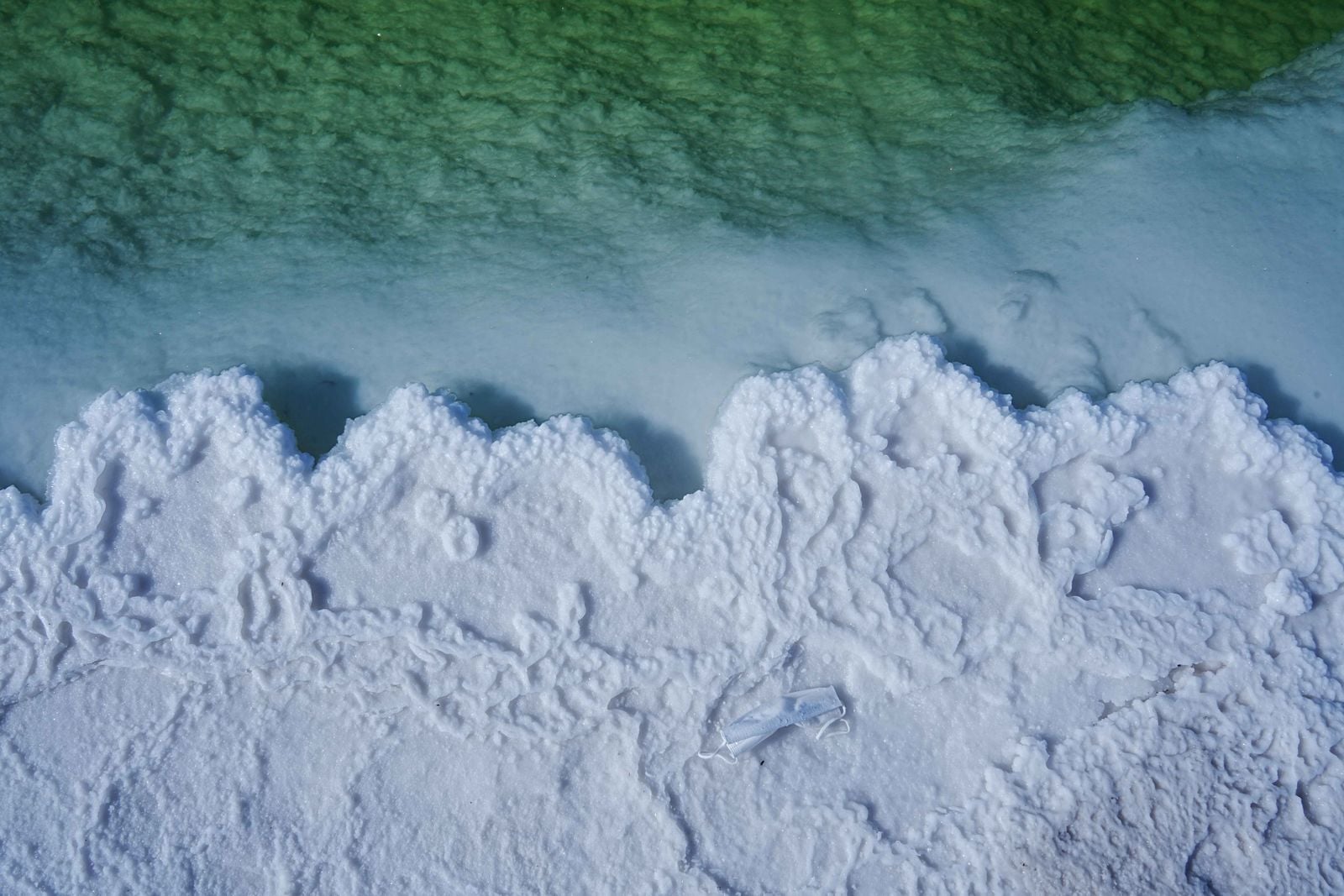
Some salts are exceptionally effective at collecting moisture from air, and researchers are incorporating them into materials designed for atmospheric water harvesting. A team associated with materials scientist Guihua Yu at the University of Texas at Austin developed a polyzwitterionic hydrogel containing lithium chloride, a highly hygroscopic salt.
According to a report on the 2022 research, the material produced almost six litres of freshwater per kilogram in 24 hours at 30% relative humidity. The polymer helped hold the salt and absorbed water together so the system could repeatedly collect and release moisture.
It is an interesting comparison, but it is not the identical process taking place in a child’s painting. The hydrogel was engineered to collect water vapour from air using lithium chloride, while table salt on watercolour is placed directly into liquid water and begins dissolving inside a drying paint film.
Why the wetness of the wash matters
The same pinch of salt can leave completely different marks depending on when it reaches the paper. Timing is often the most important variable in the entire activity.
On a very wet, glossy wash, salt may dissolve quickly or spread its influence across a broad area. The resulting shapes can be soft, blurry, or surprisingly faint because there is so much free water moving around the grain.
On a damp wash with only a slight sheen, the salt often produces clearer and more defined marks. There is still enough water for the local pattern to develop, but not so much that the effect disappears into a large puddle.
On a nearly dry wash, the salt may do very little. It can remain on the surface until it is brushed away because there is not enough mobile water left to create a noticeable change.
This gives children an easy variable to test. They can sprinkle salt immediately on one colour, wait a minute before treating another, and leave a third section untouched until it is almost dry.
Why different grain sizes leave different patterns
Fine table salt usually creates many small marks because numerous crystals can fit into a small area. Coarse culinary sea salt or kosher salt tends to create fewer, larger, and more irregular shapes.
Size is not the only difference. Crystal shape, how closely the grains touch the paper, the amount of salt used, and how quickly each grain begins dissolving can all affect the finished pattern.
A large grain may leave a broad pale patch or a dark ring around its former position. Fine grains can create constellations of dots, while flat or irregular flakes may leave shapes that look like snow, flowers, or tiny explosions.
There is no guarantee that one salt will always produce a particular mark. That unpredictability is part of what makes the technique useful for process art.
Why the paint colour matters too
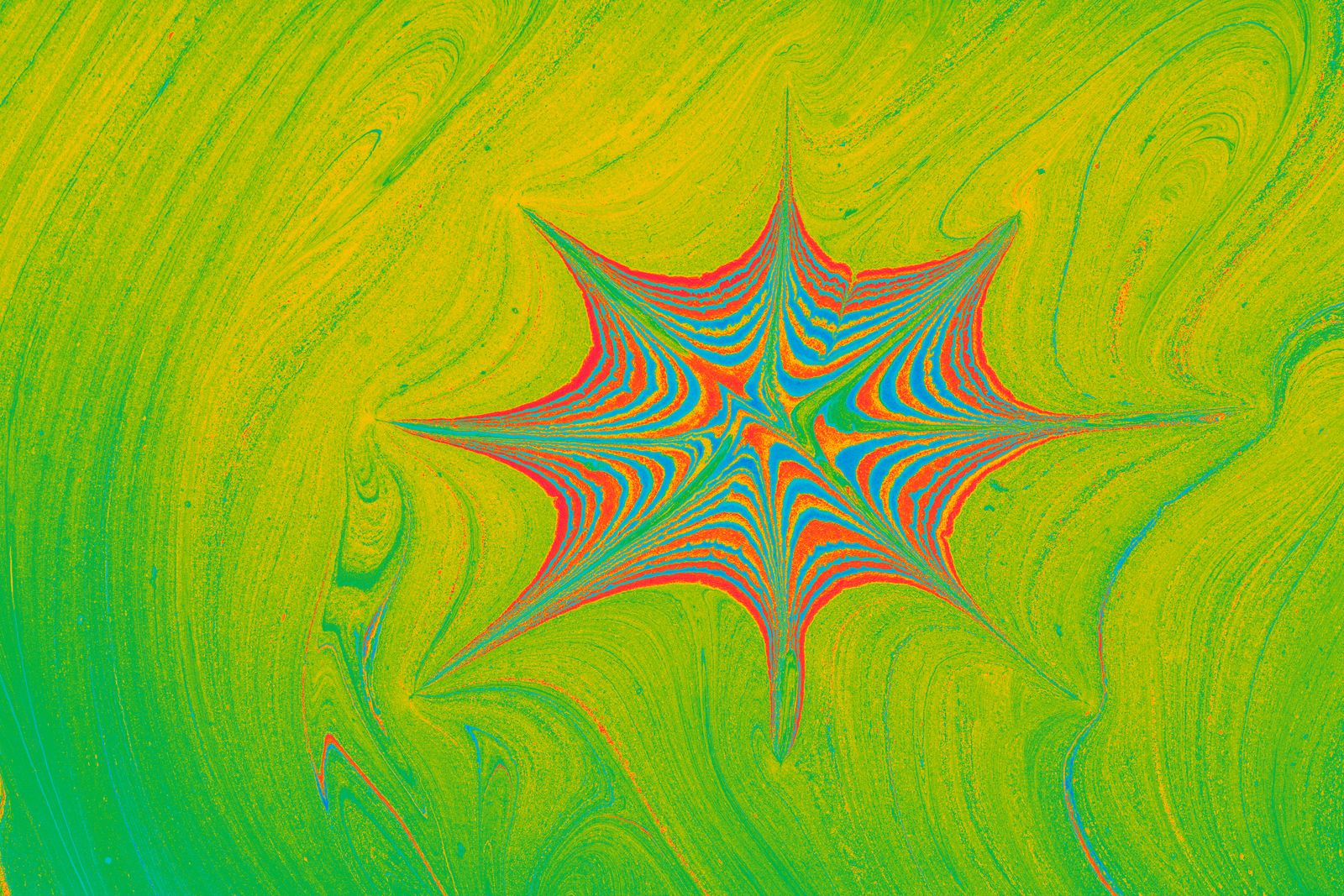
Not every watercolour paint moves in the same way. Pigments differ in particle size, transparency, staining strength, binder content, and the way they settle into a particular paper.
Those properties do not create a simple rule in which every staining pigment fails and every granulating pigment succeeds. One blue may produce sharp starbursts while another barely changes, even when both washes receive the same salt at the same moment.
Granulating colours already form visible textures as they dry, which can either strengthen the overall effect or make the salt marks harder to distinguish. Transparent colours with finely divided pigment can sometimes move very clearly around the grains.
The most reliable approach is to make a small test sheet. Paint several colour swatches, apply the same type of salt at roughly the same stage of dampness, and compare the results after everything has dried.
Is the activity suitable for preschoolers?
Food-grade salt is a familiar, relatively low-risk material when it is used in small amounts with adult supervision. Place only a little in a shallow bowl and demonstrate taking a pinch rather than pouring directly from a large container.
Use watercolours labelled for children and follow the age guidance on the packaging. Salt, paint, brushes, and coloured water should not be treated as food, even when the salt itself came from the kitchen.
Keep the materials away from eyes and irritated or broken skin, and have children wash their hands after the activity. Use only culinary salt, not road salt, deicing crystals, or another product containing unknown additives.
Wait until the painting is fully dry before brushing off the grains. Salt left embedded in paper can continue attracting moisture in humid conditions and may affect the surface over time, so remove as much as possible if the picture is going to be kept.
What children can investigate
The activity gives children several visible variables to explore without requiring a formal chemistry lesson. They can change the amount of water, the colour of the paint, the size of the salt grain, and the moment when the salt is added.
They can also compare treated and untreated sections of the same wash. The difference makes it easier to see that materials behave according to conditions rather than producing the same result every time.
Questions can remain simple and concrete. Which section made the biggest shapes, which colour changed most, and what happened when the paper was almost dry?
The scientific value comes from observing, comparing, and trying again. Terms such as pigment, dissolution, evaporation, concentration, and capillary action can be introduced later when they help describe something the child has already seen.
Setting it up on a kitchen table
Use watercolour paper or another thick paper that can tolerate plenty of water. Add a soft brush, a water cup, a child-safe watercolour set, and two small dishes containing fine table salt and coarse food-grade salt.
Paint a generous wash and divide it mentally into several testing areas. Sprinkle salt onto one area while it is glossy, another when the shine has begun disappearing, and a final area when the paper feels only slightly damp.
Encourage the child to use a pinch rather than covering the whole page. Too much salt can merge the individual marks into one large, uneven patch and make it harder to compare the results.
Leave the paper flat and undisturbed until it is completely dry. Drying may take from several minutes to more than an hour depending on the paper, the amount of water, and the room conditions.
Brush the grains gently into the household bin with a dry hand, cloth, or soft brush. Do not add water or rub the surface while it is still damp, because that can smear the pigment and erase the patterns.
The finished page may look like snow, coral, flowers, distant galaxies, or nothing recognisable at all. The child will often want to repeat the process with a different colour, which is where the activity becomes most valuable: one material, one changed condition, and another result waiting to appear.